
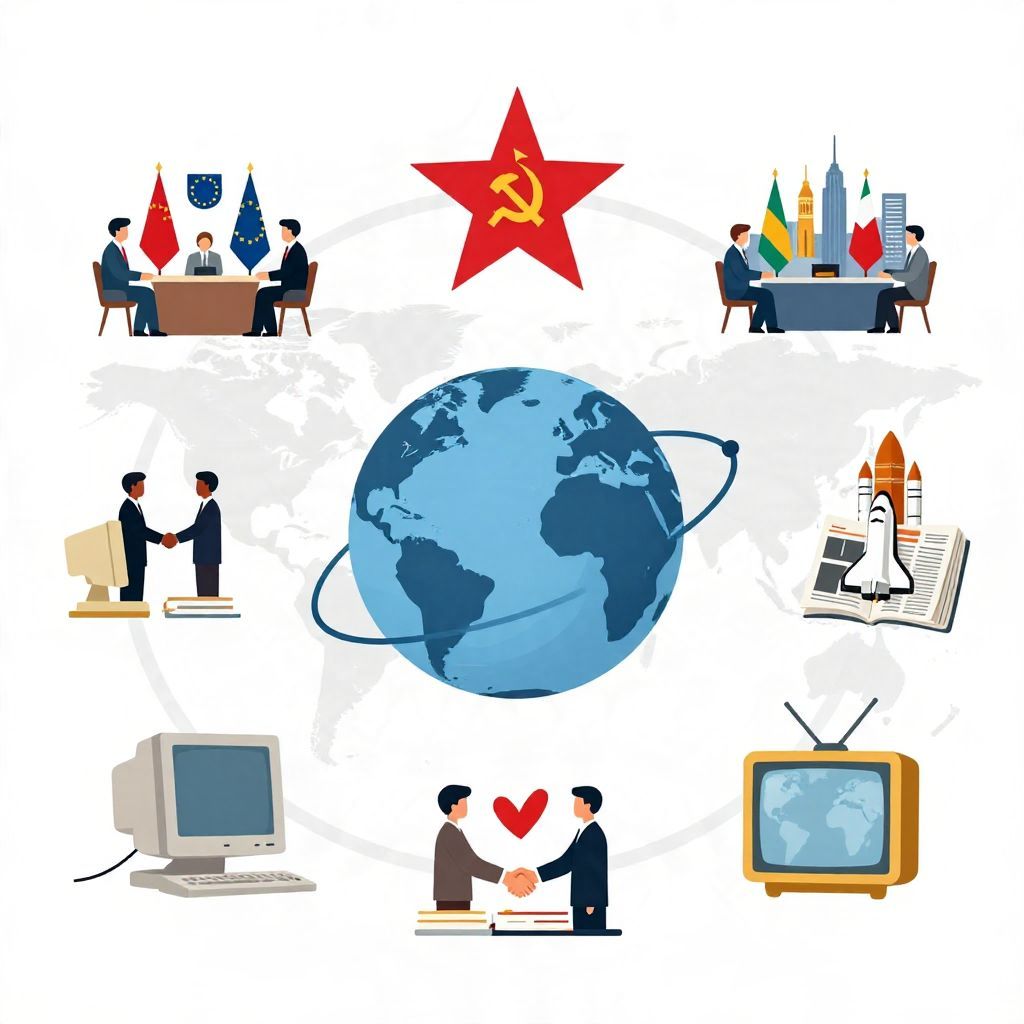
What happened in 1992? In short, 1992 was a turning point year in world history: the Cold War’s immediate aftermath continued, Europe moved toward deeper integration, the Soviet Union’s collapse reshaped politics, and major conflicts, elections, and scandals changed national directions across the globe.
It was also a year of transition in everyday life. New technologies, shifting economies, and cultural milestones reflected a world adjusting to the post-Cold War order. The events of 1992 did not belong to one country or one crisis; they formed part of a wider global reset.
What Happened In 1992?
In 1992, the world was still absorbing the consequences of the Soviet Union’s collapse, while new political, economic, and cultural developments accelerated in Europe, the Americas, Africa, and Asia. The year saw the signing of major international agreements, violent conflicts in places such as Bosnia, political change in the United States, and important steps in globalization and European union.
The World in 1992: The Big Picture
The most important context for 1992 was the end of the Cold War. The Soviet Union had dissolved at the end of 1991, and the old bipolar balance between the United States and the USSR was gone. In its place came uncertainty: new states, new alliances, economic instability in former communist countries, and debates over what a “new world order” would look like.
At the same time, 1992 was not simply a year of post-Cold War optimism. Ethnic war in the Balkans, economic recession in some countries, and political scandals in others showed that the new era was unsettled. The year is often remembered as one in which globalization advanced, but so did fragmentation and conflict.
Key Events of 1992
January: Europe Moves Toward Union
On 7 February 1992, European leaders signed the Maastricht Treaty, one of the most important agreements in modern European history. It laid the foundation for the European Union, expanded cooperation among member states, and set the stage for a common currency in the future. The treaty marked a major step beyond the earlier European Economic Community.
The treaty mattered because it showed that Western Europe was trying to deepen unity after the Cold War. But it also sparked debate about sovereignty, democracy, and how far integration should go. Those arguments would continue for decades.
Spring: War in Bosnia Escalates
One of the most tragic developments of 1992 was the outbreak and escalation of the Bosnian War. After Bosnia and Herzegovina declared independence from Yugoslavia in March 1992, conflict spread rapidly among Bosniak, Serb, and Croat forces, with severe civilian suffering and widespread ethnic violence.
The war became a symbol of Europe’s failure to prevent mass violence in the post-Cold War era. Cities were besieged, communities were displaced, and reports of ethnic cleansing shocked international opinion. The conflict would continue for years and shape debates about humanitarian intervention.
April: The Los Angeles Riots
In the United States, the Los Angeles riots erupted in April 1992 after the acquittal of police officers charged in the beating of Rodney King. The unrest exposed deep tensions over policing, race, inequality, and justice in American cities.
The riots were among the most destructive civil disturbances in U.S. history. They were not caused by one event alone; they reflected long-standing frustrations over discrimination, economic hardship, and mistrust of institutions. Their aftermath influenced policing reform debates and public discussion of race relations for years.
June: Earth Summit in Rio de Janeiro
In June 1992, world leaders gathered in Rio de Janeiro for the United Nations Conference on Environment and Development, widely known as the Earth Summit. The meeting highlighted climate change, biodiversity, deforestation, and sustainable development.
The summit was significant because it brought environmental issues into mainstream global diplomacy. It produced major statements and conventions, including agreements that helped shape later international climate and environmental policy. While it did not solve these problems, it helped define them as global concerns.
Summer and Fall: Political Change in the United States
The 1992 U.S. presidential election was shaped by recession, public dissatisfaction, and a sense that the political system had become disconnected from ordinary concerns. Bill Clinton defeated incumbent president George H. W. Bush, while independent candidate Ross Perot won a significant share of the vote.
Perot’s strong showing was especially notable because it reflected voter frustration with deficits, trade, and establishment politics. Clinton’s victory marked a generational shift in American politics and helped define the centrist “New Democrat” approach of the 1990s.
November: A Landmark in U.S. Social Policy
In November 1992, voters in several U.S. states approved measures that reflected changing social attitudes, including debates over criminal justice, abortion, and civil rights. The year was also marked by growing attention to the role of women in politics and public life, though progress remained uneven.
While no single domestic reform defined the year, 1992 helped set the tone for the political culture of the 1990s: more media-driven, more polarized, and more focused on economic anxiety and identity-based issues.
Major International Developments in 1992
Post-Soviet Realignment
After the Soviet Union’s collapse, 1992 was a year of adjustment for Russia and the newly independent republics. Economic liberalization, political instability, and uncertainty over borders and security dominated the region. The transition away from central planning was often painful, with inflation and shortages affecting daily life.
At the same time, the former Soviet space became a major focus of diplomacy. Nuclear weapons, military command structures, and questions of national identity all required urgent attention. The year did not bring a clean break from the past; instead, it revealed how difficult collapse could be.
South Africa’s Transition Continues
In South Africa, 1992 was an important year in the long end of apartheid. Negotiations between the government and anti-apartheid leaders continued, though progress was uneven and violence remained a serious problem. The country was moving toward a democratic transition, but the path was fragile.
The significance of 1992 lies in the fact that it was a year of negotiation rather than final settlement. It showed that apartheid was weakening, yet also that building a new political order would require compromise, trust, and sustained pressure.
The Gulf War’s Aftermath
Although the Gulf War had ended in 1991, its consequences continued in 1992. Iraq remained under sanctions, and the region was still shaped by the conflict’s political and military aftermath. The war had reinforced U.S. influence in the Middle East, but it also left unresolved tensions that would continue to matter.
In historical terms, 1992 belonged to the period after the war rather than the war itself. The year demonstrated how military victory did not automatically produce stability.
Culture, Technology, and Everyday Life in 1992
Popular Culture and Media
1992 was a memorable year in film, music, and television. Popular culture reflected both the optimism and anxieties of the era. Grunge, hip-hop, pop, and alternative rock all reached large audiences, while television and cable news became even more influential in shaping public opinion.
Media coverage of events such as the Los Angeles riots and the Bosnian War showed how quickly images could circulate globally. This helped create a more interconnected public sphere, even before the internet became a daily necessity for most households.
Technology and the Early Digital Age
Although 1992 was not yet the internet age as most people would later know it, the digital revolution was underway. Personal computers were becoming more common in homes and offices, and early online services were expanding. These changes were gradual, but they helped prepare the ground for the rapid technological transformation of the late 1990s.
In everyday life, many people still relied on print media, landline telephones, and broadcast television. That mix of older and emerging technologies gives 1992 its distinctive feel: modern, but not yet fully connected.
Why 1992 Mattered Historically
1992 mattered because it was a bridge year. The old Cold War framework had collapsed, but the new international order had not yet stabilized. Europe was integrating while also confronting war. The United States was entering a new political phase. Environmental diplomacy was becoming more global. And societies worldwide were wrestling with questions of identity, inequality, and power.
Historians often see years like 1992 as turning points not because one event solved everything, but because multiple developments moved in the same direction. In that sense, 1992 was less a single dramatic rupture than a year in which the post-1989 world became unmistakably visible.
Timeline of 1992
- February 7 — The Maastricht Treaty is signed, paving the way for the European Union.
- March — Bosnia and Herzegovina declares independence, and war escalates.
- April — The Los Angeles riots erupt after the Rodney King verdict.
- June — The Earth Summit takes place in Rio de Janeiro.
- November — Bill Clinton wins the U.S. presidential election.
The Aftermath of 1992
The effects of 1992 were felt well beyond the year itself. The Maastricht Treaty helped create the European Union and eventually the euro. The Bosnian War became one of the defining humanitarian crises of the 1990s. The Los Angeles riots intensified debates about race and policing in the United States. Clinton’s election helped shape the political center of the decade.
In broader terms, 1992 accelerated the transition from the Cold War world to the globalization era. It was a year of hope and instability, cooperation and conflict, reform and backlash. To understand the 1990s, 1992 is one of the most important years to study.
For more context, you may also want to read about what happened in 1991 and what happened in 1993, since both years help show how 1992 fit into the wider post-Cold War transition.