
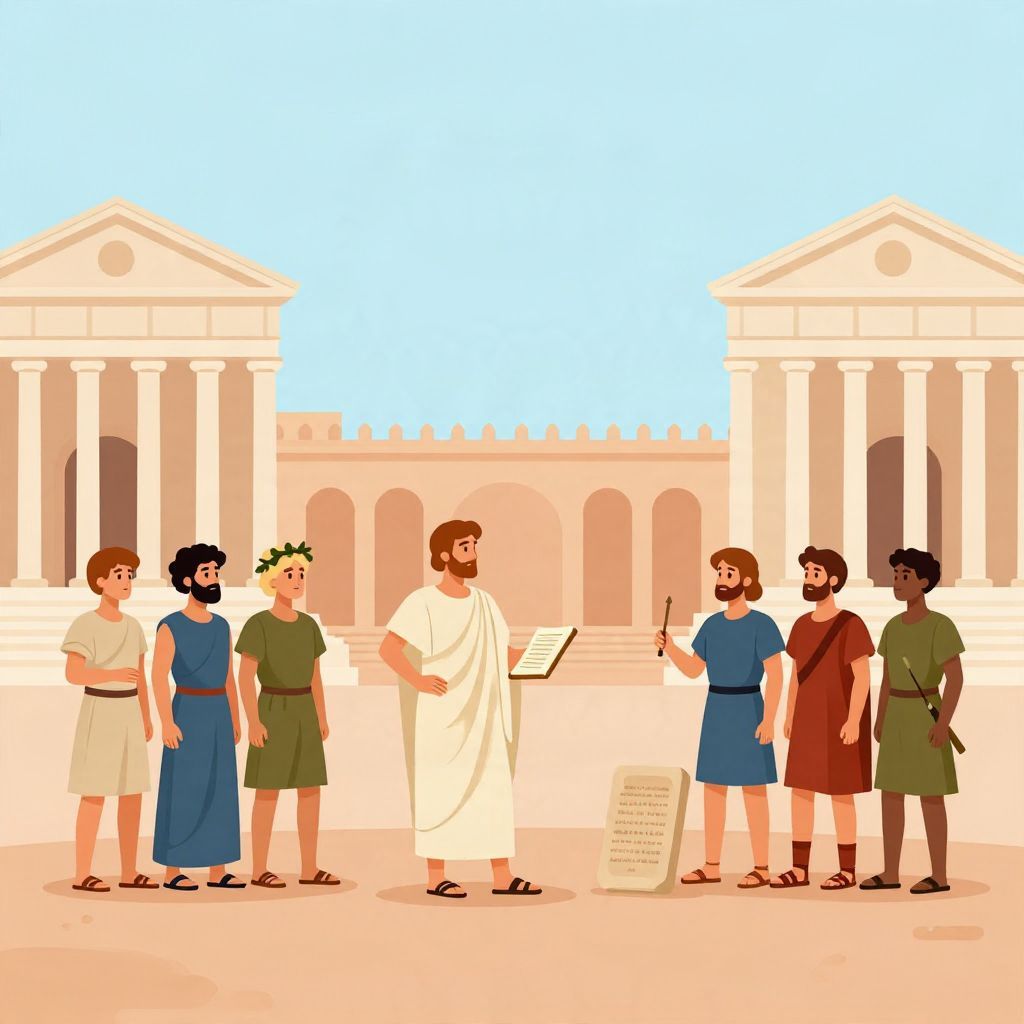
What language did Romans speak? The short answer is Latin—especially in the Roman Republic and Roman Empire—but the fuller history is more interesting. Ancient Rome was multilingual, and what people spoke depended on class, region, time period, and whether they lived in the city of Rome or in distant provinces.
Latin began as the language of central Italy, then spread with Roman power across the Mediterranean world. Over time, it developed into different forms, influenced by Greek and local languages, and eventually gave rise to the Romance languages spoken today.
What language did Romans speak?
Romans primarily spoke Latin, the language of Rome and its expanding state. In everyday life, most people used spoken Latin, while educated Romans often also knew Greek. Across the empire, many communities remained multilingual, so “the language of the Romans” depended on place, period, and social status.
Latin was the main language of ancient Rome
Latin was the native language of the city of Rome and the surrounding region of Latium in central Italy. By the time Rome became a major power, Latin was already the language of government, law, military command, religion, and much written literature. It was not the only language in the Roman world, but it was the most important one politically and culturally.
Old Latin, Classical Latin, and later Latin
Latin changed over time. Scholars usually distinguish between Old Latin, Classical Latin, and the later forms spoken by ordinary people. Classical Latin is the polished literary language associated with writers such as Cicero, Caesar, Virgil, and Ovid. It was not exactly how everyone spoke at home, but it became the standard for formal writing and education.
Everyday spoken Latin was more flexible and varied. This spoken form is often called Vulgar Latin, meaning the common speech of ordinary people. It was not “bad Latin”; it was simply the living language of daily life, and it changed from region to region over centuries.
Did all Romans speak the same Latin?
No. Romans did not all speak identical Latin. People in the city of Rome, in Italy, in North Africa, in Gaul, in Spain, and in the eastern Mediterranean could speak Latin differently. Accent, vocabulary, and grammar varied by social class, education, and local influence. The empire was unified politically, not linguistically in a modern sense.
Class and education mattered
Elite Romans were trained in rhetoric and literature, so they could use formal Latin with precision. Ordinary citizens, soldiers, merchants, and farmers used simpler speech. Some people could move between registers, speaking one way in public and another at home. This difference between literary Latin and spoken Latin is one reason the language later evolved into several distinct languages.
Latin in the army and administration
Latin was especially important in the Roman army and government. Soldiers from many backgrounds had to share commands, laws, and official procedures. In western provinces, Latin became the language of administration and public life. In some eastern areas, however, Greek remained dominant, and Roman officials often operated in both languages.
Greek was also widely spoken in the Roman world
Although Latin was Rome’s official language, Greek was extremely important, especially in the eastern Mediterranean. Many educated Romans learned Greek, and in some places Greek was more common than Latin. Roman conquest did not erase the prestige of Greek culture, which Romans admired for philosophy, medicine, science, and literature.
Why Greek mattered so much
Before Rome dominated the Mediterranean, Greek had already spread widely through the Hellenistic kingdoms that followed Alexander the Great. By the time Rome expanded eastward, Greek was a major international language. In cities such as Alexandria, Antioch, and many parts of Asia Minor, Greek often served as the main language of trade and urban life.
For this reason, a Roman elite family might use Latin in Rome, Greek in education, and perhaps another local language while traveling or governing abroad. Bilingualism was common among the educated classes.
Other languages spoken in the Roman Empire
The Roman Empire was never linguistically uniform. Alongside Latin and Greek, many regional languages survived for centuries. Roman rule often added Latin to an existing multilingual landscape rather than replacing everything already there.
Examples of regional languages
- Egyptian in parts of Roman Egypt, especially among local populations.
- Punic in some North African communities, descended from the language of Carthage.
- Aramaic in parts of the Near East, where it had long been widely used.
- Celtic languages in Gaul and other western regions, alongside growing Latin influence.
- Hebrew and related Jewish languages in Jewish communities.
- Oscan, Umbrian, and other Italic languages earlier in Italy, before Latin became dominant.
Some of these languages gradually declined under Roman rule, while others persisted for a long time. The speed of language change depended on urbanization, military settlement, trade, legal status, and local identity.
How Latin spread across the empire
Latin spread because Rome spread. As Rome conquered Italy and then the Mediterranean, Latin followed the army, the law courts, the colonies, and the bureaucracy. Veterans settled in new towns, merchants used Latin in commerce, and local elites adopted it to advance socially and politically.
Romanization and language shift
Language shift did not happen overnight. In many western provinces, people gradually became bilingual and then increasingly Latin-speaking over generations. This process is often called Romanization, though historians now emphasize that it was uneven and varied from place to place. Local customs, religion, and language often survived even as Latin became more prominent.
In the western empire, Latin became especially strong in areas such as Italy, Gaul, Iberia, and parts of North Africa. In the east, Greek remained dominant in many cities and regions, so Latin had a more limited reach as an everyday language.
Was Latin the language of ordinary Romans?
Yes, but with an important distinction. Ordinary Romans in Rome and much of the western empire spoke Latin, but not the highly polished version found in literature. They used a living spoken language that differed from the formal style taught in schools. That everyday speech is the ancestor of French, Spanish, Portuguese, Italian, Romanian, and other Romance languages.
What spoken Latin sounded like
We do not know exactly how spoken Latin sounded in every century, but inscriptions, spelling variations, and later Romance languages help historians reconstruct it. Spoken Latin likely had simpler grammar in some contexts than literary Latin, and pronunciation changed over time and across regions. These gradual changes were normal for any living language.
Why literary Latin can be misleading
Students often encounter the elegant Latin of Caesar or Virgil and assume that was how all Romans spoke. In reality, that was the language of educated writing. Everyday conversation was less rigid and more varied. This gap between written and spoken Latin is one reason the language evolved so dramatically after the fall of the Western Roman Empire.
Did Romans in the eastern empire speak Latin?
Some did, but many did not need to. In the eastern provinces, Greek was already the main language of administration, commerce, and urban culture. Roman officials, soldiers, and settlers used Latin in certain contexts, but Greek often remained the practical language of daily life. In the East, being “Roman” did not always mean speaking Latin every day.
The Eastern Roman Empire and language change
After the division of the empire, Greek became even more important in the eastern Roman world, especially in what historians call the Byzantine Empire. Latin remained significant in law and tradition for a time, but Greek eventually became the dominant administrative language in the East. This shift shows how Roman identity could survive even when language changed.
How Latin became the Romance languages
As Roman political unity weakened in the West, spoken Latin continued to evolve locally. Over centuries, regional varieties developed into separate languages. These are the Romance languages, named not after romance in the modern sense, but after their origin in Roman speech.
From Latin to modern languages
- Rome expanded and spread Latin through conquest, settlement, and administration.
- People across the western empire adopted spoken Latin alongside local languages.
- Regional forms of Vulgar Latin changed after the Western Roman Empire declined.
- Those regional forms developed into distinct languages such as French, Spanish, Italian, Portuguese, Romanian, and others.
This is why Latin is considered a “dead” language in the sense that no community grows up speaking it as a native everyday language today, yet it remains deeply alive in law, religion, science, and education.
What language did the earliest Romans speak?
The earliest Romans spoke an early form of Latin, but Rome was never isolated from its neighbors. In early Italy, many peoples spoke related or neighboring languages, including Etruscan and other Italic languages. Rome’s rise was tied not only to military power but also to its ability to absorb and adapt influences from surrounding cultures.
Influence from Etruscan and Greek
Latin borrowed words, religious practices, and cultural ideas from other languages, especially Etruscan and Greek. The Roman alphabet itself came through the Etruscans from Greek models. So even though Latin became Rome’s signature language, it developed in a multilingual environment from the beginning.
So, what language did Romans speak in daily life?
In daily life, most Romans in the city of Rome and the western empire spoke some form of Latin. Educated Romans often knew Greek too, and many people in the empire spoke additional local languages. The exact language depended on where they lived, what they did, and when they lived in Roman history.
The simplest answer is Latin, but the historically accurate answer is that the Roman world was multilingual. Latin was the core language of Roman identity and power, while Greek and many regional languages shaped the real lives of Roman people. To explore more, see what language the Romans spoke and whether Latin is a language.