
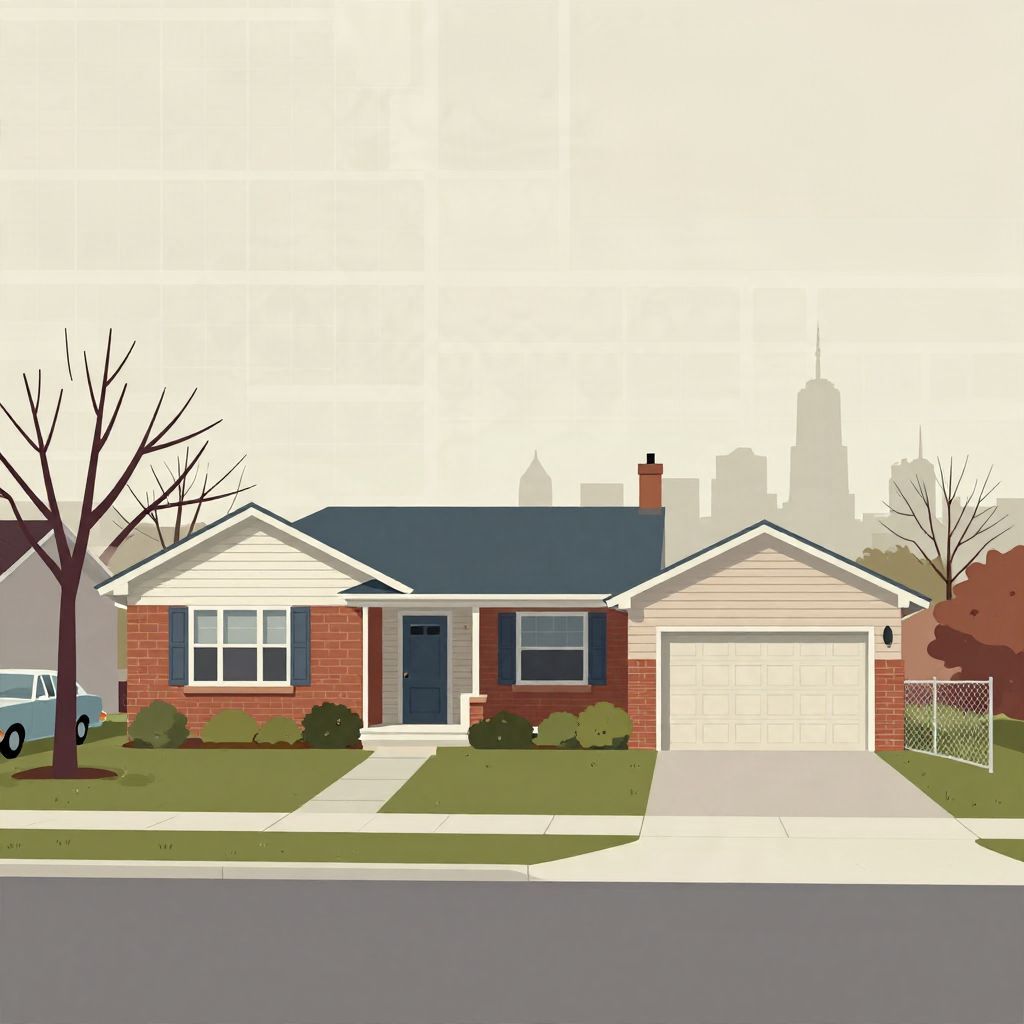
Where did John Wayne Gacy live? The short answer is that the American serial killer lived for many years in Norwood Park Township, Illinois, a suburb on Chicago’s northwest side, at 8213 West Summerdale Avenue in Des Plaines. That house became infamous because it was the site of his crimes in the 1970s.
Understanding where he lived helps explain how his public life and private violence overlapped. Gacy appeared to neighbors and local officials as a contractor, civic volunteer, and community figure, while behind the walls of his home he committed the murders that later made the address one of the most notorious in modern U.S. criminal history.
Where Did John Wayne Gacy Live?
John Wayne Gacy lived at 8213 West Summerdale Avenue in Des Plaines, Illinois, from the early 1970s until his arrest in 1978. The house stood in a residential area near Chicago and served as both his home and the place where many of his victims were killed and buried. It is the best-known address associated with him.
The Des Plaines house and its setting
The home was a modest suburban property in Cook County, Illinois. Des Plaines was not a remote place; it was part of the ordinary commuter landscape of the Chicago area. That mattered because Gacy’s crimes unfolded in a neighborhood that looked, from the outside, like countless other postwar American suburbs.
The house itself became central to the case because it was not simply where Gacy slept or stored belongings. It was the scene of concealment. Investigators later found that several victims had been buried in the crawl space beneath the house, while others were linked to the property through evidence recovered after his arrest.
Why this address became famous
The Summerdale Avenue house is remembered because it symbolized the gap between Gacy’s public image and his private actions. He hosted neighbors, worked on local projects, and cultivated a reputation as a successful businessman. At the same time, he used the home as a place to lure, assault, and kill young men and boys.
That contrast is one reason the address still appears in histories of the case. It shows how ordinary domestic spaces can hide extraordinary violence, and why suburban settings are often discussed in studies of crime, trust, and social perception in the late 20th century.
What was John Wayne Gacy’s life in Illinois like?
Gacy spent most of his adult life in Illinois, especially in the Chicago area. He moved there after earlier periods in the Midwest and built his adult identity around work, marriage, and local involvement. By the time he settled in Des Plaines, he had already established himself as a man who could seem dependable and socially engaged.
From Chicago-area resident to suburban homeowner
Gacy was born in Chicago in 1942 and grew up in the city and nearby areas. His life before the murders included jobs in business and construction, and he eventually became a small contractor. The Des Plaines house fit that image: it was a suburban base for someone who presented himself as a hardworking local entrepreneur.
He lived there with his second wife for part of the time, though the marriage later ended. After that, the house became even more important as his private domain. By the mid-1970s, he was using it as the center of his daily life and, tragically, as the location of his crimes.
Public respectability and private secrecy
One of the most disturbing aspects of the Gacy case is that his home life did not appear obviously unusual to many outsiders. He was active in community circles and even performed as “Pogo the Clown” at charitable and social events. This public persona helped shield him from suspicion for a time.
His residence therefore mattered not only as a physical place but also as a social mask. The house was part of a larger pattern in which Gacy used normalcy, familiarity, and suburban respectability to avoid detection.
Timeline of John Wayne Gacy’s residences
Gacy is most strongly associated with one address, but his life included several moves before he settled in Des Plaines. The following outline gives the broad chronology without overstating exact details where records vary.
- 1942–1950s: Born and raised in the Chicago area.
- 1960s: Lived in Illinois and other locations as his early adult life unfolded, including periods tied to work and family.
- Early 1970s: Moved into the Des Plaines house at 8213 West Summerdale Avenue.
- 1972–1978: Lived there during the period in which many of the murders occurred.
- 1978: Arrested, and the house became a major crime scene.
This chronology is important because it shows that the Des Plaines address was not a brief stop. It was the place where Gacy’s adult identity, business life, and criminal activity converged over several years.
Why the house mattered to the investigation
When police arrested Gacy in December 1978, the house quickly became central to the investigation. Search efforts revealed human remains beneath the property, confirming what had been suspected after several missing-person reports and inconsistencies in Gacy’s statements.
The crawl space and buried victims
The most infamous feature of the house was the crawl space under it. Investigators discovered that Gacy had buried victims there, using the structure of the home to conceal evidence. The discovery shocked the public because it turned an ordinary suburban basement area into a hidden burial site.
That fact also changed how the case was understood. The home was no longer just the place where Gacy lived; it was recognized as an active part of the murder process. The architecture of the house, especially its crawl space, became inseparable from the history of the crimes.
How the neighborhood reacted
Neighbors and local residents were stunned by what was uncovered. Many had known Gacy as a familiar figure in the community. The revelations forced a painful reassessment of how well people knew those living around them and how easily a dangerous person could blend into suburban life.
The case became one of the most famous examples of hidden violence in a residential setting, and the house itself took on a symbolic role in American true-crime memory.
What happened to the Des Plaines house afterward?
The house at 8213 West Summerdale Avenue did not remain a normal family residence for long. After the crimes were exposed, it became a site of public fascination, then a burden to the community. The property was eventually demolished in 1979.
Demolition and the end of the physical site
Once the house was torn down, the exact structure that had housed Gacy’s crimes disappeared. That demolition did not erase the history, but it did remove the building itself from the landscape. The address remained infamous, however, because the events associated with it were already part of the public record.
In cases like this, demolition can serve both practical and symbolic purposes. It removes a physical reminder while also acknowledging that some places become too closely tied to tragedy to retain their original form.
The address in historical memory
Even after the house was gone, the address continued to appear in books, documentaries, and discussions of the case. It remains a reference point for historians of crime, journalists, and the public because it anchors the story in a specific place and time.
That is one reason the question “Where did John Wayne Gacy live?” is still asked. The answer is not only a location, but a key to understanding how the case unfolded.
How historians and the public interpret Gacy’s home
Historians and criminologists often treat the Gacy house as an example of how domestic spaces can be weaponized. The suburban home, usually associated with safety and family life, became a site of predation and concealment. This does not mean suburbia caused the crimes, but it helps explain why the setting was so unsettling.
Ordinary place, extraordinary violence
The house’s significance lies in its ordinariness. It was not a remote cabin, abandoned warehouse, or hidden compound. It was a standard suburban residence in a populated area. That made the case more disturbing and more difficult to imagine in advance.
For that reason, the home is often discussed alongside broader questions about trust, policing, and the limits of appearances in modern society. Gacy’s residence was part of the apparatus that allowed him to evade detection for years.
Architecture and concealment
The physical layout of the house mattered. The crawl space beneath the home provided a hidden area that Gacy exploited. In historical terms, this shows how architecture can shape human behavior, including criminal behavior, by offering opportunities for secrecy or storage that are not immediately visible to outsiders.
That is one reason the property still attracts attention in studies of crime scenes and built environments. The house was not merely a backdrop; it was part of the story.
Why the location still matters today
Knowing where John Wayne Gacy lived helps place the crimes in their real historical context. It reminds us that the murders happened in a recognizable American suburb, not in some distant or abstract setting. The location reveals how ordinary surroundings can conceal extraordinary harm.
It also shows why historical questions about place matter. A residence is more than an address; it can help explain a person’s social world, daily routines, and opportunities for action. In Gacy’s case, the Des Plaines house was the center of his public life, private violence, and eventual downfall.
For readers interested in the broader history of the case, it can also help to explore how John Wayne Gacy died and, in a different historical context, how architecture can preserve cultural memory. The key takeaway, though, is simple: John Wayne Gacy lived in Des Plaines, Illinois, at 8213 West Summerdale Avenue, and that address became one of the most infamous homes in American criminal history.