
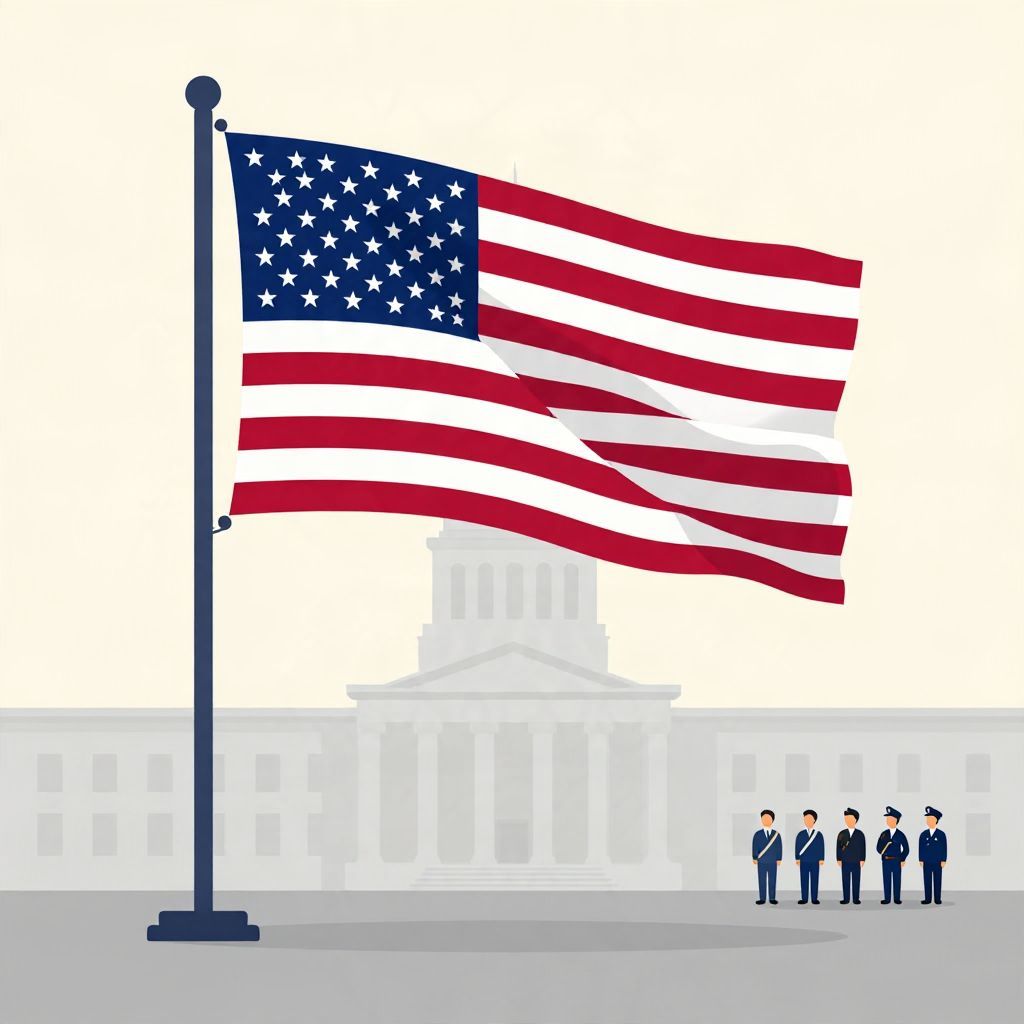
The upside down American flag is one of the most recognizable forms of protest or distress in U.S. history. But its meaning is not always the same in every situation, and its use has changed over time.
In simple terms, an upside down American flag usually signals serious distress. It can also be used as a political protest, though that meaning depends on context and has become more common in modern public life.
What does the upside down American flag mean?
An upside down American flag traditionally means dire distress. In U.S. flag practice, it is a signal that something is gravely wrong and that help is needed. Over time, people also began using it as a form of protest, especially in political disputes, but distress remains its original and most established meaning.
The historical meaning of the upside down flag
The idea of displaying a flag upside down as a sign of distress is older than many people realize. In maritime tradition, ships used flags to communicate at sea, and an inverted national flag could indicate emergency or danger. That practice influenced later American usage, where the upside down flag came to symbolize a vessel, person, or community in serious trouble.
In the United States, this meaning was later reflected in flag etiquette and federal guidance. The key point is that the upside down flag was not invented as a political statement. Its earliest recognized meaning was practical: a visible call for aid.
Distress, not disrespect
Because the American flag is a powerful national symbol, many people assume that any inverted display is meant to insult the country. Historically, that is not necessarily true. The flag code and long-standing custom treat the upside down flag as a legitimate distress signal when used in that limited way.
That said, intent matters. If someone flies the flag upside down to mock the nation or express anger, observers will often read it as disrespectful protest. The same display can therefore mean different things depending on context, timing, and the person using it.
How the U.S. Flag Code explains it
The modern U.S. Flag Code, first enacted in the 20th century and later incorporated into federal law, states that the flag should never be displayed upside down except as a signal of dire distress in instances of extreme danger to life or property. This is the clearest official explanation of the symbol’s meaning.
The law does not make every misuse of the flag a crime in the broad sense many people imagine. In the United States, flag etiquette is strongly shaped by custom and constitutional protections, especially free expression. That is one reason the upside down flag has become a recurring point of public debate.
What “dire distress” means
The phrase “dire distress” is important. It suggests an emergency serious enough to justify an extraordinary signal. Historically, that could mean immediate physical danger, a life-threatening situation, or a severe crisis. The phrase is not meant for ordinary disagreement or routine political frustration.
In practice, however, people have stretched the meaning. During periods of intense political conflict, some Americans have flown the flag upside down to express alarm about the nation’s direction rather than an immediate emergency. That usage is newer and more controversial than the older distress signal.
When did it become a protest symbol?
The upside down flag became more visible as a protest symbol in the 20th century, especially during moments of national tension. It was used in different ways by different groups, and there is no single date when it changed from distress signal to protest emblem. Instead, the meaning evolved gradually.
By the late 20th and early 21st centuries, the display had become a recognizable form of political expression. Some people used it to criticize government policy, war, elections, or social change. Others saw it as a misuse of a solemn symbol. Both reactions reflect the flag’s powerful place in American culture.
Why the meaning became contested
The American flag carries multiple layers of meaning: nationhood, sacrifice, unity, and constitutional rights. Because of that, turning it upside down can be read in two very different ways. One interpretation says, “We are in trouble and need help.” Another says, “We reject what the country is doing.”
This ambiguity is part of why the symbol is so potent. It can communicate urgency without words, but it can also provoke anger because many viewers focus first on the flag’s normal upright meaning of respect and national identity.
How people should interpret it today
Today, the upside down American flag should be understood first as a traditional signal of distress, but context is essential. If it appears during a disaster, emergency, or life-threatening situation, it likely means exactly that. If it appears at a rally, outside a home, or during a political dispute, it is more likely being used as protest.
In other words, the symbol itself does not tell the whole story. The setting, the speaker, and the moment all matter. Historians and flag experts generally emphasize that meaning is shaped by use, not just by appearance.
Examples of context that change the meaning
- Emergency setting: likely a distress signal.
- Political rally: likely protest or criticism.
- Military or maritime context: more likely to carry a formal distress meaning.
- Casual or decorative use: often seen as ignorance or poor etiquette rather than a deliberate message.
Is flying the flag upside down illegal?
In general, flying the American flag upside down is not automatically illegal in the United States. The First Amendment protects most forms of political expression, even when that expression is offensive to others. That is why the government usually cannot punish someone simply for using the symbol as protest.
However, there may be local rules, property restrictions, or special circumstances that affect how a flag can be displayed. Also, while the act may be legal, it can still violate etiquette, upset neighbors, or create public controversy. Legality and social acceptance are not the same thing.
Why the upside down flag causes strong reactions
The American flag is tied to memory, sacrifice, and national identity, so changing its orientation is emotionally powerful. For some people, it feels like a warning that the country is in crisis. For others, it feels like an attack on shared values.
This tension reflects a broader feature of American history: the flag has always been both a unifying symbol and a site of disagreement. Americans have used it to celebrate independence, mourn war dead, protest injustice, and express dissent. The upside down flag belongs to that larger tradition of symbolic conflict.
Why historians care about symbols like this
Historians pay attention to symbols because they reveal how people understand power, loyalty, and crisis. A flag is not just cloth; it is a public statement. The upside down American flag shows how a familiar national emblem can shift from ceremonial meaning to emergency signal to political protest, depending on the era.
That evolution also shows how traditions survive by adapting. A maritime distress signal became part of American civic life, then entered the language of modern protest. The symbol’s history is therefore not fixed; it is layered.
The bottom line
The upside down American flag traditionally means dire distress, and that is its oldest established meaning. In modern times, it is also used as a protest symbol, especially in political conflicts. The exact message depends on context, but the historical core of the symbol is a call for help, not simply disrespect.
If you want to explore related flag history and symbolism, see my neighbor is flying the flag upside down meaning and what does upside down American flag mean.