
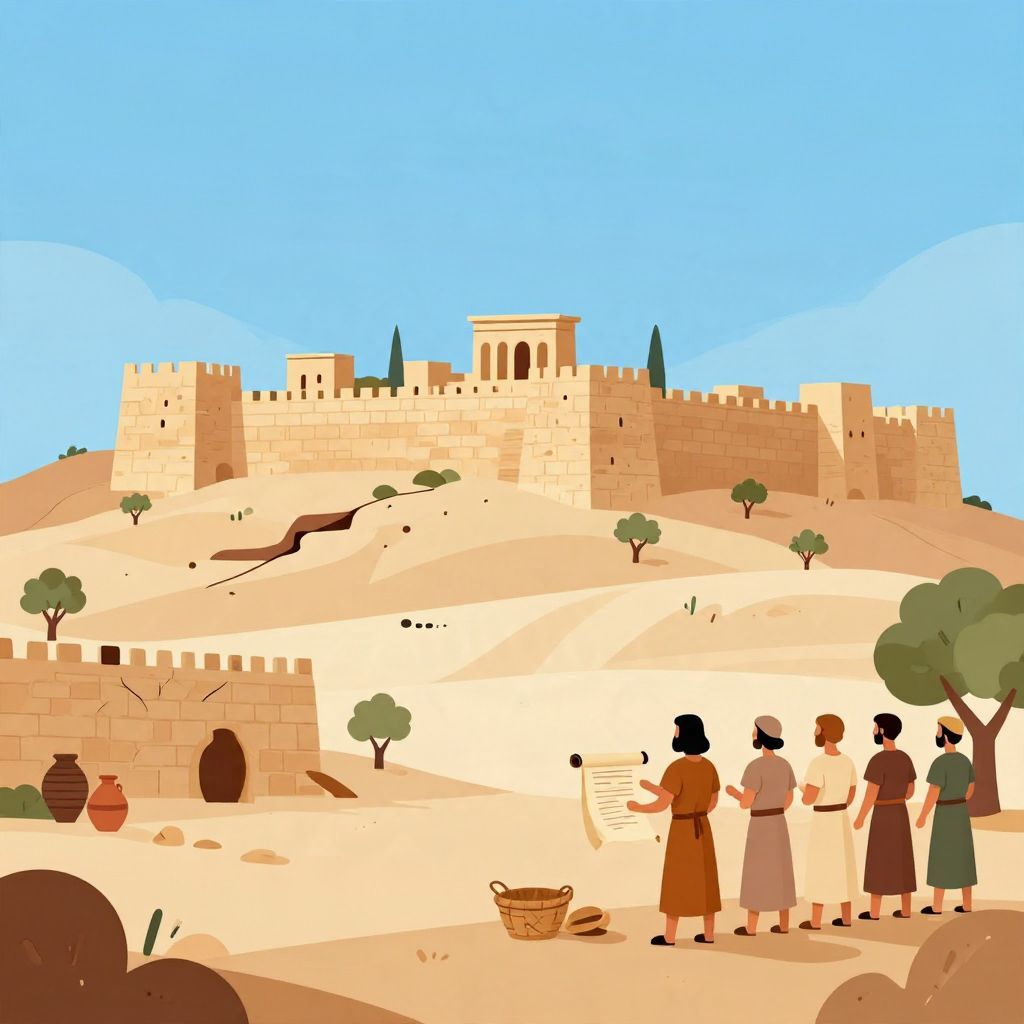
What does “Perish Judah” mean? The phrase is usually a mistaken or distorted version of a much older religious idea: the fate of Judah in biblical history, or more commonly the fate of Judas in Christian tradition. Because the wording is unclear, the safest historical answer is that it is not a standard historical phrase with one fixed meaning.
In practice, people usually use it when they are trying to ask about biblical language, especially the themes of judgment, destruction, or betrayal associated with Judah, Judas, or the people of Judah in the ancient Near East.
What does “Perish Judah” mean?
“Perish Judah” is not a standard phrase from ancient history or the Bible in English. Most often, it reflects confusion between Judah—the ancient Israelite kingdom and later Jewish community—and Judas, the New Testament figure known for betraying Jesus. Historically, the phrase is best understood as a mistaken shorthand for ideas of ruin, judgment, or betrayal.
Why the phrase is confusing
The confusion comes from similar-sounding names and from the way biblical language has been translated and repeated over centuries. Judah was a tribal and political name in the ancient Levant. Judas was a common Greek form of the Hebrew name Yehudah, meaning Judah. In English, the two can sound close enough to blur together.
That overlap matters because biblical and later Christian traditions often connect names with moral meaning. As a result, someone searching for “Perish Judah” may actually be looking for one of several different historical or religious ideas:
- the kingdom of Judah’s destruction by foreign powers, especially Babylon in the 6th century BCE;
- the New Testament story of Judas Iscariot and his betrayal of Jesus;
- symbolic language about a people, tribe, or individual facing divine judgment.
Judah in ancient history
Judah was one of the two major kingdoms that emerged after the united monarchy of Israel split, traditionally after the reign of Solomon. Judah existed in the southern Levant, centered on Jerusalem, and became a major political and religious identity in the ancient world. Its history is well documented through biblical texts, archaeology, and references in neighboring Near Eastern records.
The kingdom of Judah
The kingdom of Judah lasted for centuries, roughly from the 10th or 9th century BCE until its fall to Babylon in 586 BCE or shortly before, depending on how one dates the final stages of conquest. Its capital, Jerusalem, became the center of royal and temple life. The kingdom survived long enough to develop a strong identity tied to the Davidic dynasty and the Temple.
When people speak of Judah “perishing,” they may be referring to this historical collapse. The Babylonians destroyed Jerusalem, ended the monarchy, and deported much of the elite population. This was not the end of the people of Judah, however. It was a political catastrophe that reshaped Jewish identity in exile and in the post-exilic period.
Destruction, not disappearance
Historically, Judah did not simply vanish. After the Babylonian conquest, many Judeans remained in the land, while others lived in exile in Babylon and later returned under Persian rule. Over time, “Judah” became less a kingdom and more a people and religious identity that eventually developed into Judaism and the term Jews.
So if “Perish Judah” is meant in this older historical sense, it points to the fall of the kingdom rather than the total extinction of a people. The phrase would be better translated as “Judah was destroyed” or “Judah fell.”
Judas and the idea of betrayal
More often, though, “Perish Judah” is probably a confused reference to Judas Iscariot, the disciple in the Christian New Testament who is said to have betrayed Jesus. Judas became one of the most enduring symbols of treachery in Western religious memory. The historical figure is difficult to reconstruct beyond the gospel accounts, but his role in Christian tradition is unmistakable.
Who was Judas Iscariot?
Judas appears in the canonical gospels as one of the Twelve disciples. According to the accounts, he handed Jesus over to the authorities, leading to Jesus’ arrest and crucifixion. The motives given vary by text and tradition: money, Satanic influence, disappointment, or divine necessity within the narrative of salvation.
Historically, scholars treat these accounts carefully. The gospels are theological texts, not neutral biographies. They were written decades after the events they describe, and they aim to explain Jesus’ death within the framework of early Christian belief. That means Judas is both a historical question and a literary-theological figure.
Why Judas became a symbol
In Christian culture, Judas came to represent betrayal, guilt, and tragic failure. His name became so strongly associated with treachery that “Judas” entered many languages as a term for a traitor. If someone says “perish Judah” when they mean Judas, they may be drawing on this symbolic tradition rather than on actual ancient history.
Still, historians distinguish between the textual tradition and later moralized interpretations. Judas was not a king, kingdom, or nation. He was a figure in a religious narrative whose meaning grew over centuries of interpretation, art, preaching, and popular culture.
What the Bible actually says about Judah and judgment
To understand the phrase more accurately, it helps to separate the biblical uses of Judah from later interpretations. In the Hebrew Bible, Judah can refer to a tribe, a kingdom, a land, or a person. In prophetic literature, the fate of Judah is often tied to covenant faithfulness, military disaster, exile, and eventual restoration.
Judah in prophetic language
Many biblical prophets warned that Judah would suffer if it abandoned justice or worshiped other gods. These warnings are part of the religious worldview of the texts, not simple historical prediction. When disaster came in the form of Assyrian pressure, Babylonian conquest, and exile, later writers interpreted those events as confirmation of prophetic judgment.
This is why phrases about Judah “perishing” can sound biblical even when they are not exact quotations. The Bible frequently uses language of falling, being destroyed, or being cut off. Such language is theological as much as historical.
Judah after exile
After the Babylonian exile, the Persian period allowed some Judeans to return and rebuild. The Second Temple period followed, and Judah’s identity continued under changing imperial powers: Persian, Hellenistic, and Roman. So the story is not one of a single final end, but of repeated political loss and cultural survival.
How the name Judah became important in later history
Judah is one of the most significant names in biblical history because it shaped later Jewish identity and Christian interpretation. The term appears in tribal genealogies, royal narratives, prophetic books, and later religious memory. It also gave rise to the words Jew and Jewish through historical language change from Hebrew to Greek, Latin, and modern European languages.
From Judah to Jews
In the ancient world, “Judah” originally referred to a tribe and then a kingdom. Over time, especially after the exile, it became associated with the people descended from or identified with that kingdom. In Greek and Latin usage, this identity shifted into forms that eventually became “Jews” in English. That linguistic history explains why Judah is so central to later religious and ethnic identity.
Why that matters for the phrase
If someone uses “Perish Judah” in a religious or emotional context, they may be invoking the downfall of a biblical people, the tragedy of exile, or a moral warning. But historically, the phrase itself is not a recognized classical expression. It is more likely a modern mishearing, mistranslation, or informal paraphrase.
Common interpretations of “perish” in historical and religious language
The word perish in English usually means to die, be destroyed, or cease to exist. In older religious language, however, it can also imply moral ruin, divine punishment, or national collapse. That broader meaning is often what gives phrases like this their force.
- Literal destruction — a city, kingdom, or army is defeated.
- Political collapse — a state loses independence or rulership.
- Religious judgment — suffering is interpreted as punishment.
- Symbolic condemnation — a person or group is cast as morally ruined.
In the case of Judah, the first two meanings are historically relevant. In the case of Judas, the third and fourth meanings dominate Christian tradition.
What historians can say with confidence
Historians can say with confidence that Judah was an ancient kingdom in the southern Levant, that it was conquered by Babylon in the 6th century BCE, and that its people survived through exile and return. They can also say that Judas Iscariot became a central symbol of betrayal in Christian tradition. What they cannot say is that “Perish Judah” is a fixed ancient phrase with one universally accepted meaning.
That uncertainty is important. Many online searches mix biblical names, translation issues, and later religious symbolism. A careful historical reading keeps those layers separate instead of merging them into one invented expression.
So what does “Perish Judah” most likely mean?
Most likely, it means one of two things: either a mistaken reference to the fall of the kingdom of Judah, or a confused reference to Judas and the theme of betrayal. In either case, the phrase is not a standard historical term. Its meaning depends on context, and the context is usually religious rather than strictly historical.
The best historical takeaway is simple: Judah was an ancient kingdom that fell but did not disappear, while Judas became a lasting symbol of betrayal in Christian memory. If you want to explore the related biblical background further, see what happened to Judas after he betrayed Jesus and what the name Judas means.