
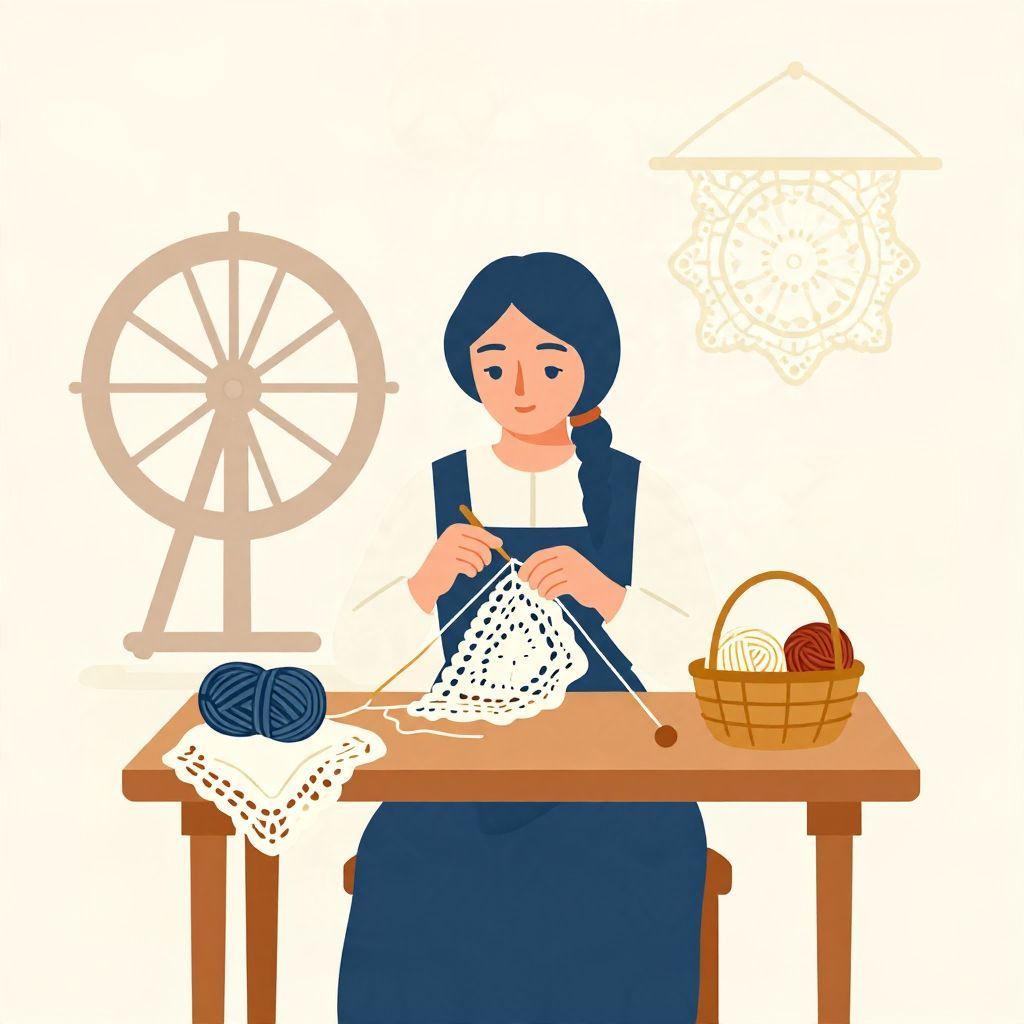
When was crochet invented? The short answer is that crochet, as we know it today, emerged in Europe in the early 19th century, with the earliest clear published instructions appearing in the 1820s and 1830s. Its deeper roots are harder to pin down, and older needlework traditions may have influenced it.
So while people often ask for a single “invention date,” crochet is better understood as a craft that developed gradually before becoming recognizable in print and popular use during the 1800s.
When was crochet invented?
Crochet was not invented in one exact year. The best historical evidence places its rise in early 19th-century Europe, especially in the 1820s and 1830s, when written patterns and instructional books began describing the technique. Earlier textile practices likely shaped it, but the modern craft became visible only when it entered print and fashion culture.
The historical answer: a 19th-century craft with older roots
Most textile historians agree that crochet, in its modern form, is a relatively recent craft compared with spinning, weaving, embroidery, and knitting. The first solid documentary trail comes from the early 1800s. Before that, there are suggestions of related looped or hooked needle techniques in Europe, Asia, and the Middle East, but the evidence is too thin to call them crochet in the modern sense.
Why historians do not give a single ancient origin date
One reason the origin is debated is that many handcrafts leave little archaeological evidence. Yarn, thread, and hooks survive poorly over time, and visual depictions can be ambiguous. A fabric made with loops might resemble crochet, knitting, nalbinding, or another method. Because of that, historians are cautious about claims that crochet is “ancient” in a direct, provable way.
The earliest documented crochet appears in the 1800s
The first clear references to crochet come from early 19th-century Europe, especially France and Britain. By the 1820s, patterns and descriptions were circulating in print, and by the 1830s crochet was becoming a recognized domestic craft. This is the period when the technique moved from scattered practice into a named, teachable art.
From “shepherd’s knitting” to crochet
In some early English sources, crochet was associated with terms like “shepherd’s knitting,” which suggests that people were trying to explain a familiar-looking but distinct method. The modern French word crochet means “hook,” which reflects the tool at the center of the craft. That name helped standardize the practice as it spread through Europe.
Printed patterns made the craft visible
What turned crochet into a recognizable historical phenomenon was not just the making itself, but the publication of instructions. Once magazines, manuals, and pattern books described stitches and projects, crochet could be taught more consistently. In other words, the craft’s “invention” is tied to literacy, publishing, and domestic fashion as much as to the hook and thread.
What came before crochet?
Although modern crochet appears in the 19th century, it likely did not arise from nowhere. Many scholars think it developed from earlier forms of looped needlework that used a hook, a needle, or the fingers to create open, flexible fabric. These older traditions may have influenced crochet, even if they were not identical to it.
Possible ancestors of crochet
- Nalbinding: an older looped textile technique using a single needle, found in various parts of the world.
- Tambour work: embroidery done with a hook through fabric, which may have helped shape hook-based methods.
- Looped lace traditions: decorative textile practices that used repeated loops and openwork patterns.
- Regional hook-and-loop techniques: local crafts that may have resembled crochet without being the same thing.
These traditions matter because they show that crochet was part of a broader textile world. It was not a sudden miracle invention, but a craft that likely drew from existing skills and tools before being refined into a distinct method.
Why crochet became popular in the 19th century
Crochet spread quickly in the 1800s because it fit the social and economic conditions of the time. It was relatively inexpensive, portable, and useful for making fashionable items. As industrialization changed clothing and household goods, handmade crochet offered both practicality and decorative appeal.
Fashion, class, and domestic labor
In Europe, especially among middle-class women, crochet became part of domestic accomplishment. It was a respectable leisure skill, but also a way to produce clothing trims, shawls, caps, and household decorations. At the same time, working-class makers could use crochet for income, selling lace and small goods in local markets.
The lace connection
One important reason crochet gained attention was its resemblance to lace. Handmade lace was expensive and highly valued, while crochet offered a faster and more accessible way to create openwork designs that looked elegant. This made the craft attractive in a period when fashion strongly shaped domestic needlework.
How crochet spread from Europe to the wider world
Once crochet entered print culture, it traveled through trade, empire, migration, and fashion networks. Pattern books circulated widely, and European styles influenced makers in many places. Over time, crochet became global, adapting to local materials, tastes, and traditions.
19th-century expansion
By the mid-19th century, crochet had become established in Britain and France and was spreading elsewhere in Europe and beyond. It appeared in women’s magazines and household manuals, often alongside knitting and sewing. The craft’s portability made it easy to teach and transmit across households and communities.
Global adaptation
As crochet spread, it was not simply copied unchanged. Makers adapted stitches, fibers, and motifs to local needs. In some places, crochet became associated with lace-making; in others, it served practical uses such as garments, bags, nets, and decorative household items. That flexibility helped the craft survive long after its first wave of popularity.
What is the best date to give for the invention of crochet?
If you need a single date, the fairest historical answer is the early 1800s, especially the 1820s. That is when crochet first becomes clearly identifiable in surviving sources. If you want the broader story, however, the craft developed from earlier looped textile traditions and only became fully recognizable through 19th-century publication and fashion.
A simple timeline
- Before the 1800s: related looped and hooked textile techniques exist, but evidence is indirect and debated.
- 1820s: the earliest clear references to crochet appear in European print culture.
- 1830s: crochet becomes more widely recognized as a distinct craft.
- Mid-1800s: the craft spreads through pattern books, magazines, and domestic fashion.
- Later 19th century and beyond: crochet becomes a global handcraft with many regional styles.
Why the origin story matters
The history of crochet shows how everyday crafts can emerge from a mix of tradition, technology, and culture. A tool as simple as a hook became the basis for a new domestic art because people found it useful, beautiful, and teachable. Its rise also reflects the 19th century’s growing print culture and changing ideas about women’s work, leisure, and fashion.
So, when was crochet invented?
Crochet was invented, or more accurately recognized as a distinct craft, in the early 19th century—most clearly in the 1820s and 1830s. Earlier textile traditions may have influenced it, but the historical record supports a European origin in the modern sense. That makes crochet a relatively recent invention with older inspirations behind it.
If you enjoy the wider historical context behind everyday crafts, you may also like reading about cultural divergence and mercantilism, both of which help explain how ideas and goods spread across societies.