
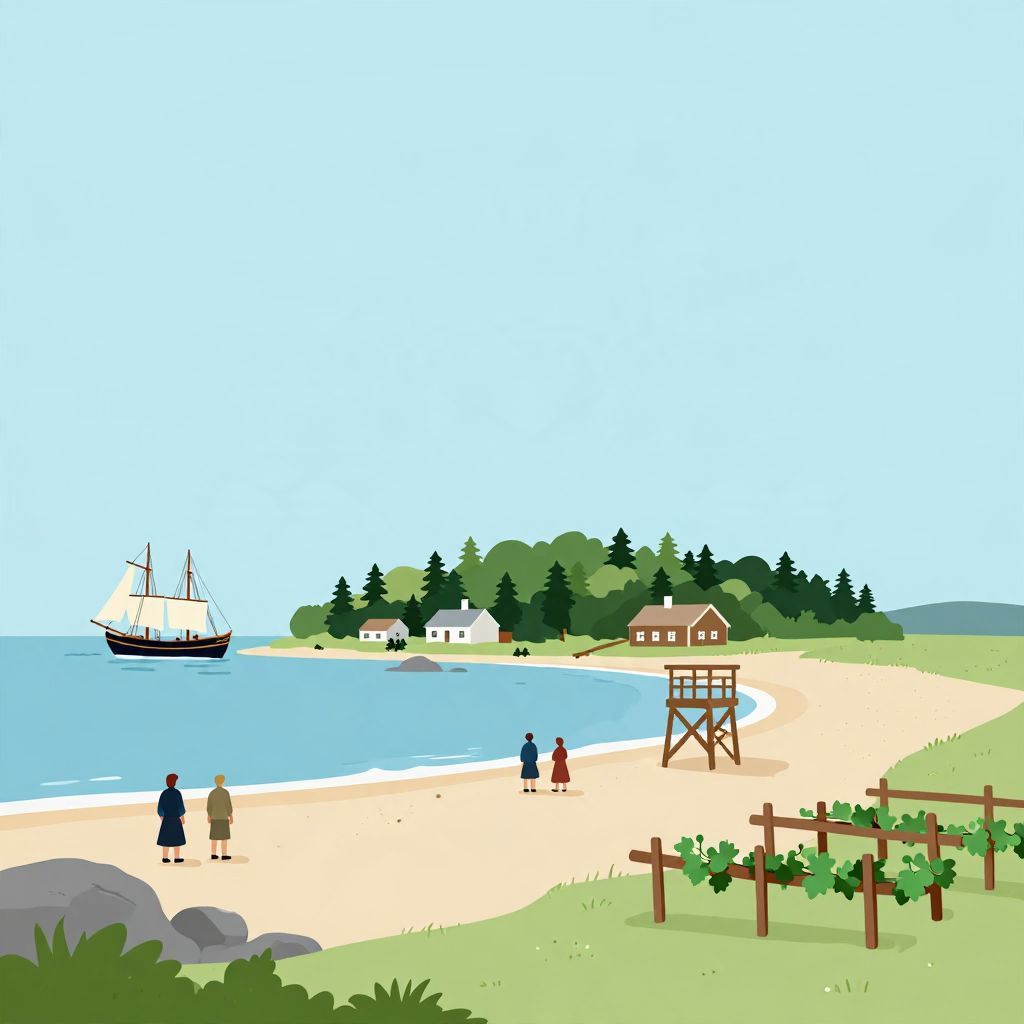
Why is it called Martha’s Vineyard? The short answer is that the name comes from English explorers in the early 1600s, who adapted an existing Native place name and combined it with a personal reference to “Martha,” likely the daughter of explorer Thomas Mayhew or another close family connection. The “Vineyard” part was not a literal description of the island’s economy at the time.
Like many colonial place names, it reflects a mix of Indigenous geography, English naming habits, and later tradition. The story is more complicated than a simple “someone named it after a vineyard,” and the historical record leaves room for some uncertainty.
Why Is It Called Martha’s Vineyard?
Martha’s Vineyard was named in the 17th century by English settlers and explorers, but the exact reason for “Martha” is not fully certain. The “Vineyard” likely came from an earlier English name for the nearby waters or island landscape, while “Martha” was probably added to honor a family member of Thomas Mayhew, the English proprietor who helped establish settlement there in the 1640s.
The Historical Origin of the Name
The island had Indigenous names long before English contact, and the English did not create the place from scratch. They encountered a landscape already inhabited by the Wampanoag people, whose communities had their own names for the island and its places. The English name emerged during the age of exploration, when sailors and colonists frequently renamed locations to fit their own language, patrons, and political claims.
Before the English: Indigenous place names
Before it was called Martha’s Vineyard, the island was part of the homeland of the Wampanoag. Indigenous names for the island varied by community and language use, and those names are historically important even if they are less familiar today. This is a common pattern in colonial history: European names often became dominant in written records, while older Indigenous names were pushed aside or preserved only in limited ways.
How the English name developed
The “Vineyard” element appears in early English usage connected to the island and surrounding waters. One widely accepted explanation is that English sailors thought the island resembled a vineyard in its greenery, or that nearby “Vineyard” terminology already existed in English maps and seafaring language. The “Martha” addition likely came later, tied to the Mayhew family, especially Thomas Mayhew and his daughter or daughter-in-law Martha. The precise naming sequence is not documented with complete certainty, which is why historians usually present it as probable rather than absolute.
Who Was Martha?
The “Martha” in Martha’s Vineyard is generally linked to the family of Thomas Mayhew, an early English settler and proprietor on the island. Mayhew arrived in the mid-17th century and became an important figure in the island’s colonial history, especially in relations with the Wampanoag. The name may have honored his daughter Martha, though some traditions connect it to other family members or to naming conventions used by English settlers more broadly.
Thomas Mayhew and the island settlement
Thomas Mayhew was granted control over the island and played a central role in its English settlement from the 1640s onward. He and his descendants became influential local leaders. Because of that prominence, later tradition often attached the island’s name to the Mayhew family. This does not mean Mayhew personally “invented” the name in a single moment; rather, the name seems to have evolved through use, recordkeeping, and local habit.
Why historians are cautious
Early colonial naming records are often incomplete. Spelling was inconsistent, maps varied, and names changed as English usage spread. As a result, historians can usually trace the broad outlines of the name’s origin, but not always the exact first person who said it. That is why the Martha explanation is treated as the most likely one, not an unquestionable fact.
Why “Vineyard” If There Were No Famous Vineyards?
The “Vineyard” part is one of the most puzzling features of the name because the island was not originally known for wine production. In the early colonial period, “vineyard” could function as a descriptive or imaginative term rather than a literal agricultural label. English place names often reflected appearance, metaphor, or older naming habits rather than actual crops growing there.
Possible meanings of “Vineyard”
- Landscape description: The island may have seemed lush or vine-covered to English observers.
- Seafaring terminology: The name may have been influenced by earlier nautical or regional usage among English mariners.
- Mapmaking convention: Early cartographers sometimes used names loosely, and a term could become fixed through repeated use.
None of these explanations is perfectly proven on its own, but together they help explain why the island received a name that sounds agricultural even though its fame today is tied to tourism, summer communities, and maritime history.
Colonial Naming and Power
The naming of Martha’s Vineyard was not just a linguistic accident. It was part of a broader colonial process in which English settlers asserted ownership by renaming lands already inhabited by Native peoples. A name on a map was also a claim to authority. By attaching the island to English family names and English usage, colonists made the place legible within their own political world.
Renaming as a colonial practice
Across North America, English, French, Spanish, and Dutch colonizers renamed rivers, islands, and settlements. Sometimes they translated Indigenous names; sometimes they replaced them entirely; sometimes they created hybrid names. Martha’s Vineyard fits that pattern. Its current name preserves a trace of English colonization while obscuring the older Indigenous geography that preceded it.
What the name tells us about the era
The island’s name reflects the 17th-century Atlantic world: exploration, settlement, land grants, family patronage, and contested sovereignty. It also shows how colonial names often carried personal, political, and symbolic meanings. A name could honor a person, mark possession, and make a place feel familiar to English settlers all at once.
How the Name Became Fixed in Common Use
Once English settlement expanded, “Martha’s Vineyard” gradually became the standard name in colonial records and local speech. As trade, governance, and church life developed, the English designation became more durable than earlier or competing names. Over time, maps and documents reinforced the name until it became the accepted one in both local and imperial contexts.
From local usage to official identity
By the later 17th century, the island was increasingly identified in English as Martha’s Vineyard. The name then survived through the colonial period, the American Revolution, and the formation of the United States. Even when the island’s economy changed—from early settlement and farming to fishing, whaling connections, and later tourism—the name remained fixed.
Why the name lasted
Place names often endure because they are repeated in legal records, shipping routes, church documents, and family memory. Once a name becomes established, changing it is difficult unless there is a major political rupture. Martha’s Vineyard had no such rupture strong enough to replace the name, so it remained part of the island’s identity.
Myth, Tradition, and Historical Evidence
There are popular stories about the name Martha’s Vineyard, but not all of them are equally well supported. Some versions make the explanation sound neat and certain, yet the surviving evidence is fragmentary. The safest historical answer is that the name emerged from English colonial naming practices in the 1600s, with “Martha” probably linked to the Mayhew family and “Vineyard” coming from an earlier English descriptive or geographic usage.
What we can say confidently
- The island had Indigenous names before English contact.
- The English name developed in the 17th century.
- Thomas Mayhew and his family were central to early English settlement.
- The exact origin of “Vineyard” is less certain than the broad colonial context.
What remains uncertain
Historians cannot point to a single universally accepted document that settles every detail of the naming. That uncertainty is normal for early colonial history. The best interpretation is based on the convergence of maps, settlement history, and later local tradition rather than on one definitive founding moment.
Why the Name Still Matters Today
Martha’s Vineyard is more than a picturesque island name. It is a reminder that place names carry layers of history: Indigenous presence, colonial settlement, family influence, and later cultural memory. The name preserves an early English story while also revealing how much of the island’s deeper Native history was overwritten in the colonial record.
So, why is it called Martha’s Vineyard? Because English colonists in the 1600s gave the island a new name that combined a likely family reference to Martha with an older English “Vineyard” label, replacing earlier Indigenous names in the process. The result is a name that sounds simple today but reflects a complicated history of exploration, settlement, and colonial power.