
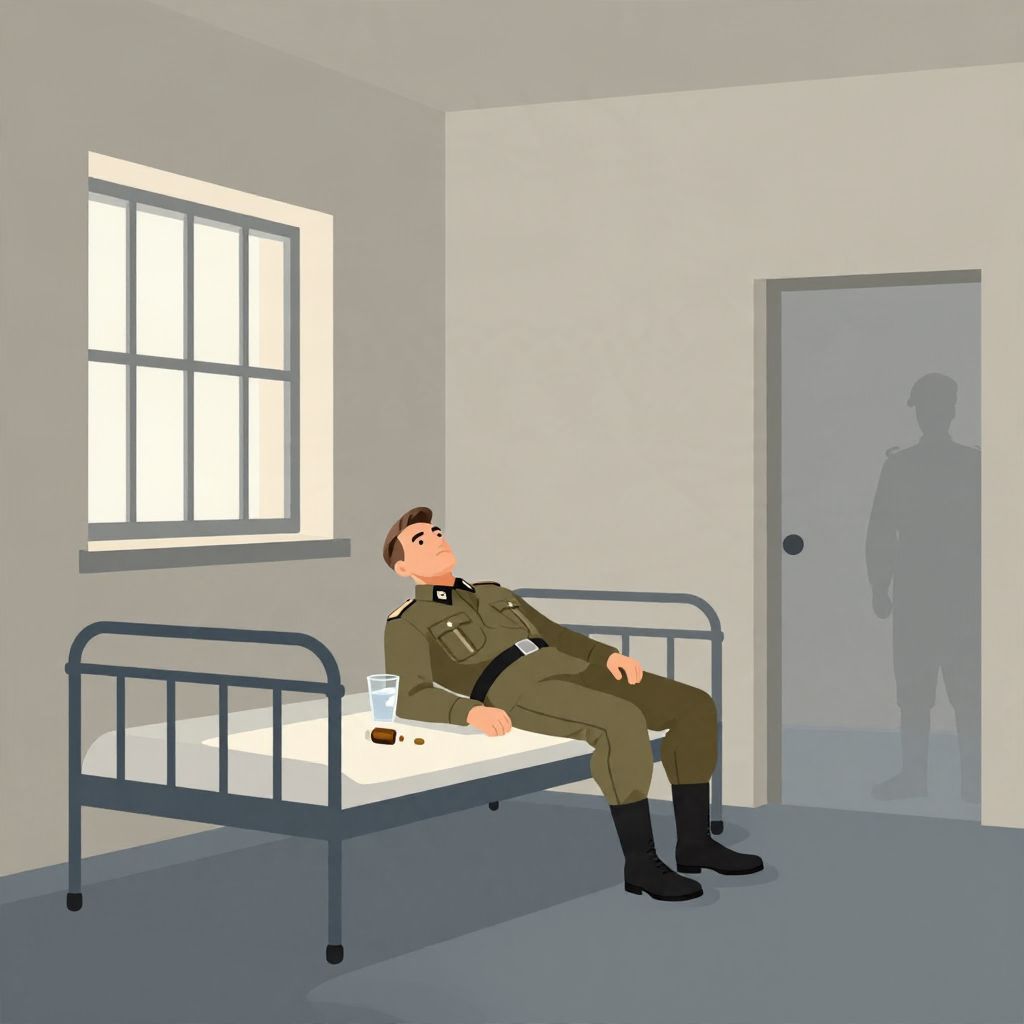
How did Goering die? Hermann Göring, one of Nazi Germany’s most powerful leaders, died by suicide on 15 October 1946, just hours before he was scheduled to be executed after the Nuremberg Trials. He swallowed a cyanide capsule in his prison cell at Nuremberg, ending his life while still under Allied custody.
His death mattered because it denied the Allies the public hanging they had planned and added one last layer of controversy to an already historic trial. It also raised enduring questions about Nazi accountability, prison security, and the final moments of a man who had helped shape the Third Reich.
How Did Goering Die?
Hermann Göring died by cyanide poisoning on the night of 15 October 1946 in his cell at Nuremberg. He had been sentenced to death by hanging after being convicted at the International Military Tribunal, but he took poison before the sentence could be carried out. The exact way he obtained the capsule has been debated, but the basic fact of his suicide is well established.
The immediate cause of death
Göring ingested a cyanide capsule, a fast-acting poison that causes rapid respiratory failure and death. He was found dead in his cell shortly after midnight. The speed of the poison left little chance of rescue. His death occurred only a few hours before the scheduled executions of the condemned Nazi leaders.
Why suicide was possible
One of the enduring mysteries is how Göring managed to keep the poison hidden despite being imprisoned under close Allied supervision. Investigators and historians have offered several possibilities, including smuggling by an accomplice, concealment in personal effects, or a breach in prison security. No single explanation has been proven beyond doubt, but the capsule itself was real, and the suicide is not in dispute.
Who Was Hermann Göring?
Hermann Göring was a leading Nazi official, a World War I fighter pilot, and one of Adolf Hitler’s earliest and most prominent supporters. He held major positions in the Nazi state, including commander of the Luftwaffe, president of the Reichstag, and a central role in the regime’s economic and police apparatus. He was also deeply involved in the persecution of Jews and the expansion of Nazi power.
From war hero to Nazi leader
Göring’s public image in the 1920s and 1930s was shaped by his military reputation and theatrical political style. After Hitler came to power in 1933, Göring became one of the regime’s most influential figures. He helped consolidate Nazi control in Germany, supported rearmament, and played a major part in the regime’s repression of opponents.
His role in Nazi crimes
Göring was not a peripheral figure. He was central to the machinery of dictatorship. He helped build the Gestapo’s early power base, supported anti-Jewish policies, and later signed the authorization that led to the so-called “Final Solution” planning process. At Nuremberg, the prosecution treated him as one of the principal architects of Nazi aggression and persecution.
What Happened Before His Death?
Göring’s death came at the end of a dramatic legal and political process. After Germany’s defeat in 1945, the Allies put leading Nazi officials on trial at Nuremberg, a city chosen for its symbolic association with Nazi rallies and propaganda. The tribunal sought to establish individual responsibility for war crimes, crimes against humanity, and crimes against peace.
The Nuremberg Trial
Göring was the highest-ranking Nazi defendant at the trial and, for much of the proceedings, the most prominent. He tried to defend his actions, justify Nazi policies, and present himself as a statesman rather than a criminal. He was ultimately convicted on multiple counts and sentenced to death by hanging on 1 October 1946.
The final days in prison
After sentencing, the condemned men remained under guard while appeals and administrative details were handled. Göring knew his execution was coming. In those final days, he apparently decided not to face the gallows. His suicide prevented the Allies from carrying out the sentence and immediately became one of the most discussed episodes in the aftermath of the trial.
Why Did Göring Kill Himself?
Historians generally see Göring’s suicide as the result of a mix of personal pride, fear of humiliation, and a desire to control his own ending. He had spent much of his life projecting power. Facing execution as a convicted war criminal may have seemed to him like an intolerable loss of status. Suicide allowed him one final act of agency.
Control, image, and defiance
Göring had long cultivated a larger-than-life persona. He was known for vanity, ambition, and political opportunism. In that context, death by hanging would have been a public disgrace. By taking poison, he denied the Allies the symbolic power of the execution and preserved, in his own mind, some measure of control.
Not a martyrdom, but a final evasion
Some Nazi sympathizers later tried to cast Göring’s death in heroic or defiant terms. That interpretation does not fit the historical record well. His suicide was not a noble sacrifice; it was the final act of a condemned man avoiding the punishment imposed for his crimes. It also cut short the possibility of further questioning or public reckoning.
How Did the Allies React?
Göring’s suicide embarrassed the prison authorities and frustrated the Allied powers, who had wanted the executions to proceed in an orderly and public way. The Nuremberg process was designed not only to punish but also to demonstrate the rule of law after the war. His death complicated that message, though it did not erase the trial’s significance.
Security concerns
His ability to obtain poison raised immediate questions about prison security. The Allies investigated the circumstances, but the full answer remained elusive. The incident showed that even in tightly controlled conditions, a determined prisoner could sometimes evade supervision. It also highlighted the difficulty of managing high-profile war criminals in a politically charged environment.
Impact on the executions
Göring’s suicide meant that only ten of the twelve condemned men were executed by hanging. The executions took place on 16 October 1946, the day after his death. In historical memory, Göring’s last-minute escape from the gallows has often overshadowed the other executions, but the broader importance of Nuremberg lies in the legal precedent it set.
Why Does Goering’s Death Matter Historically?
Göring’s death matters because it sits at the intersection of justice, memory, and the collapse of Nazi power. It marked the end of one of the regime’s most notorious figures, but it also symbolized the limits of punishment. Even after conviction, the Nazi elite could still resist, deceive, and manipulate the final stages of accountability.
A symbol of Nazi downfall
Göring had been one of Hitler’s most visible lieutenants. His suicide, coming so soon after conviction, became a grim symbol of the regime’s collapse. The man who once helped project Nazi strength died alone in a prison cell, stripped of office, influence, and the authority he had once wielded.
The legacy of Nuremberg
The Nuremberg Trials were a turning point in international law. They established that state leaders could be held personally responsible for war crimes and crimes against humanity. Göring’s death did not undermine that achievement, but it did underscore the tensions between legal justice and the desire for visible punishment. His case remains one of the most studied examples of postwar accountability.
Common Questions About Göring’s Death
Was Göring executed?
No. He was sentenced to death, but he died by suicide before the execution could take place.
Did he die instantly?
Cyanide acts very quickly. He died within a short time after ingesting the poison, likely within minutes.
Was the poison ever explained?
Not conclusively. Historians agree that he had cyanide, but the exact route by which he acquired it remains uncertain.
Why is his death still discussed?
Because it combines mystery, symbolism, and legal history. Göring’s suicide is part of the larger story of how the world responded to Nazi crimes after World War II.
Conclusion
Hermann Göring died by cyanide suicide in his Nuremberg prison cell on 15 October 1946, just before his scheduled execution. His death was both an act of personal defiance and a final reminder of the challenges of bringing powerful war criminals to justice. For readers interested in the fate of notorious figures, you may also want to explore how Marcus Garvey died and how John Wayne Gacy died.