
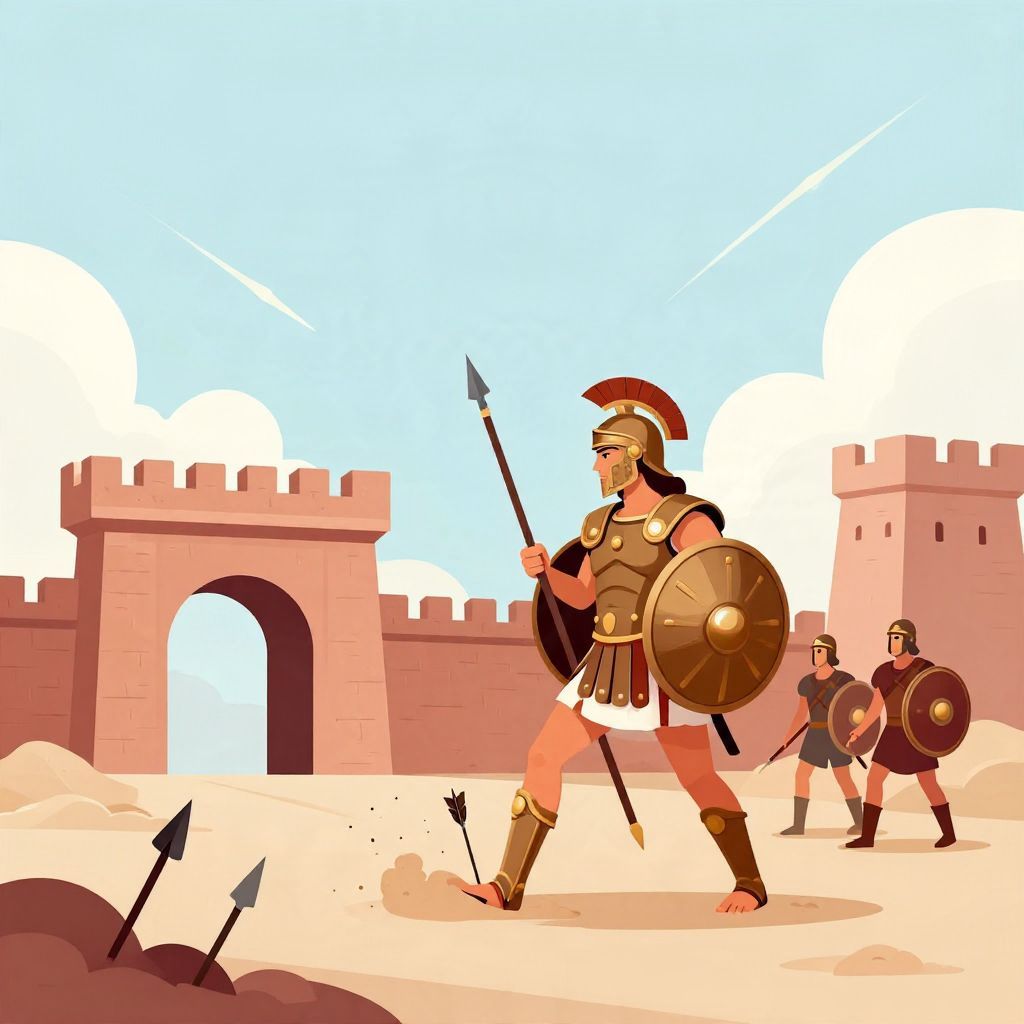
How does Achilles die? In the best-known ancient tradition, the great Greek hero of the Iliad is killed by an arrow during the Trojan War, but the details come from later myth rather than Homer’s epic itself. The most familiar version says Paris shoots him, often with Apollo’s help, and the arrow strikes his vulnerable heel.
Because Achilles is a figure of legend, not verifiable history, the answer depends on which ancient source you follow. The story changed over time, and the famous “Achilles heel” became a lasting symbol of a hidden weakness.
How does Achilles die?
Achilles dies in Greek myth when an arrow hits him in the heel or ankle, usually while he is fighting near Troy. In many later versions, Paris fires the arrow and the god Apollo guides it. Homer does not narrate Achilles’ death in the Iliad, so the exact scene belongs to later epic tradition.
What the ancient sources actually say
The Iliad, the earliest major source for Achilles, ends before his death. Homer focuses on Achilles’ rage, grief, and return to battle, but not on the final blow. That means the most famous death scene comes from later Greek and Roman storytelling, not from the poem that made Achilles central to Western literature.
The Homeric gap
In Homer’s version, Achilles knows he is fated to die young if he keeps fighting at Troy. He chooses glory over a long life, and that choice shapes the whole epic. But Homer leaves the actual death outside the poem, which allowed later poets to fill in the missing ending in different ways.
Later Greek tradition
By the time of later epic cycles and myth summaries, Achilles’ death had become more specific. The common account says Paris shot him with an arrow, and Apollo either directed the shot or made it fatal. Some versions place the wound in the heel; others say the arrow struck his ankle or lower leg. The “heel” detail became dominant only later.
The most famous version of Achilles’ death
The best-known story is that Achilles was killed by Paris, with divine help from Apollo, and that the arrow found the one spot on his body that was not protected. This is the version most people know today, but it is a mythic explanation developed after Homer, not a historical report.
Why Paris is the killer
Paris is often cast as the opposite of Achilles: less heroic in battle, but favored by the gods and tied to the war’s origin through Helen’s abduction. In the mythic logic of the Trojan War, Paris killing Achilles gives the weaker warrior a famous victory, though not one achieved by skill alone.
Why Apollo matters
Apollo’s role reflects a common Greek belief that gods could shape battlefield outcomes. In some stories, Apollo helps Paris by guiding the arrow or exposing Achilles to danger. This makes Achilles’ death not just a military event but a moment of divine justice, fate, and vulnerability.
The “Achilles heel” and the problem of the vulnerable spot
The idea that Achilles had only one vulnerable heel is one of the most famous myths in Western culture, but it is not present in the earliest sources. It appears in later retellings and became standard over time. The phrase “Achilles heel” now means a hidden weakness, whether in a person, system, or plan.
The myth of invulnerability
One later story says Achilles’ mother, Thetis, tried to make him immortal by dipping him in the River Styx or by holding him over sacred fire, leaving only a small part of him unprotected. The exact method varies by source. These stories explain why a hero so powerful could still die from a single arrow.
What is and is not certain
It is certain that the “heel” story is a later mythic development. It is not certain that any one ancient author first invented it, because the tradition evolved across centuries. What matters historically is that the story grew to explain Achilles’ otherwise surprising death and to give language to human vulnerability.
Why Achilles’ death mattered in Greek myth
Achilles was not just another warrior. He was the greatest Greek fighter at Troy, and his death marked a turning point in the war’s legend. Once Achilles fell, the Greeks lost their most formidable champion, and the narrative moved toward the final destruction of Troy and the eventual Greek victory.
A hero defined by fate
Achilles’ story is built around a tragic choice. He can live a long, ordinary life or die young and win everlasting fame. His death fulfills the logic of heroic myth: greatness brings honor, but also an early grave. In this sense, Achilles’ end is as important as his battlefield victories.
From warrior to symbol
Over time, Achilles became more than a character in a war story. He came to represent speed, strength, pride, anger, and the fragility beneath excellence. His death helped turn him into a symbol of the tragic hero, someone whose greatest gift is bound to his downfall.
How later writers reshaped the story
Greek and Roman authors after Homer often expanded Achilles’ death to make it more dramatic and morally meaningful. They added details about prophecy, divine intervention, and the hero’s hidden weakness. These changes show how myth evolves: each generation retells the story in a way that fits its own values and literary tastes.
Epic tradition after Homer
Lost or fragmentary epics from the ancient cycle likely included fuller versions of Achilles’ death. Later summaries and allusions suggest that Paris, with Apollo’s aid, became the standard killer. Roman poets and mythographers then helped spread and stabilize the version in which the heel became the fatal point.
Art and popular imagination
Vase paintings, later literature, and modern retellings reinforced the image of Achilles dying from a single arrow. Visual art especially favored dramatic moments, making the death scene easier to remember than the more complex literary tradition behind it. That is one reason the “heel” version became so widely known.
Historical fact versus mythological tradition
Achilles himself is a mythic figure, not a person whose death can be verified through historical records. The Trojan War may preserve distant memories of conflicts in the Late Bronze Age, roughly the 12th or 13th century BCE, but Achilles belongs to the world of heroic legend. His death should be understood as mythology, not biography.
What historians can say
Historians can trace how the story developed in ancient literature and how later cultures interpreted it. They cannot confirm an actual warrior named Achilles dying in the way the myths describe. The value of the story lies in what it reveals about Greek ideas of fate, heroism, divine power, and mortality.
Why the distinction matters
Separating myth from history does not make the story less important. It makes it clearer. Achilles’ death is one of the best examples of how ancient societies used legend to explore human limits. The tale explains not only how a hero dies, but why even the greatest warrior cannot escape fate.
The lasting legacy of Achilles’ death
Few mythic deaths have had a longer afterlife than Achilles’. The phrase “Achilles heel” remains common in everyday language, and the story still appears in books, films, and classrooms. Its endurance comes from a simple but powerful idea: extraordinary strength can still contain a fatal weakness.
Why the story still resonates
Achilles’ death endures because it combines triumph and vulnerability. He is nearly unstoppable, yet one small flaw brings him down. That tension has made the story useful far beyond ancient Greece, from literature to psychology to modern political language.
So, how does Achilles die? In the dominant later myth, Paris kills him with an arrow, often with Apollo’s help, and the wound is said to strike his heel or lower leg. The exact scene varies by source, but the deeper historical point is clear: Achilles’ death is a legendary tradition that grew after Homer, and it remains one of antiquity’s most enduring symbols of hidden weakness. For more on how famous historical figures met their ends, see how Rodney King died and how Marcus Garvey died.