
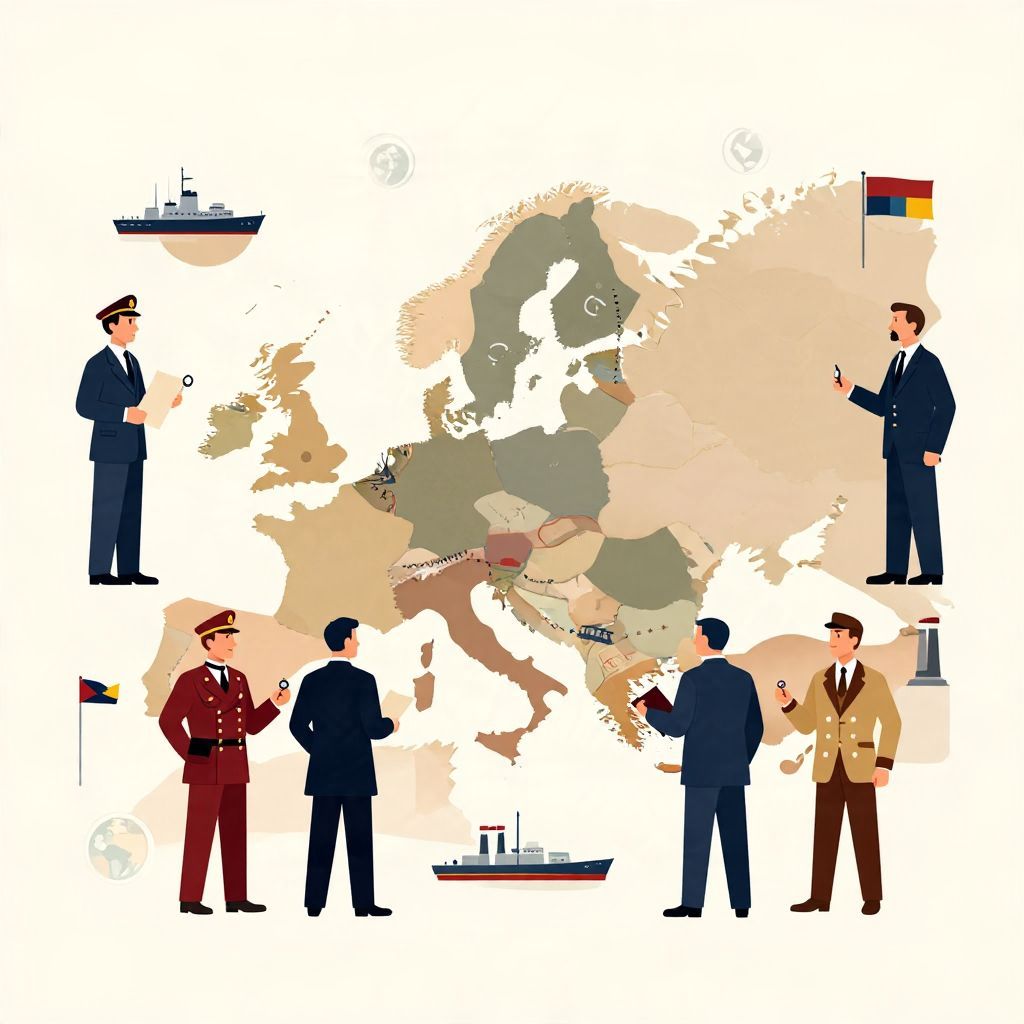
How did imperialism lead to World War I? In the decades before 1914, the major European powers competed for colonies, markets, prestige, and strategic advantage across Africa, Asia, and the Pacific. That rivalry did not by itself cause the war, but it sharpened distrust, encouraged military buildup, and made diplomacy more dangerous.
When the July Crisis of 1914 began, imperial competition helped turn a regional dispute into a wider European conflict. It mattered because empires were not just overseas possessions; they were symbols of national power, sources of tension, and reasons states feared falling behind their rivals.
How did imperialism lead to WW1?
Imperialism helped lead to World War I by intensifying rivalry among the great powers, especially Britain, France, Germany, Russia, and Austria-Hungary. Colonial disputes, naval competition, and the desire for prestige made international relations more hostile. By 1914, leaders already expected conflict, so a Balkan crisis could spread rapidly.
What imperialism meant in the late 19th and early 20th centuries
In this period, imperialism meant the extension of a state’s power over foreign territories through conquest, pressure, or political control. European empires expanded in Africa and Asia, while the United States and Japan also pursued overseas influence. Empire was tied to national pride, military strength, and economic ambition.
The “Scramble for Africa,” roughly from the 1880s to the early 1900s, is one of the clearest examples. European states carved up African territory with little regard for local societies. Similar competition took place in China, the Middle East, and the Pacific, where powers sought trade routes, ports, and influence.
Why imperialism made rivalries worse
Imperialism turned international politics into a status contest. If one power gained territory, another often feared exclusion. That fear encouraged suspicion, propaganda, and diplomatic pressure. A dispute over a distant colony could damage relations in Europe, where alliances were already hardening into opposing blocs.
It also encouraged the belief that war was a normal tool of statecraft. Leaders who thought in imperial terms often assumed that strong nations expanded and weak ones yielded. This mindset made compromise seem like weakness and made crises more likely to escalate.
Colonial competition and the road to war
Several imperial crises before 1914 showed how dangerous overseas rivalry had become. These incidents did not directly start World War I, but they deepened mistrust and helped shape the alliance system that later widened the war.
The Fashoda Crisis and Anglo-French tension
In 1898, Britain and France nearly went to war over Fashoda in Sudan. Both powers wanted influence in northeast Africa, and each saw the other as blocking imperial ambitions. France eventually backed down, but the crisis revealed how colonial competition could bring major powers to the brink of war.
Ironically, the crisis also helped push Britain and France toward reconciliation. Their later Entente Cordiale in 1904 was not a military alliance, but it reduced colonial friction and reflected a new fear of Germany. In that sense, imperial rivalry reshaped European diplomacy in ways that later mattered in 1914.
The Moroccan Crises and German challenge
Germany’s attempts to challenge French influence in Morocco in 1905 and again in 1911 created another major strain. German leaders hoped to test the strength of the new Anglo-French understanding and gain leverage in colonial negotiations. Instead, the crises pushed Britain and France closer together and made Germany feel encircled.
These confrontations mattered because they showed how imperial disputes could spill into European alliance politics. A colonial issue in North Africa became a test of power, credibility, and military readiness. By the early 1910s, diplomacy was increasingly shaped by fear that any retreat would signal weakness.
Imperial competition in Asia and the Pacific
Imperialism also fueled tension outside Africa. Russia’s expansion in Asia, Japan’s rise after the Russo-Japanese War of 1904–1905, and British concerns about routes to India all affected the balance of power. The great powers watched one another’s moves closely, especially where trade routes and strategic ports were involved.
These global rivalries did not create a single chain of causation, but they reinforced the idea that the world was divided into competing spheres of influence. That made the international system more brittle. When a crisis hit Europe, states were more likely to assume hostile intent rather than seek calm compromise.
How imperialism fueled militarism and alliances
Imperialism and militarism were closely linked. To protect colonies and project power, states built larger navies, stronger armies, and more elaborate war plans. Military expansion then increased fear among rivals, who responded in kind. This cycle made Europe far more dangerous by 1914.
The naval arms race
The most famous example was the Anglo-German naval race. Germany, under Kaiser Wilhelm II, expanded its navy in hopes of becoming a world power with a global empire. Britain, whose security depended on maritime dominance and imperial communications, viewed this buildup as a direct threat.
Britain responded with its own naval expansion, including the launching of HMS Dreadnought in 1906, which intensified the race for modern battleships. Although the naval race was not solely about colonies, imperial power was central to it. A world empire required sea control, and sea control required fleets.
Empire, army planning, and the assumption of war
Imperial commitments also influenced military planning. Britain needed troops and shipping to defend imperial routes. France had colonial obligations in North Africa and elsewhere. Russia and Austria-Hungary were drawn into Balkan disputes linked to imperial decline and expansion. Germany feared strategic isolation and sought a place in the sun.
As armies grew, mobilization plans became rigid. Leaders believed that once a crisis began, delay could be fatal. This made diplomacy harder, because military timetables often overrode political caution. Imperial rivalry helped create this atmosphere of urgency and mistrust.
Germany’s place in the imperial struggle
Germany is central to understanding how imperialism led to World War I. Unified only in 1871, Germany entered the imperial race later than Britain and France and felt that it deserved a larger share of global power. German leaders pursued colonies and a stronger navy partly to gain prestige and security.
Many historians emphasize that Germany’s pursuit of Weltpolitik, or “world policy,” aggravated tensions. This was not the only cause of the war, and Germany was not alone in pursuing empire, but its assertive diplomacy often alarmed rivals. The result was a cycle of competition rather than cooperation.
Why “a place in the sun” mattered
German leaders and public figures often spoke of needing a “place in the sun,” meaning recognition as a world power. That ambition was partly economic and partly ideological. It reflected the belief that a modern nation should possess colonies, a fleet, and influence beyond Europe.
Yet Germany’s imperial ambitions collided with the existing empires of Britain and France. Instead of gaining acceptance, Germany’s challenge often increased suspicion. In the years before 1914, this helped push Britain closer to France and Russia, strengthening the alliance system that would divide Europe in war.
How imperialism connected to the July Crisis of 1914
The immediate cause of World War I was the assassination of Archduke Franz Ferdinand in Sarajevo on 28 June 1914, followed by Austria-Hungary’s confrontation with Serbia. That crisis began in the Balkans, not in Africa or Asia. But imperialism shaped the environment in which the crisis escalated.
The Balkans were themselves a zone of imperial decline and competition. The Ottoman Empire was weakening, Austria-Hungary feared Slavic nationalism, and Russia claimed a role as protector of Slavic peoples. These tensions were not identical to colonial imperialism, but they reflected the same logic of power, influence, and expansion.
Why the crisis spread
When Austria-Hungary acted against Serbia, Russia mobilized in support of Serbia. Germany backed Austria-Hungary. France stood with Russia. Britain entered after Germany invaded Belgium and threatened the European balance. Imperial mistrust made each power assume that backing down would invite future losses.
In other words, imperialism did not cause the assassination, but it helped create a world in which leaders saw conflict through the lens of prestige, security, and global competition. That made compromise harder and war more likely once the crisis began.
What historians mean when they say imperialism was a cause
Most historians treat imperialism as one of several long-term causes of World War I, alongside militarism, alliance systems, nationalism, and the Balkan crisis. It was not a single trigger. Instead, it was part of the broader structure that made Europe unstable in the early 20th century.
Some scholars emphasize economic motives, arguing that empires were sought for markets and raw materials. Others stress prestige, strategic fear, or domestic politics. In practice, these motives overlapped. States wanted colonies for many reasons, and imperial competition often mattered as much for status as for profit.
What imperialism did and did not do
- It did: intensify rivalry among the great powers.
- It did: encourage military buildup, especially naval expansion.
- It did: harden alliance politics and distrust.
- It did not: directly cause the assassination at Sarajevo.
- It did not: make war inevitable on its own.
The best historical explanation is that imperialism made the international system more competitive and less forgiving. When the crisis of 1914 arrived, there was little trust left to contain it.
Why imperialism still matters in understanding World War I
Understanding imperialism helps explain why World War I became a global war rather than a purely European one. The empires of Britain, France, Germany, Russia, and later others pulled soldiers, resources, and battlefields from around the world into the conflict. Colonial subjects were drawn into a war they had not caused.
It also helps explain the war’s aftermath. The collapse of empires after 1918 redrew borders, fueled anti-colonial movements, and changed how people thought about power. The war exposed the instability of imperial systems and accelerated demands for self-determination, even if those demands were only partially fulfilled.
So, how did imperialism lead to WW1? It did so by turning global expansion into a rivalry of prestige, power, and fear. Colonial competition sharpened distrust, fueled arms races, and helped create the tense diplomatic climate in which a Balkan crisis could explode into world war. For related reading, see what American imperialism was and why Germany was blamed for WW1.