
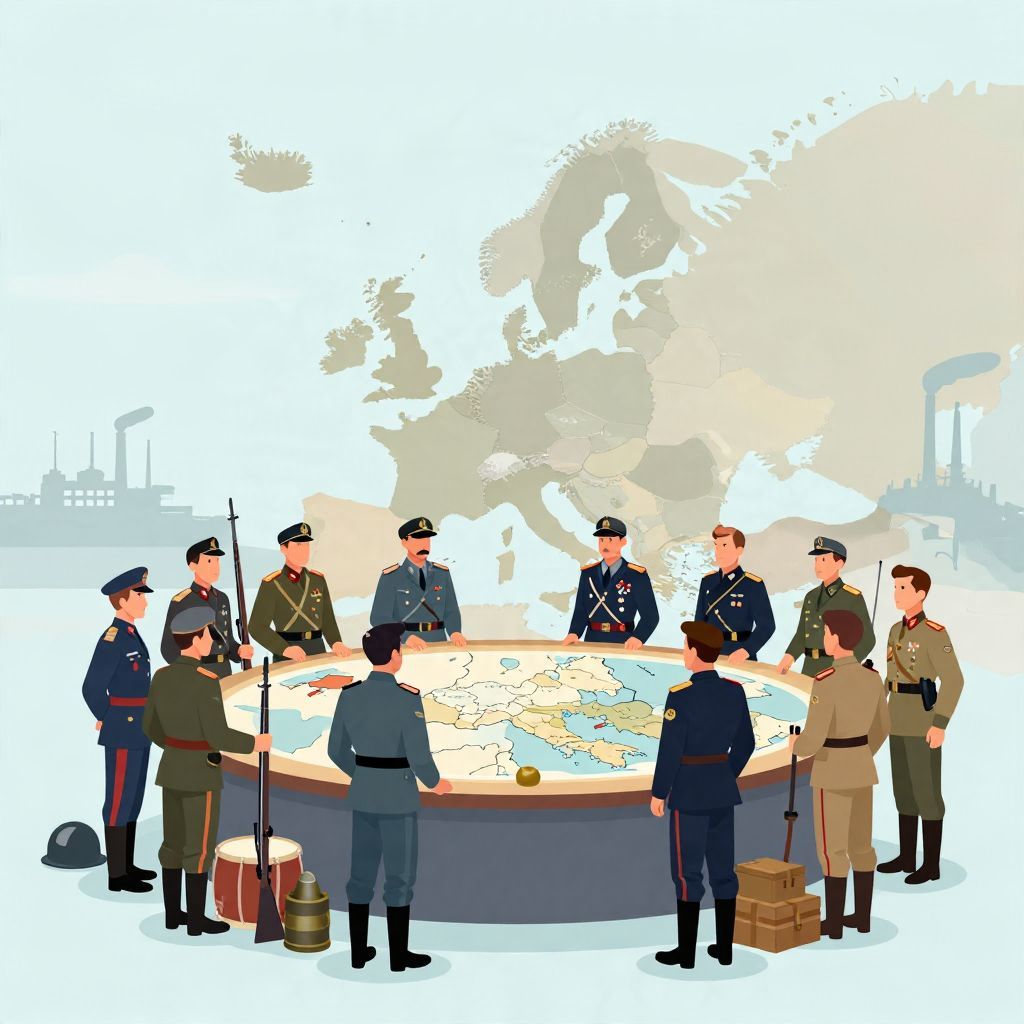
Militarism was one of the main forces that turned a dangerous European crisis into World War I. It did not cause the war by itself, but it made leaders more willing to use force, more dependent on military plans, and less able to step back once tensions rose in 1914.
In the years before the war, the great powers built huge armies, expanded navies, and treated military strength as a measure of national power. When the July Crisis began after the assassination of Archduke Franz Ferdinand, those habits helped push diplomacy aside and made escalation far more likely.
How did militarism lead to WW1?
Militarism led to World War I by encouraging arms races, glorifying war, and giving military leaders great influence over policy. By 1914, European states had built war plans and mobilization systems so rigid that once one country started preparing for war, others felt forced to react quickly, turning a regional crisis into a general war.
What militarism meant in early 20th-century Europe
Militarism was more than having a strong army. It was a political culture that valued military power, expected war to be useful or even necessary, and gave generals and admirals major influence in government. In the decades before 1914, many European leaders believed national greatness depended on military readiness.
A culture of force
In schools, newspapers, public ceremonies, and politics, military virtues such as discipline, obedience, and sacrifice were often praised. This did not mean every citizen wanted war, but it did mean that war was easier to imagine as a legitimate tool of statecraft. Peaceful compromise could look weak or risky.
Why this mattered in 1914
When the crisis came, leaders were already thinking in military terms. They worried about losing an advantage if they delayed. They feared that hesitation would leave their country vulnerable. That mindset narrowed the space for diplomacy and made escalation seem like the safer choice.
The arms race before 1914
One of the clearest signs of militarism was the arms race among the European powers. Governments spent heavily on armies, artillery, railways for troop movement, and especially navies. These preparations did not automatically cause war, but they increased suspicion and made each state assume the others were preparing for conflict.
Naval competition between Britain and Germany
The rivalry between Britain and Germany was especially important at sea. Britain had long relied on naval supremacy to protect its empire and trade. Germany, under Kaiser Wilhelm II, expanded its navy in the early 1900s, challenging British dominance. This alarmed British leaders and deepened mistrust between the two countries.
Army expansion on the continent
France, Germany, Russia, Austria-Hungary, and others also enlarged their armies and improved mobilization systems. Military planners expected a future war to be large and fast. As a result, they designed plans that depended on rapid movement and immediate action, leaving little room for hesitation once a crisis began.
How military planning made war more likely
Militarism mattered not only because armies were larger, but because military plans became so rigid. By 1914, many governments believed that if they mobilized too slowly, they would lose the war before it began. This created a dangerous pressure to act first and act quickly.
Mobilization as a trigger
Mobilization meant calling up reservists, moving troops, and preparing for battle. It was not the same as declaring war, but in practice it often looked like one. Because rail schedules and deployment plans were so tightly organized, partial mobilization could be difficult or impossible. Once one power mobilized, others feared being left exposed.
War plans that reduced flexibility
Military staffs often assumed that war with one enemy could quickly become war with several. Germany’s Schlieffen Plan, for example, was designed for a fast campaign in the west if war with France and Russia seemed likely. Russia’s mobilization plans also created pressure for quick action. These plans made leaders think in terms of timetables rather than negotiations.
Militarism and the July Crisis of 1914
The immediate cause of World War I was the assassination of Archduke Franz Ferdinand in Sarajevo on 28 June 1914. Militarism did not cause the assassination, but it shaped how governments responded. Instead of treating the crisis as a problem to be contained, many leaders saw it through the lens of military strength, deterrence, and national honor.
Austria-Hungary chooses force
Austria-Hungary blamed Serbia for the assassination and wanted to punish it. Military leaders and hardliners in Vienna pushed for a strong response, believing that hesitation would weaken the empire. Germany’s support for Austria-Hungary, often called the “blank cheque,” encouraged Austrian leaders to act more aggressively.
Russia, Germany, and the fear of losing time
Russia saw itself as Serbia’s protector and began preparing to defend its interests. Germany interpreted Russian mobilization as a direct threat. German leaders feared that delay would allow Russia and France to coordinate against them. Once mobilization began, military logic took over and diplomacy struggled to keep pace.
From crisis to war
What might have remained a Balkan conflict widened because each major power believed it had to respond quickly to avoid strategic disaster. Militarism made compromise look dangerous and speed look essential. By early August 1914, a chain of mobilizations and declarations of war had turned a regional crisis into a European war.
Why militarism made diplomacy harder
Militarism did not remove diplomacy, but it weakened it. Civilian politicians often had to consult generals and admirals who favored decisive action. Military leaders also tended to view compromise as temporary or unreliable. In that environment, diplomacy could be treated as a delay tactic rather than a real solution.
National honor and prestige
Military strength became tied to national honor. Leaders feared that backing down would damage their country’s reputation at home and abroad. This was especially dangerous in July 1914, when each government worried that showing restraint would be seen as weakness by rivals, allies, and domestic critics.
Alliance systems and military thinking
Europe’s alliance system was not purely militaristic, but military thinking made alliances more rigid. States planned not only for defense but for rapid support of allies. Once one member of a bloc moved toward war, others felt pressure to follow, which helped transform a local dispute into a wider conflict.
What militarism did not do
It is important not to oversimplify the causes of World War I. Militarism was a major factor, but it worked alongside nationalism, imperial competition, alliance rivalries, imperial crises, and the decisions of specific leaders. The war did not happen because Europeans simply “loved war.” It happened because political systems and military assumptions made war increasingly thinkable and, in 1914, increasingly hard to stop.
Other causes that worked with militarism
- Nationalism intensified rivalries and ethnic tensions, especially in the Balkans.
- Imperial competition increased distrust among European powers.
- Alliance systems widened the conflict once it began.
- Leadership decisions in Vienna, Berlin, St. Petersburg, Paris, London, and Belgrade shaped the outcome.
Why militarism mattered after the war began
Once World War I started, militarism helped shape the war’s brutal character. Leaders expected a short, decisive conflict, but the industrialized armies and defensive technology of the Western Front produced trench warfare, mass casualties, and prolonged stalemate. Military planning had helped start the war, but it could not quickly end it.
The war’s scale reflected prewar militarism
The huge conscript armies, artillery barrages, and centralized command systems of 1914 were products of the prewar arms buildup. The war became a test of industrial capacity, manpower, and endurance. In that sense, militarism did not just help cause the war; it also shaped how devastating it became.
Why this history still matters
World War I shows how military buildup can change political behavior long before shots are fired. When states assume war is likely, they may build plans that make war easier to start and harder to avoid. Militarism is therefore not only about weapons; it is about the way societies think about power, security, and national success.
The lesson of 1914 is not that military strength always causes war, but that when military thinking dominates politics, crises become more dangerous. For a closer look at the idea itself, see what militarism means in history and explore why Germany was blamed for World War I.