
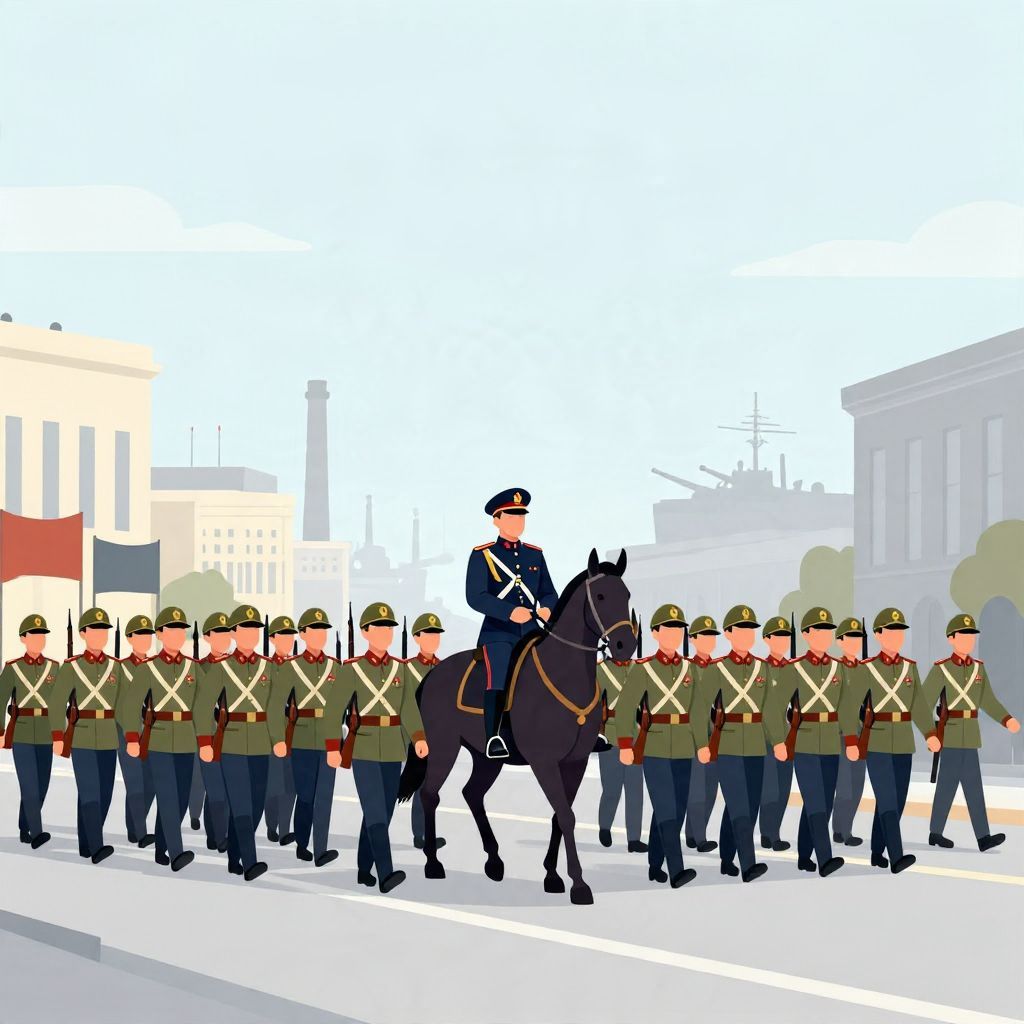
Militarism is one of the most important ideas in modern history because it helps explain why some states build huge armies, glorify war, and give military power a central place in politics and society. It is not just “having soldiers.” It is a broader way of thinking about security, power, and national strength.
Understanding militarism matters because it has shaped empires, revolutions, dictatorships, and world wars. It also helps explain how civilian life can become organized around military values, from education and propaganda to industry and foreign policy.
What Is Militarism?
Militarism is the belief that military power should play a major role in a country’s affairs, often influencing politics, society, and national identity. In militaristic systems, armies are treated as essential to greatness and security, and military solutions are often favored over diplomacy or compromise.
What Militarism Means in History
Historically, militarism has described both an idea and a pattern of state behavior. As an idea, it promotes the prestige of soldiers, weapons, discipline, and readiness for war. As a pattern, it appears when governments expand armed forces, prepare for conflict in peacetime, and allow generals or military institutions to shape national policy.
Militarism is not the same as defense
Every state needs some form of defense, but militarism goes further. A country can maintain an army without being militaristic. Militarism begins when war planning, military spending, and martial values become central to public life and political culture. In that sense, it is as much about attitudes and institutions as about troop numbers.
Common features of militarism
- Large standing armies or rapid military expansion
- High military spending, often at the expense of social programs
- Public praise for soldiers, weapons, and discipline
- Military influence over government decisions
- Frequent use of force as a tool of policy
- Propaganda that links war with patriotism or national survival
Where Did Militarism Come From?
Militarism is ancient, but the term is most often used for modern states. Many early empires, including Rome, Sparta, and various imperial dynasties, relied heavily on military power. However, the modern concept developed most clearly in the 18th, 19th, and early 20th centuries, when nation-states built mass armies and linked military strength to national prestige.
Ancient and early examples
In the ancient world, some societies were organized around war more than others. Sparta is often cited as a classic example because its social system emphasized military training and discipline. Rome also depended on military expansion, though it combined warfare with law, administration, and citizenship. These examples show that militaristic behavior is not unique to the modern era, even if the word itself is.
The rise of modern militarism
Modern militarism grew with centralized states, industrial production, and nationalist politics. From the late 1700s onward, governments could raise larger armies, equip them more efficiently, and mobilize whole populations for war. The French Revolutionary and Napoleonic Wars helped normalize mass conscription, while the 19th century saw great powers compete in armies, navies, and overseas empires.
Why Militarism Grew in the 19th and Early 20th Centuries
Militarism expanded because industrialization, nationalism, and imperial competition reinforced one another. Railways, factories, and modern bureaucracy made it possible to organize large armies. At the same time, nationalist movements often argued that a strong military proved a nation’s vitality and right to power. In Europe, Asia, and elsewhere, military strength became a measure of state status.
Nationalism and prestige
Nationalism encouraged people to think of the nation as a single body that had to be defended, honored, and, if necessary, expanded. Military service could be portrayed as a patriotic duty. In some countries, uniforms, parades, and war memorials became part of public culture, helping normalize the idea that military readiness was a civic virtue.
Imperial competition
Imperial rivalries also fueled militarism. European powers competed for colonies, trade routes, and strategic territory in Africa, Asia, and the Pacific. This competition encouraged naval buildups, arms races, and a belief that only strong military power could protect or enlarge an empire. Militarism and imperialism often supported each other.
Industrialization and arms production
Industrial economies made modern weapons easier to produce in large quantities. Railways moved troops quickly; steel and chemical industries supported artillery, ships, and later explosives and poison gas. As military production became tied to industrial growth, some governments and businesses benefited from sustained rearmament.
Militarism and the Road to World War I
Militarism is one of the major causes historians discuss in relation to World War I. It did not cause the war alone, but it helped create a climate in which leaders expected conflict and prepared for it. By 1914, several European powers had developed large armies, detailed war plans, and a readiness to use force in a crisis.
Arms races and war planning
Before 1914, the major powers expanded their armies and navies. Germany and Britain competed in naval construction, while continental powers prepared mobilization plans that were difficult to stop once started. These plans made diplomacy fragile. When the July Crisis followed the assassination of Archduke Franz Ferdinand in 1914, military timetables helped turn a regional crisis into a general war.
Military culture and political pressure
In several countries, military leaders had strong influence and were often treated as guardians of national honor. This made compromise politically difficult. Leaders feared appearing weak, and public opinion could be shaped by patriotic press campaigns. Militarism did not make war inevitable, but it made war more thinkable and more acceptable to decision-makers.
Militarism in the 20th Century
The 20th century produced some of the clearest examples of militarism, especially in authoritarian states and during total war. Governments in fascist and militarist regimes often glorified soldiers, demanded obedience, and used military expansion to justify internal control and external conquest.
Japan
In pre-1945 Japan, military leaders gained enormous influence over government and foreign policy. Although Japanese politics was complex and changed over time, the armed forces increasingly shaped decisions in the 1930s and led expansion into Manchuria, China, and the Pacific. Militarism in Japan was tied to imperial ambition, emperor-centered ideology, and the suppression of dissent.
Nazi Germany
Nazi Germany also embraced militaristic values, though it combined them with racial ideology and totalitarian rule. The regime glorified violence, rearmament, and conquest. Military expansion was presented as a way to restore national greatness after defeat in World War I, but it also served the dictatorship’s broader goals of domination and genocide.
The Soviet Union and other states
Not all heavily armed states are usually described as militaristic in the same way, and historians debate how far the label should be applied in different cases. The Soviet Union, for example, built a massive military and emphasized preparedness against external threats, but its political system, ideology, and social structure differed from classic militarist models. This shows that militarism is a useful concept, but not a one-size-fits-all label.
How Militarism Affects Society
Militarism changes more than foreign policy. It can shape education, media, gender roles, labor, and everyday life. When a society becomes militarized, military values such as obedience, sacrifice, hierarchy, and aggression may be praised as civic ideals. Civil institutions can be reorganized to serve war readiness.
Education and youth training
Militaristic states often use schools and youth organizations to promote discipline and loyalty. Physical training, cadet programs, and patriotic instruction may be used to prepare young people for military service or to normalize war as part of life. This can blur the line between civilian education and military preparation.
Gender and social ideals
Militarism often promotes narrow ideas of masculinity, linking manhood with courage, toughness, and willingness to fight. Women may be assigned supportive roles, such as nursing, domestic labor, or propaganda work, though this varies by time and place. These ideas can influence family life and social expectations far beyond the battlefield.
Economy and industry
Military expansion can stimulate arms production, shipbuilding, and heavy industry. In some cases, this creates jobs and technological development. But it can also divert resources away from housing, health care, and education. Historians often note that militarism can strengthen the state while narrowing the space for civilian priorities.
Militarism, Imperialism, and Nationalism
Militarism is closely connected to imperialism and nationalism, but it is not identical to either. Imperialism is the policy of extending control over other lands or peoples. Nationalism is the belief that a nation should have political unity and self-rule. Militarism often supports both by making force seem necessary, honorable, or unavoidable.
How the three ideas overlap
- Nationalism can create the emotional case for military strength.
- Militarism turns that strength into a central political value.
- Imperialism uses military power to expand control beyond existing borders.
In practice, these ideas often reinforce one another. A nation may justify rearmament as self-defense, then use that military power to dominate neighbors or colonies. That is why historians often study them together when examining the modern world.
Is Militarism Always Bad?
Historically, militarism is usually associated with danger because it tends to elevate war, suppress dissent, and encourage aggressive policy. Still, historians distinguish between military preparedness and militarism itself. A state under genuine threat may strengthen its defenses without embracing militaristic ideology. The key question is whether military power serves civilian society or begins to dominate it.
A historical judgment, not just a moral label
When historians use the term, they are not simply condemning armies. They are describing a political culture in which war and military values become unusually influential. That influence can lead to repression, arms races, and war, but the exact outcome depends on the historical context.
Key Facts About Militarism
- Militarism is the belief that military power should play a central role in state and society.
- It is different from ordinary defense because it elevates military values above other priorities.
- It became especially important in the modern era, alongside nationalism, imperialism, and industrialization.
- It helped shape the political climate before World War I.
- It was central to several 20th-century authoritarian regimes.
- It can influence education, propaganda, economics, and daily life, not just foreign policy.
Why Militarism Still Matters Today
Militarism remains a useful historical concept because it helps explain how societies prepare for war and why some governments rely so heavily on force. It also reminds us that military power is never just technical; it is cultural and political. When armies become symbols of national identity, the line between defense and domination can become dangerously thin.
In short, militarism is the elevation of military power into a guiding principle of politics and society. To understand it fully, it helps to compare it with related ideas such as nationalism in history and American imperialism, both of which have often intersected with militaristic policies and ambitions.