
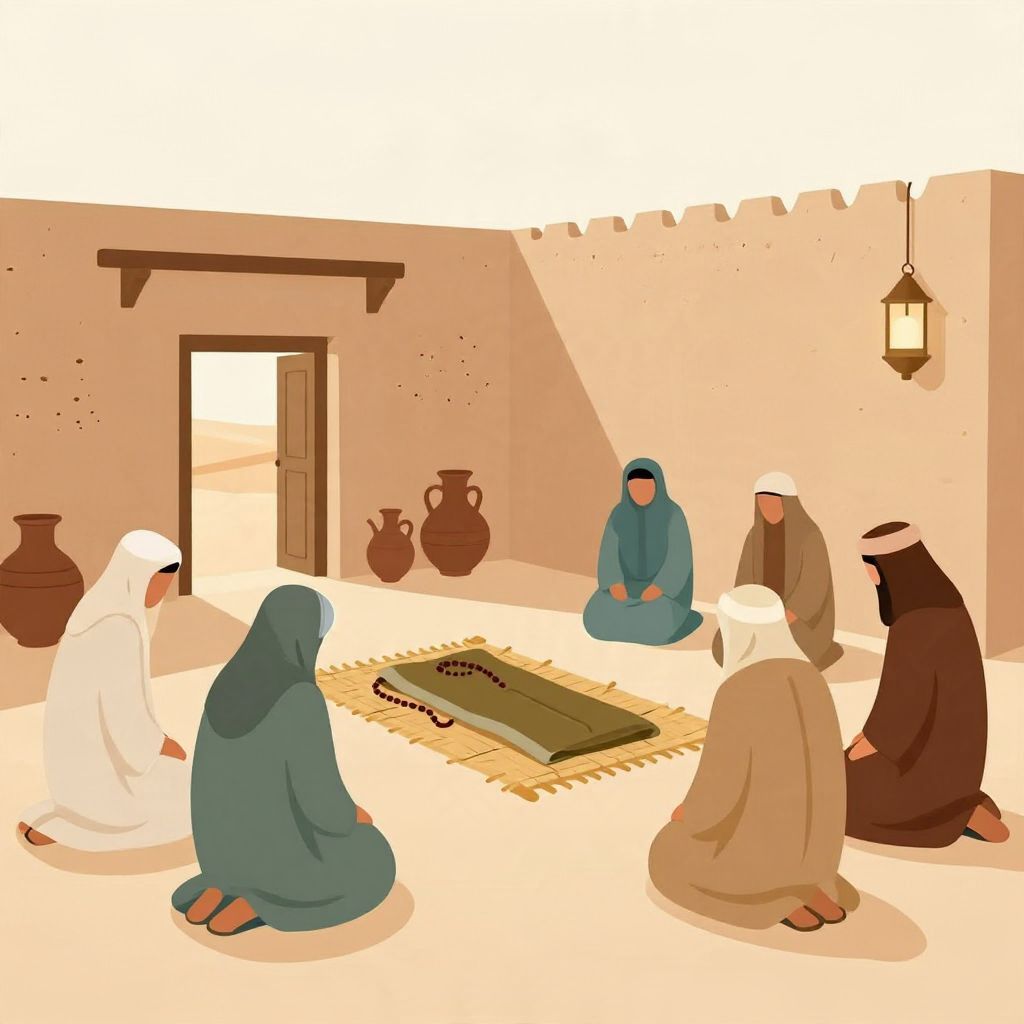
How did Mohammed die? The historical answer is that the Prophet Muhammad died in Medina in 632 CE after a short illness, likely involving fever and weakness. The exact medical cause is not known with certainty, but the broad outline of his final days is well preserved in early Islamic tradition.
His death mattered far beyond the personal loss of a religious leader. It immediately raised the question of succession, helped shape the early Muslim community, and influenced the political and religious history of Islam for centuries afterward.
How Did Mohammed Die?
Muhammad died in Medina on 8 June 632 CE, at about age 62 or 63. Early sources describe several days of illness marked by fever, headache, and increasing weakness. Historians cannot identify a single confirmed medical cause, but his death appears to have been from natural illness rather than violence or accident.
What the Historical Sources Say
The main historical accounts come from early Islamic biographies, hadith collections, and later historical works. These sources agree on the basic sequence: Muhammad became ill, his condition worsened over several days, and he died in the house of his wife Aisha in Medina. Because the sources were written down after his death, details vary, but the overall narrative is consistent.
The final illness
Traditional accounts describe Muhammad returning from the Farewell Pilgrimage in 632 CE and later falling ill. He is said to have experienced fever and physical weakness, at times leading others to assist him in prayer. Some reports mention that he continued to address the community during the illness, while others emphasize his growing inability to move easily.
Why historians avoid a precise diagnosis
Modern historians are cautious about naming a specific disease because the evidence is limited and retrospective. Terms like “fever” in early sources describe symptoms, not a modern diagnosis. Suggestions such as infection, a recurring illness, or a complication of another condition remain speculative. What can be said confidently is that the sources present his death as the result of illness, not martyrdom or assassination.
Where and When Did Muhammad Die?
Muhammad died in Medina, the city that had become the center of the early Muslim community after the Hijra from Mecca in 622 CE. His death is generally dated to 8 June 632 CE, though exact conversion into the modern calendar can vary slightly depending on method. He was buried in the room where he died, which later became part of the Prophet’s Mosque.
Why Medina mattered
Medina was not only Muhammad’s home in his final years; it was the political and religious heart of the emerging Muslim community. Dying there meant that the first major crisis after his death unfolded at the center of the movement he had led. That location helped shape how his followers responded in the hours and days that followed.
What Happened After His Death?
Muhammad’s death created an immediate leadership crisis. He had united multiple tribes and communities under a new religious and political order, but he left no universally accepted public instruction naming a successor. This uncertainty led to debate among his companions and eventually to the selection of Abu Bakr as the first caliph.
The question of succession
Different Muslim groups later interpreted the succession differently. Sunni tradition generally emphasizes the community’s choice of Abu Bakr, while Shi’a tradition holds that Muhammad designated Ali as his successor in a spiritual and political sense. This disagreement became one of the most important divisions in Islamic history.
The community’s immediate response
Sources describe shock and grief among Muhammad’s followers. Some reports say that certain companions initially struggled to accept that he had died. The eventual arrangement of burial and the selection of a successor were urgent because the community needed stability at a moment of uncertainty.
Did Mohammed Die of Poison?
One of the most discussed claims in later tradition is that Muhammad may have been poisoned. This idea comes from reports about a meal at Khaybar years earlier, after which he is said to have felt lingering effects. Some traditions connect that event to his final illness, but historians do not treat poisoning as proven. The evidence is debated, and the sources do not allow a firm conclusion.
How to understand the poison tradition
The poison story appears in Islamic tradition and has been interpreted in different ways over time. Some believers see it as evidence of martyrdom, while others treat it as a pious memory or a symbolic element in the broader narrative of his suffering. Historically, however, it remains uncertain and should not be stated as fact.
What Was Muhammad’s Final Illness Like?
According to the sources, Muhammad spent his last days with increasing weakness, but he remained conscious for much of the time. He reportedly asked to be moved, continued to give guidance, and spent time with family members and close companions. The accounts stress both his physical decline and his continued authority until the end.
Death in the household
Tradition says he died in Aisha’s room, which later became one of the most revered places in Islamic history. The burial there reflects both the intimacy of his final moments and the early community’s reverence for his memory. Over time, the site became part of the sacred geography of Medina.
Why Mohammed’s Death Matters in History
Muhammad’s death was not only the end of a life; it was the beginning of a new historical phase. The movement he founded had to survive without its prophet, and that transition tested its unity. The debates that followed helped define leadership, authority, and memory in Islam.
Political consequences
The first caliphate emerged from the need to preserve order after Muhammad’s death. The early Muslim community soon faced disputes, the Ridda wars, and the challenge of maintaining cohesion across Arabia. In that sense, his death directly shaped the expansion and institutional development of the Islamic state.
Religious consequences
His death also changed how Muslims understood revelation and authority. With prophecy ended, the Qur’an and Muhammad’s example became even more central as sources of guidance. The community increasingly relied on memory, interpretation, and law to preserve his teachings.
How Different Traditions Remember His Death
Muslim remembrance of Muhammad’s death is deeply shaped by devotion, theology, and historical memory. Sunni and Shi’a traditions share reverence for him, but they sometimes emphasize different aspects of the final days and the succession dispute that followed. These differences are part of the broader history of Islamic interpretation.
Shared reverence
Across Islamic traditions, Muhammad’s death is remembered with grief and respect. His burial place in Medina remains one of the most visited sites in the Muslim world. The memory of his final illness is often linked to reflections on humility, mortality, and the completion of his mission.
Why legends and history can overlap
As with many major religious figures, later devotion shaped how the story was told. That does not make the tradition meaningless, but it does mean historians distinguish between what can be established from early evidence and what belongs to devotional memory. The historical core is clear: Muhammad died in Medina after an illness in 632 CE.
A Brief Chronology of the Final Weeks
- 632 CE — Muhammad returns from the Farewell Pilgrimage.
- Shortly afterward — He becomes ill in Medina.
- Over several days — His condition worsens; he remains in his household and gives guidance to followers.
- 8 June 632 CE — He dies in Medina.
- Immediately after — The community debates succession and later recognizes Abu Bakr as caliph.
The Historical Bottom Line
So, how did Mohammed die? The best historical answer is that Muhammad died naturally in Medina in 632 CE after a brief illness, with fever and weakness described in early sources. A poison theory exists in tradition but is not proven. What matters most historically is that his death triggered a leadership crisis that shaped the future of Islam. For readers interested in the broader context, related topics include the history of early Islam and the role of Medina in Islamic history.