
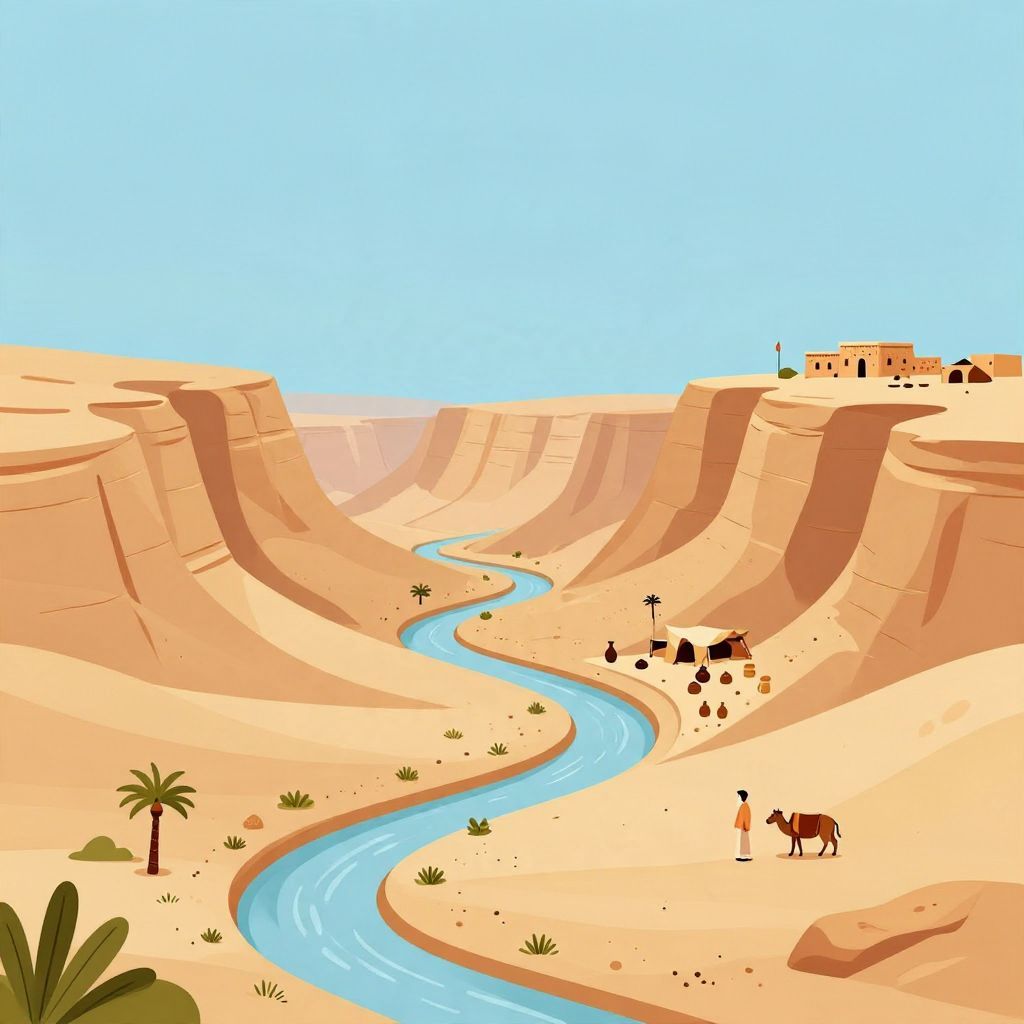
How Havajazon formed is a question that depends on what the term refers to, because “Havajazon” is not a standard, widely documented historical place name, people, state, or event in mainstream historical scholarship. That means the safest answer is to treat it as an uncertain or possibly localized term and explain how such names or identities usually form over time.
In history, formations like this often emerge from language change, migration, local tradition, or transcription differences. If “Havajazon” comes from a regional oral history, a family name, or a place-name variant, its origin is likely tied to a gradual process rather than a single founding moment.
How Havajazon formed
There is no well-established historical record that identifies a single, universally accepted origin for Havajazon. The most responsible historical answer is that it likely formed through a combination of naming, local usage, and transmission over time, rather than through one dramatic event. If the word appears in a community tradition, it may reflect a place, lineage, or cultural label that evolved as people repeated and adapted it.
Why the origin is uncertain
When a term is not firmly documented in major historical sources, historians have to be careful. A name may survive in oral tradition, in a local dialect, or in a modern spelling that differs from an older form. Over generations, pronunciation shifts, scribal errors, translation, and colonial or administrative record-keeping can all change how a word appears in writing.
That means “How Havajazon formed” may not have one answer. Instead, there may be several possibilities:
- It began as a local place-name and later became a broader identity marker.
- It was a family or clan name that spread through migration and marriage.
- It is a modern spelling of an older word whose original form is no longer clear.
- It entered written records late, after being used orally for a long time.
How names and identities usually form in history
Across history, names like Havajazon often develop through ordinary social processes. A community may first use a descriptive term for a location, a leader, a river, a hill, a profession, or an ancestor. Over time, that term can become an ethnic label, a territorial name, or a surname. This kind of formation is common in many parts of the world and does not require a single founder.
1. Geographic naming
Many historical names begin with geography. People identify a settlement by a natural feature nearby, such as a valley, mountain, or water source. If Havajazon originated this way, its earliest meaning may have been practical rather than symbolic. Later generations would have inherited the name even after its original meaning was forgotten.
2. Lineage and clan formation
Some names begin with an ancestor or a respected family line. A clan name can expand as descendants multiply and settle in new areas. In this pattern, Havajazon might have started as a household or kinship identifier and then broadened into a larger social label.
3. Language change and spelling variation
Historical names often change when they move between languages. Sounds that exist in one language may not exist in another, so scribes and administrators approximate them. A name like Havajazon could therefore reflect a later transcription of an older spoken form. In that case, the written version may preserve only part of the original sound and meaning.
4. Religious or cultural association
In some cases, names become attached to ritual, belief, or cultural memory. A community may preserve a term because it is linked to sacred geography, a founding story, or a revered figure. If Havajazon belongs to this kind of tradition, its formation may be tied to cultural continuity more than political history.
What historians would look for
To explain how Havajazon formed with confidence, historians would want evidence from several kinds of sources. The strongest case would come from early written records, maps, inscriptions, genealogies, or consistent oral histories collected from multiple generations. Without that evidence, any reconstruction has to remain cautious.
- Earliest written appearance: When does the term first appear in documents?
- Geographic consistency: Does it refer to one place or many?
- Spelling variants: Are there older forms that look similar?
- Oral tradition: Do local accounts agree on the origin story?
- Historical context: Was the area affected by migration, conquest, trade, or administration changes?
These clues help separate a genuine historical formation from a later legend or a modern reinterpretation.
Possible historical pathways behind Havajazon
Because the term is not securely identified in standard reference history, the most useful approach is to outline the most likely pathways by which it could have formed. These are not claims of fact about Havajazon specifically, but historically grounded possibilities.
Migration and settlement
Many names emerge when people move into a new region and bring their language with them. A migrant group may rename a place, or a host community may adapt a newcomer’s name into local speech. Over time, the name becomes part of the landscape and may outlast the original migration itself.
Administrative record-keeping
Sometimes a name becomes fixed only after states, empires, or colonial governments begin recording it. Officials often standardized spellings for taxes, censuses, maps, or legal documents. If Havajazon appears in archival records, its modern form may reflect bureaucratic standardization rather than its oldest usage.
Oral tradition becoming written history
In many societies, memory was preserved orally long before it was written down. When oral material is later recorded, the spelling and even the meaning may shift. A term like Havajazon could therefore have deep roots in local memory while remaining difficult to trace in formal archives.
Religious or symbolic reinterpretation
Communities sometimes give older names new meanings. A word that began as a geographic label may later be interpreted as spiritually significant, heroic, or ancestral. This process can make origin stories richer, but also more difficult to verify historically.
Why origin stories matter
Questions like how Havajazon formed matter because names are not just labels. They carry memory, identity, and claims to belonging. A community’s explanation of its own name can reveal how it understands its past, even when the exact historical origin cannot be proven with certainty.
At the same time, historians distinguish between cultural meaning and documentary evidence. A cherished origin story may be historically important even if it cannot be confirmed word for word. That balance is essential when dealing with uncertain or poorly documented terms.
What can be said with confidence
The most careful historical conclusion is that Havajazon likely formed gradually through social use, language change, and repeated transmission, not through one clearly recorded founding event. If the term has local significance, its history may be preserved in oral tradition or in scattered records rather than in a single authoritative source.
In other words, the formation of Havajazon is best understood as a process: people used the name, adapted it, wrote it down in different ways, and passed it on until it became established. That is how many historical names, identities, and place terms come into being.
Historical takeaway
How Havajazon formed cannot be answered with certainty from widely known historical evidence alone, but the most likely explanation is a gradual process shaped by language, memory, migration, and record-keeping. If you are exploring related questions about cultural spread and identity formation, you may also find why Hinduism spread and how Hinduism spread useful for understanding how traditions and names develop across history.