
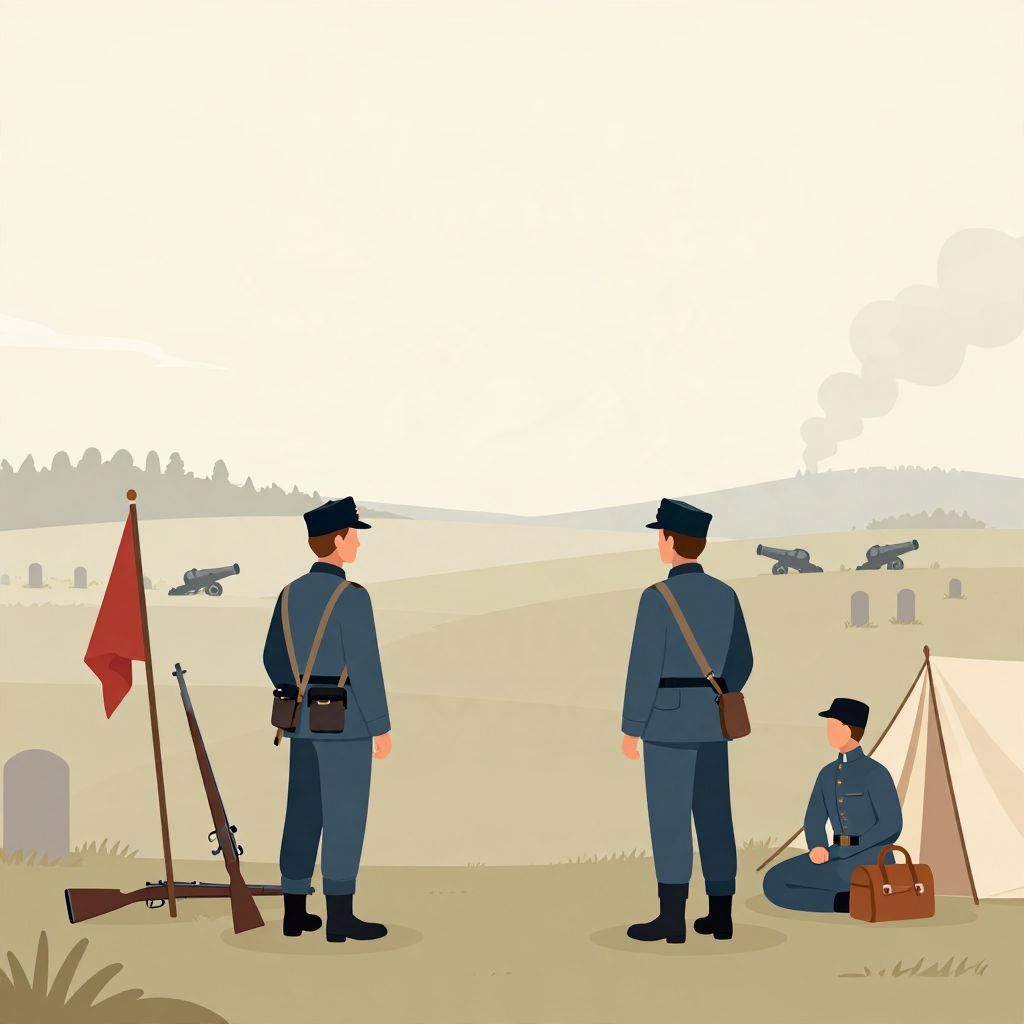
The American Civil War was the deadliest war in United States history, and the question “How many died in the Civil War?” has a surprisingly careful answer. Historians generally estimate that about 620,000 to 750,000 soldiers died between 1861 and 1865, with many modern studies leaning toward the higher end of that range.
The exact total is uncertain because record-keeping was incomplete, especially for Confederate forces, and many deaths were never formally documented. Civilian deaths were also harder to count, so any total is an estimate rather than a precise final number.
How many died in the Civil War?
Most historians estimate that roughly 620,000 to 750,000 soldiers died in the American Civil War. That figure includes deaths from battle wounds, disease, accidents, and other war-related causes. Because many wartime records were lost or never kept consistently, the true number may never be known exactly.
Why the death toll is hard to pin down
The Civil War was fought in a country that had no modern system for tracking casualties. Union records were better than Confederate records, but both were incomplete. Some soldiers died far from home and were buried in unmarked graves, while others disappeared from official rolls without clear documentation.
Union and Confederate record problems
Union armies kept more systematic paperwork, but even those records were imperfect. Confederate records were damaged during the war and in the chaotic collapse of the Confederacy in 1865. Many local archives were destroyed, and medical and burial records were often informal or inconsistent.
Different ways of counting deaths
One reason estimates vary is that historians may count different categories of dead. Some totals include only soldiers killed directly in combat. Others include deaths from disease, exposure, infection, and accidents. Broader estimates may also try to account for civilians, though those numbers are much less certain.
What caused so many deaths?
The Civil War’s death toll was so high because it combined huge armies, brutal weaponry, poor sanitation, and limited medical knowledge. Disease killed more soldiers than bullets did, and the war’s scale meant that even a single battle could produce thousands of casualties in a few hours.
Battlefield weapons became deadlier
By the 1860s, armies used rifled muskets and Minié balls, which were far more lethal than older smoothbore weapons. These arms could hit accurately at longer distances and caused devastating wounds. Tactics, however, often lagged behind technology, so troops still fought in dense formations that made them easy targets.
Disease killed more soldiers than combat
In both armies, disease was the leading cause of death. Camp life spread measles, dysentery, typhoid, pneumonia, and other illnesses. Soldiers often drank contaminated water, lived in cramped conditions, and lacked proper nutrition. Medical care existed, but it was limited by the standards of the time.
Infection and amputation were common
Even soldiers who survived the battlefield could die later from infected wounds. Surgery was often performed without modern antiseptics or antibiotics. Amputations were common because they were one of the few ways doctors could try to save lives after severe limb injuries.
What is the best estimate of military deaths?
A widely accepted modern estimate puts total military deaths at about 750,000, with some scholars arguing for a slightly lower figure and others for a somewhat higher one. This estimate reflects better demographic research and the recognition that earlier counts likely understated Confederate losses and disease deaths.
Older estimates were lower
For many years, the most commonly repeated figure was around 620,000 dead. That number became famous because it was long cited in textbooks and public memory. Later scholarship, especially demographic studies, suggested the toll was probably higher than that older figure.
Why historians still use a range
Because the evidence is incomplete, historians avoid pretending there is one exact number. A range is more honest and more useful. The lower end reflects conservative counting from wartime records; the higher end reflects later efforts to correct for missing data and undercounted Confederate losses.
How many civilians died in the Civil War?
Civilian deaths are much harder to measure than military deaths. There is no universally accepted total for civilian casualties in the Civil War. Some civilians died in raids, bombardments, massacres, prison conditions, shortages, and disease linked to the war, but these losses were not systematically recorded.
Slavery and wartime mortality
The war also transformed the lives and deaths of enslaved people. Enslaved families were displaced, separated, and exposed to violence, hunger, and disease. Many escaped to Union lines or were forced into labor by both sides. Their suffering was real and extensive, but it is difficult to quantify in a single death toll.
Women, children, and the home front
Civilians on the home front faced food shortages, inflation, raids, and the collapse of local economies. In some regions, especially in the South, wartime hardship increased mortality indirectly. However, because records were not kept in a modern statistical way, historians usually avoid giving a precise civilian death total.
How Civil War deaths compare with other American wars
The Civil War remains the deadliest conflict in American history by a wide margin. Its death toll exceeded that of World War I, World War II, Korea, Vietnam, and later wars combined in many common comparisons. The scale of loss helps explain why the war left such a deep mark on American memory.
Why the Civil War stands out
The war pitted Americans against one another in a struggle over the survival of the Union and the future of slavery. Because both North and South mobilized large armies, the fighting touched nearly every region and family. The result was not only military devastation but also social and demographic upheaval.
What the death toll meant at the time
The Civil War’s losses were shocking to people who lived through it. Communities saw long casualty lists, empty farms, and missing sons, husbands, and fathers. The scale of death changed how Americans thought about war, national sacrifice, and the cost of political conflict.
Mass death changed public memory
After the war, Americans built cemeteries, monuments, and memorial rituals to honor the dead. The need to identify and rebury soldiers led to the creation of national cemeteries and more organized burial practices. These efforts reflected a new awareness of mass wartime death.
Medical and administrative lessons
The war also exposed the limits of nineteenth-century medicine and military administration. In later decades, the United States improved battlefield medicine, record-keeping, and veteran care in part because Civil War losses had been so severe and so difficult to manage.
So what number should you remember?
If you want one clear answer, the safest short version is this: about 750,000 soldiers died in the Civil War, though historians often give a broader range of roughly 620,000 to 750,000 because the records are incomplete. Civilian deaths were significant too, but they cannot be counted with the same confidence.
The Civil War’s human cost was enormous not just because of battlefield carnage, but because disease, poor sanitation, and incomplete records made the suffering even harder to measure. For more on the war’s timeline, see what year the Civil War ended, and for a broader comparison of wartime loss, read about how many Americans died in World War II.