
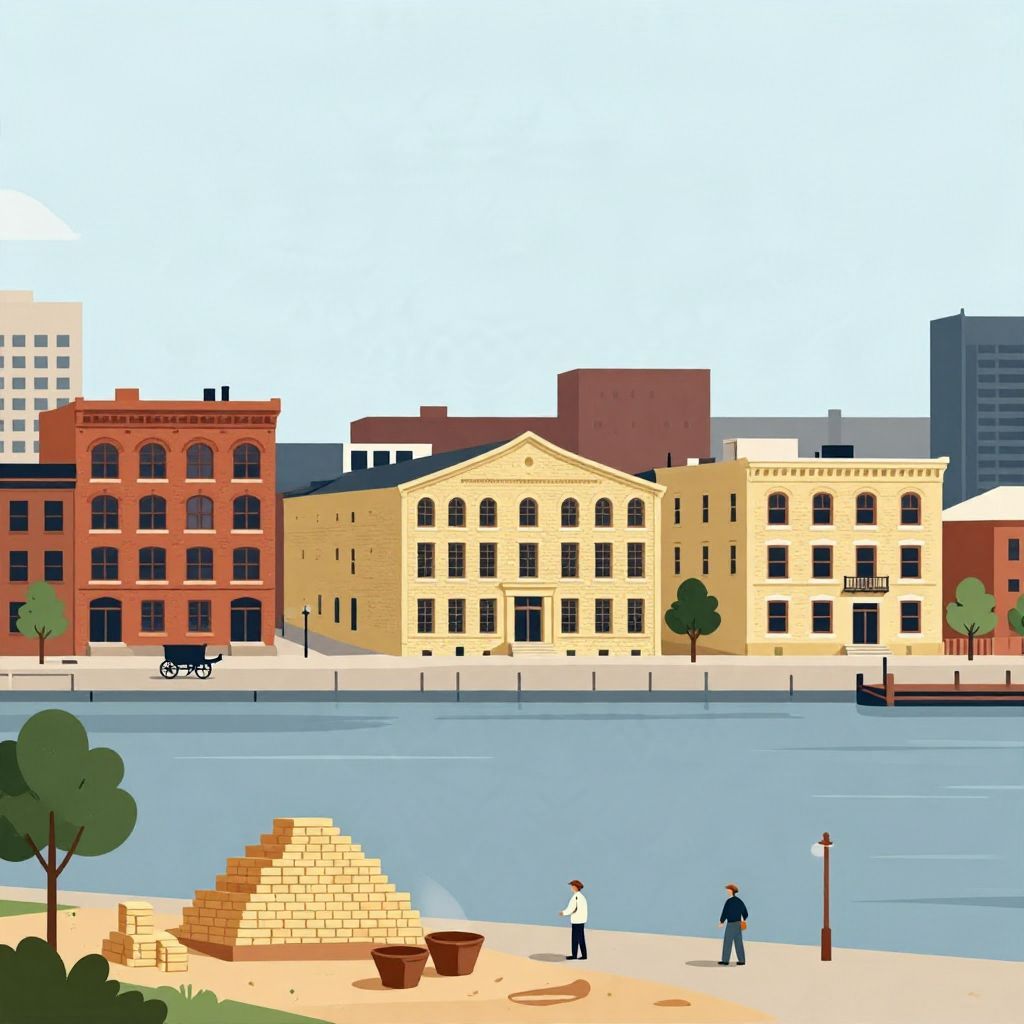
Why is Milwaukee called Cream City? The short answer is not because of dairy, ice cream, or a nickname for the city’s people. Milwaukee earned the name from the pale, warm color of its 19th-century cream-colored bricks, which were made from local clay and became a defining feature of the city’s architecture.
The nickname grew out of Milwaukee’s rapid urban growth in the mid-1800s, when brick buildings, warehouses, churches, and homes spread across the city. Over time, “Cream City” became a local identity marker, even as the original brick industry faded and the meaning of the phrase became less obvious to later generations.
Why is Milwaukee called Cream City?
Milwaukee is called Cream City because many of its early buildings were made from distinctive pale yellow or cream-colored bricks produced from local clay along the Lake Michigan shoreline. The name refers to the color of the brick, not to milk, cream, or dairy products. It became popular in the 19th century as the city expanded.
The brick that gave Milwaukee its nickname
The heart of the story is Milwaukee’s clay. In the 1800s, builders used clay deposits found in the region to make bricks that fired into a light buff or creamy shade rather than the deep red common elsewhere. Those bricks were durable, affordable, and widely used, so the city’s streetscape took on a distinctive look.
What made the bricks look cream-colored?
The color came from the mineral content of the clay, especially the local glacial deposits around Milwaukee. When fired, the clay produced a light, warm tone that stood out against the darker reds of bricks made from different clay sources. This was not a decorative choice at first; it was a practical result of the local geology.
Why did builders use them so widely?
Milwaukee was growing quickly in the mid-19th century, especially after the 1840s and 1850s, when immigration, commerce, and industry transformed the settlement into a major city. Brick offered fire resistance and permanence compared with wood, and local production made it economical. The result was a cityscape that looked unusually uniform in color.
The historical context behind the name
The nickname emerged during a period when American cities were developing strong regional identities. In the 19th century, city nicknames often reflected a visible local trait, an industry, or a landscape feature. Milwaukee’s “Cream City” label fit that pattern: it was easy to remember and tied directly to something people could see.
Milwaukee’s growth in the 1800s
Milwaukee incorporated as a city in 1846, and its growth accelerated in the decades that followed. Germans and other immigrant groups arrived in large numbers, businesses multiplied, and brick construction became common in commercial districts. As the city expanded, the cream-colored brick buildings became one of its most recognizable features.
How the nickname spread
The term likely began as a local descriptive phrase and then became a broader nickname as the city’s appearance became well known. It was reinforced by newspapers, civic pride, and the repeated sight of cream brick on major buildings. By the late 19th century, “Cream City” was firmly associated with Milwaukee.
Was Milwaukee called Cream City because of dairy?
No. This is one of the most common misunderstandings. Milwaukee is in Wisconsin, a state famous for dairy farming, so people sometimes assume the nickname has something to do with milk or cheese. Historically, however, the name comes from the color of the city’s brick, not from agriculture or food production.
Why the dairy explanation sounds plausible
Modern audiences often connect Wisconsin with dairy so strongly that “Cream City” seems like a natural extension of that reputation. But the nickname predates many of the state’s later dairy branding campaigns and has a different origin entirely. The similarity is mostly coincidental.
What was Cream City brick used for?
Cream City brick was used in a wide range of buildings, from modest houses to major public and commercial structures. Its appeal was both practical and aesthetic. Builders valued it for strength and fire resistance, while residents and visitors noticed the soft, light-colored appearance that gave neighborhoods a distinctive look.
- Homes in growing residential districts
- Warehouses and industrial buildings near the lake and river
- Churches and civic structures that wanted a durable finish
- Commercial blocks in downtown Milwaukee
Many of these buildings helped create the visual identity that made the nickname stick. Even where later construction changed the city, surviving Cream City brick structures remained reminders of Milwaukee’s 19th-century development.
How the nickname shaped Milwaukee’s identity
“Cream City” became more than a description of brick color. It turned into a civic identity that linked Milwaukee’s architecture, industry, and local pride. Like many city nicknames, it helped residents distinguish their place from others and gave the city a memorable image in the wider region.
A nickname with lasting cultural value
Over time, the phrase appeared in business names, preservation efforts, and local storytelling. Today it is often used to celebrate Milwaukee’s architectural heritage. The nickname also helps historians and residents remember that the city’s built environment was shaped by local materials and 19th-century industry.
Why it still matters
The name is useful because it captures a real historical process in a simple phrase. It tells us about geology, construction, urban growth, and local identity all at once. In that sense, “Cream City” is not just a nickname; it is a shorthand for how Milwaukee developed.
Popular myths and common confusion
Because the phrase is unusual, it has attracted myths and casual explanations. Some people assume it refers to dairy products. Others think it was simply a marketing slogan. The historical evidence points instead to the brick industry and the city’s physical appearance, which is the most widely accepted explanation among historians and local preservationists.
What historians can say with confidence
It is well established that Milwaukee’s cream-colored brick buildings were central to the nickname. The exact moment the phrase first appeared is harder to pin down with precision, as nicknames often develop gradually in speech and print. But the connection between the brick and the city name is clear.
The legacy of Cream City today
Although modern Milwaukee is no longer defined primarily by Cream City brick, the nickname remains an important part of its heritage. Surviving buildings continue to attract interest from architects, historians, and preservationists. They show how a city’s nickname can preserve a piece of its material past long after the original industry has changed.
So, Milwaukee is called Cream City because of the pale brick made from local clay that once dominated its architecture. The nickname reflects the city’s 19th-century growth, its building materials, and its civic identity. For more on how places acquire memorable names, see our articles on why Kentucky is called the Bluegrass State and why it is called a flea market.