
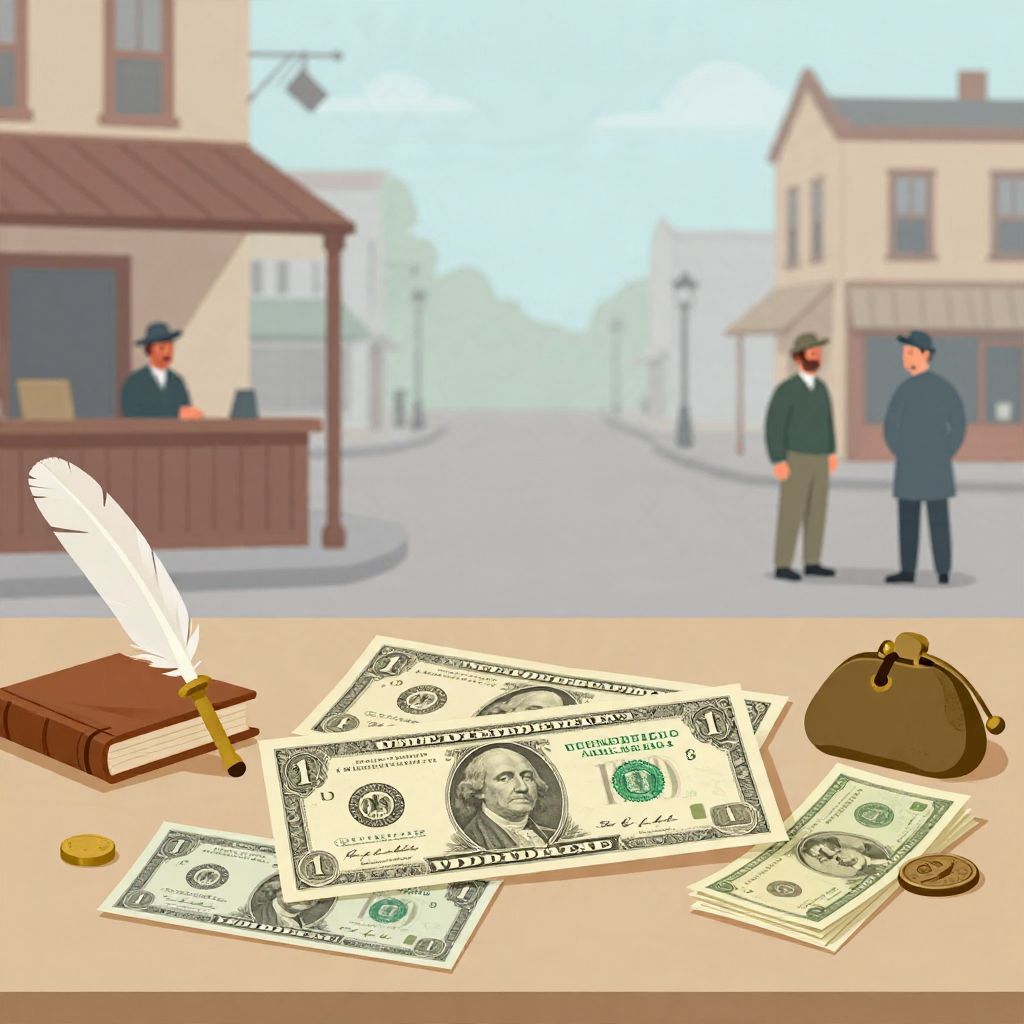
Confederate money can be worth something today, but usually not as spending money. Its value depends on whether the note is genuine, what denomination and date it is, its condition, and whether it has collector interest. Most Confederate currency is worth far less than its face amount, yet some pieces can sell for modest sums or, in rare cases, much more.
To understand why, you have to look at the history of the Confederate States of America, the Civil War economy, and the way collectors now judge surviving paper money. Confederate notes are historical artifacts first and currency only in a very limited sense.
Is Confederate Money Worth Anything?
Yes, Confederate money is often worth something to collectors, but not as legal tender and rarely for its printed face value. Common notes in worn condition may be worth only a small amount, while scarce issues, unusual denominations, or well-preserved examples can be worth considerably more. Counterfeits, reproductions, and damaged notes may have little or no market value.
Why Confederate Money Exists at All
Confederate currency was issued by the Confederate government during the American Civil War, beginning in 1861. The Confederacy needed money to fund its war effort, pay soldiers and suppliers, and support a new national government. Because it lacked the financial strength and international recognition of the Union, it relied heavily on paper notes backed mainly by confidence rather than hard reserves.
The Civil War economy and inflation
At the start of the war, Confederate notes circulated because people believed the Confederacy might survive and because there were few better alternatives in the South. But as the war dragged on, the government printed more money to cover expenses. That overprinting, combined with military setbacks and shortages, caused severe inflation. By the later war years, Confederate paper money had lost much of its purchasing power.
Why face value became meaningless
When a government collapses or loses a war, its currency usually loses official monetary status. That is what happened to Confederate notes in 1865. Once the Confederacy dissolved, the money it had issued no longer functioned as currency. Today, the number printed on the note is mostly a historical detail, not a reliable guide to market value.
What Determines the Value of Confederate Notes?
The value of Confederate money today depends on collectability, rarity, condition, authenticity, and historical interest. A note’s printed denomination matters less than its survival story and physical state. Collectors usually pay for examples that are scarce, attractive, and clearly genuine.
1. Authenticity
Authentic Confederate notes are worth more than replicas or modern souvenirs. Unfortunately, the market includes many reprints, fantasy pieces, and altered notes. A genuine note usually shows period printing methods, paper characteristics, and design details consistent with Civil War-era production. If there is any doubt, expert authentication matters.
2. Condition
Collectors use condition to judge paper money just as they do with coins. A crisp, clean note with strong printing and little damage is generally more valuable than a stained, torn, or heavily circulated one. Folds, missing corners, writing, and repairs can lower value substantially.
3. Rarity
Some Confederate notes were printed in larger numbers than others, and some varieties survive in far smaller quantities. Notes from certain series, printers, or denominations can be scarcer because fewer were issued or fewer survived the war and the decades that followed. Rare varieties often command the strongest collector premiums.
4. Historical appeal
Collectors are often drawn to notes connected with major Civil War events, distinctive engravings, or unusual design features. Confederate currency is also valued as a tangible reminder of a failed state and wartime hardship, which gives it historical interest beyond its monetary worth.
How Much Is Confederate Money Usually Worth?
There is no single price for Confederate money. Common notes in average condition may sell for a modest amount, while better-preserved or scarcer notes can bring significantly more. Extremely rare examples, or notes with exceptional condition and strong provenance, may reach high collector prices. The market changes over time, and professional appraisal is often the best guide.
Common versus rare examples
- Common notes: Often modestly priced if authentic but heavily circulated.
- Scarce varieties: Can bring higher prices because collectors compete for them.
- Exceptional condition: Clean, crisp notes usually sell for more than damaged ones.
- Special historical interest: Notes tied to unusual printings or well-documented provenance may be especially desirable.
Why online asking prices can be misleading
Many online listings show very high asking prices, but asking price is not the same as actual sale price. A seller may hope to find a buyer, yet the note may never sell at that figure. Real market value is better judged by completed sales, expert appraisal, and the note’s exact characteristics.
Was Confederate Money Ever Worth Its Face Value?
Early in the war, Confederate money could function as money in the South because people expected the Confederacy to endure. In that sense, yes, it had purchasing power at first. But inflation quickly eroded that value. By the end of the war, many notes were nearly worthless in everyday transactions, and after 1865 they had no official currency status at all.
From currency to collectible
The shift from money to collectible happened because historical survival changed the note’s role. A bill that once bought food or clothing now survives as an artifact. Its collector value comes from scarcity and history, not from any legal promise to redeem it.
How to Tell If Confederate Money Is Genuine
Because Confederate notes are widely collected, reproductions are common. A careful look can help, but authentication is not always simple. If a note may have real value, a professional opinion is wise.
- Check the printing style: Genuine Civil War notes were made with period engraving and printing methods.
- Look at the paper: Old paper often has age-related texture and wear, though age alone does not prove authenticity.
- Examine the design: Confederate notes came in many series and designs, and some reproductions are inaccurate.
- Watch for modern clues: Brightly uniform paper, modern ink behavior, or obviously new wear may indicate a copy.
- Seek expert review: A paper-money dealer or grading service can help identify genuine notes and estimate value.
Reproductions and souvenirs
Many Confederate notes sold as souvenirs were never intended to be mistaken for originals. Some were made for educational displays, reenactments, or tourist markets. These can still have interest, but they are usually far less valuable than authentic wartime issues.
Why Confederate Currency Matters Historically
Confederate money is important because it reveals how war, state-building, and economic instability intersected. The Confederacy tried to create the institutions of a nation while fighting a massive war against a far stronger industrial economy. Its currency shows the limits of political independence without financial stability.
Money, trust, and state power
Currency works when people trust that others will accept it and that the issuing authority can support its value. During the Civil War, Confederate leaders could print notes, but they could not fully control inflation, supply shortages, or the outcome of the war. The collapse of Confederate money is therefore a lesson in the relationship between government legitimacy and economic confidence.
What collectors preserve
When collectors keep Confederate notes, they preserve material evidence of the Civil War era. These notes can help historians and the public understand wartime finance, propaganda, design, and everyday life. They are not valuable because the Confederacy succeeded; they are valuable because it did not, and because the paper survives as evidence of that failure.
Common Misconceptions About Confederate Money
Several myths circulate about Confederate currency. Some are harmless misunderstandings, while others exaggerate its value or significance. It helps to separate folklore from fact.
- Myth: All Confederate money is rare and expensive.
Reality: Many notes survive in large numbers and are only modestly valuable. - Myth: The face value tells you what it is worth today.
Reality: Collector value depends on condition, rarity, and authenticity. - Myth: Any old-looking note is genuine.
Reality: Reproductions and fantasy pieces are common. - Myth: Confederate money can still be spent somewhere.
Reality: It is no longer legal tender and functions as a collectible.
What to Do If You Found Confederate Money
If you discovered Confederate currency in an attic, a family album, or an inherited collection, do not assume it is worthless or extremely valuable. Handle it carefully, keep it flat and dry, and avoid tape or cleaning. Then compare it with known examples or consult a knowledgeable dealer, auction house, or paper-money specialist.
Practical steps for owners
- Do not fold, glue, or laminate the note.
- Store it away from moisture and direct sunlight.
- Photograph both sides for reference.
- Check for series date, denomination, and any printing details.
- Seek an appraisal if the note appears old and authentic.
So, Is Confederate Money Worth Anything?
Yes—often as a collectible, sometimes as a historically significant artifact, and occasionally as a valuable rare item. But it is not worth anything as currency in the modern sense, and most examples are not worth their printed face value. Its worth comes from history, scarcity, condition, and collector demand.
In short, Confederate money is a surviving relic of a short-lived state and a devastating war. If you want to understand its broader setting, you may also find related context in American imperialism and the end of the Revolutionary War, both of which help frame how the United States changed over time.