
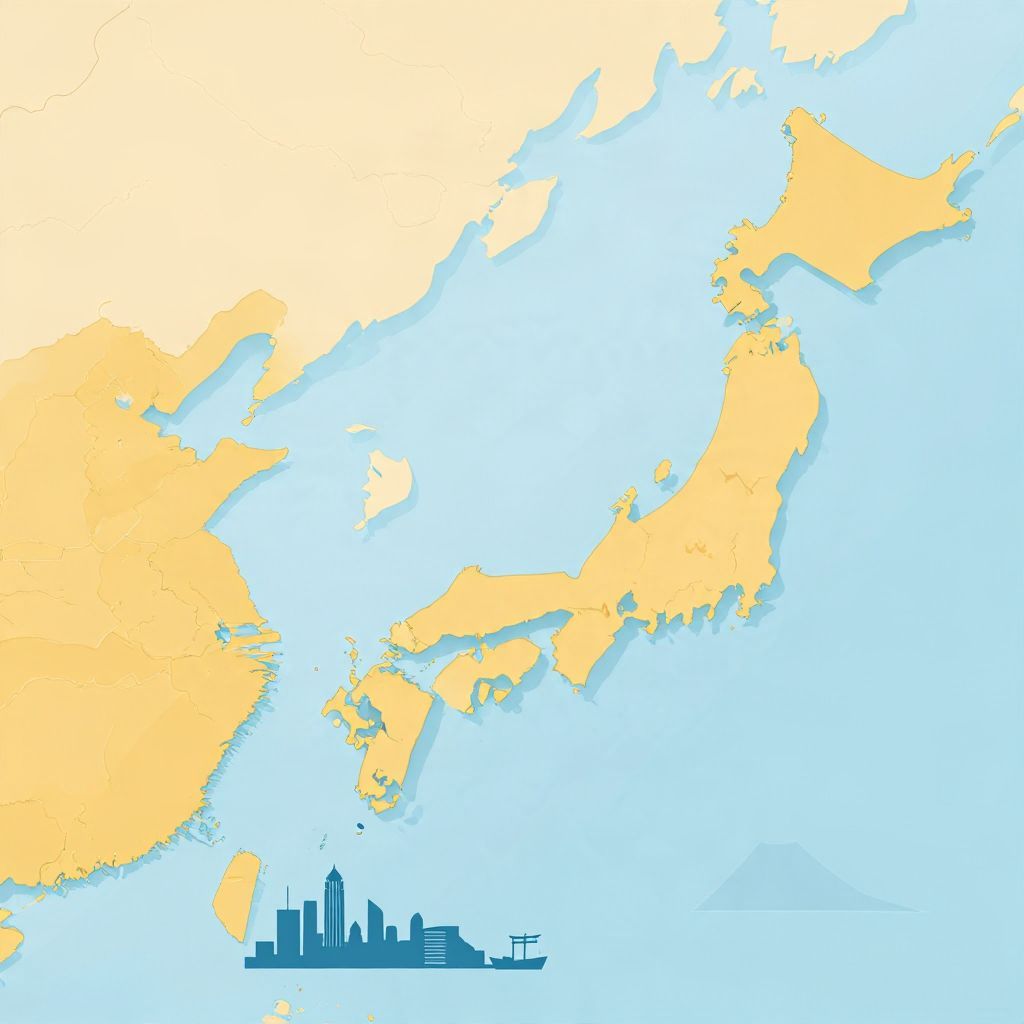
Is Hong Kong in Japan? No. Hong Kong is not part of Japan, and it has never been a Japanese territory in the modern political sense. Hong Kong is a Special Administrative Region of China, located on the southern coast of China near the Pearl River Delta.
The confusion usually comes from geography, history, and the long period of Japanese influence in East Asia. Hong Kong has been shaped by British colonial rule, wartime Japanese occupation, and close economic ties with Japan, but those connections do not make it Japanese.
Is Hong Kong in Japan?
No. Hong Kong is not in Japan geographically, politically, or historically. It is a Chinese territory with a distinct administrative status. Japan is an independent island nation far to the northeast, while Hong Kong sits on the coast of southern China, bordering Guangdong Province.
Where Hong Kong Is Located
Hong Kong lies on the south coast of China, facing the South China Sea. It includes Hong Kong Island, the Kowloon Peninsula, the New Territories, and many smaller islands. Japan, by contrast, is an archipelago in East Asia made up of four main islands and many smaller ones. The two places are separated by the East China Sea and are hundreds of miles apart.
Why the geography matters
People sometimes ask whether Hong Kong is in Japan because both places are major East Asian economic centers with busy ports, dense cities, and strong international trade links. But similar urban culture does not mean the same country. Geography and sovereignty are separate questions, and in this case the answer is clear: Hong Kong is not in Japan.
Hong Kong’s Historical Status: A Brief Timeline
Hong Kong’s history helps explain why the question comes up so often. Its modern political identity was shaped by colonialism, war, and the return of sovereignty to China in 1997.
- Before the 19th century: The area was part of the wider Chinese imperial world, with fishing villages and market settlements.
- 1842: After the First Opium War, Britain acquired Hong Kong Island under the Treaty of Nanking.
- 1860: Britain gained the Kowloon Peninsula south of Boundary Street after the Convention of Peking.
- 1898: Britain leased the New Territories for 99 years.
- 1941–1945: Japan occupied Hong Kong during World War II.
- 1997: Britain transferred sovereignty over Hong Kong to the People’s Republic of China.
This timeline shows the key point: Hong Kong was ruled by Britain for more than a century, occupied by Japan for a few years during wartime, and then returned to Chinese sovereignty. It was never absorbed into Japan as a permanent part of the Japanese state.
Was Hong Kong Ever Controlled by Japan?
Yes, but only temporarily. Japan occupied Hong Kong from December 1941 until August 1945 during World War II. This occupation was harsh and destructive, but it was a military occupation, not annexation. Hong Kong did not become a normal Japanese prefecture or a lasting part of the Japanese empire in the way some territories were incorporated elsewhere.
The Japanese occupation of Hong Kong
Japanese forces attacked Hong Kong shortly after the Pacific War began in December 1941. British, Canadian, Indian, and local defenders resisted, but the colony surrendered on Christmas Day, 1941. Japan then governed Hong Kong until its defeat in 1945. During that period, the Japanese military controlled administration, food supplies, policing, and daily life.
The occupation brought severe hardship: shortages, forced labor, inflation, violence, and displacement. Many residents suffered famine and repression. After Japan’s surrender in 1945, British administration returned. This wartime episode is important historically, but it does not change Hong Kong’s national identity.
Why People Confuse Hong Kong With Japan
Several historical and cultural factors can make the question seem plausible at first glance. The confusion usually comes from a mix of wartime memory, modern business ties, and East Asian regional similarity rather than from actual political geography.
1. Wartime memory
Older generations in Hong Kong and across East Asia still remember the Japanese occupation of the 1940s. Because Japan once controlled the city, some people loosely associate Hong Kong with Japan in historical conversation. But occupation is not the same as ownership in a lasting legal sense.
2. Strong economic and cultural ties
Hong Kong has long been connected to Japan through trade, tourism, finance, food culture, and popular media. Japanese brands, films, fashion, and cuisine have been influential in Hong Kong, especially since the second half of the 20th century. These ties are real, but they do not alter sovereignty.
3. Regional proximity in East Asia
Hong Kong, China, Japan, Korea, and Taiwan are all part of East Asia, so outsiders sometimes blur them together. Yet each has a separate history, language environment, political structure, and legal identity. Hong Kong’s Cantonese-speaking culture and colonial past are very different from Japan’s imperial and postwar national history.
Hong Kong Under British Rule, Not Japanese Rule
For most of its modern history, Hong Kong was under British control, not Japanese control. Britain governed the territory from the 19th century until 1997, except for the wartime occupation. This long colonial period shaped Hong Kong’s legal system, city planning, port economy, and international orientation.
How British rule shaped Hong Kong
British administration introduced common-law institutions, English as an important language of government and business, and a commercial port economy tied to global trade. Hong Kong became a major financial and shipping center. These developments are central to understanding the city’s modern identity and are unrelated to Japan as a sovereign power.
The 1997 handover
In 1997, Hong Kong was transferred from Britain to China under the principle of “one country, two systems.” This arrangement preserved a separate legal and economic system for Hong Kong for a period after the handover. Again, this was a transfer between Britain and China, not a transfer to Japan.
Hong Kong’s Relationship With China
Historically, Hong Kong has been tied to China by geography, population, language, and culture. Most residents have Chinese ethnic roots, and Cantonese has long been the dominant spoken language. The city’s modern political status, however, has been shaped by treaties, colonial rule, war, and later reintegration with China.
This is why the most accurate answer is not simply “Hong Kong is Chinese” in a vague sense, but more precisely that Hong Kong is a Special Administrative Region of China with a distinct history. It is not part of Japan, and it never has been in any permanent political sense.
Historical Evidence Against the Idea That Hong Kong Is in Japan
Several kinds of evidence make the answer unambiguous:
- Maps and geography: Hong Kong is on China’s southern coast, not within the Japanese archipelago.
- Treaties and colonial records: The main 19th-century transfers involved Britain and China, not Japan.
- World War II history: Japan occupied Hong Kong temporarily, but occupation ended in 1945.
- Modern sovereignty: Since 1997, Hong Kong has been under Chinese sovereignty as a Special Administrative Region.
These facts are well established in historical scholarship and international geography. There is no serious historical basis for describing Hong Kong as being in Japan.
Why the Question Still Matters
Questions like “Is Hong Kong in Japan?” may seem simple, but they reveal how history shapes public understanding of place. Hong Kong’s identity has been influenced by empire, war, migration, and globalization, so it can be easy to misread its status if one focuses only on its modern cityscape or its international character.
The question also shows how wartime memory can linger. For many families in Hong Kong, the Japanese occupation remains a painful historical memory. At the same time, postwar cultural exchange and tourism have created a very different relationship with Japan. History often leaves behind layered meanings, and Hong Kong is a strong example of that complexity.
So the direct answer is simple: Hong Kong is not in Japan. It is a Chinese territory with a distinct history, briefly occupied by Japan during World War II, governed by Britain for more than a century, and returned to China in 1997. For more background on East Asian history and identity, you can also explore broader historical context.