
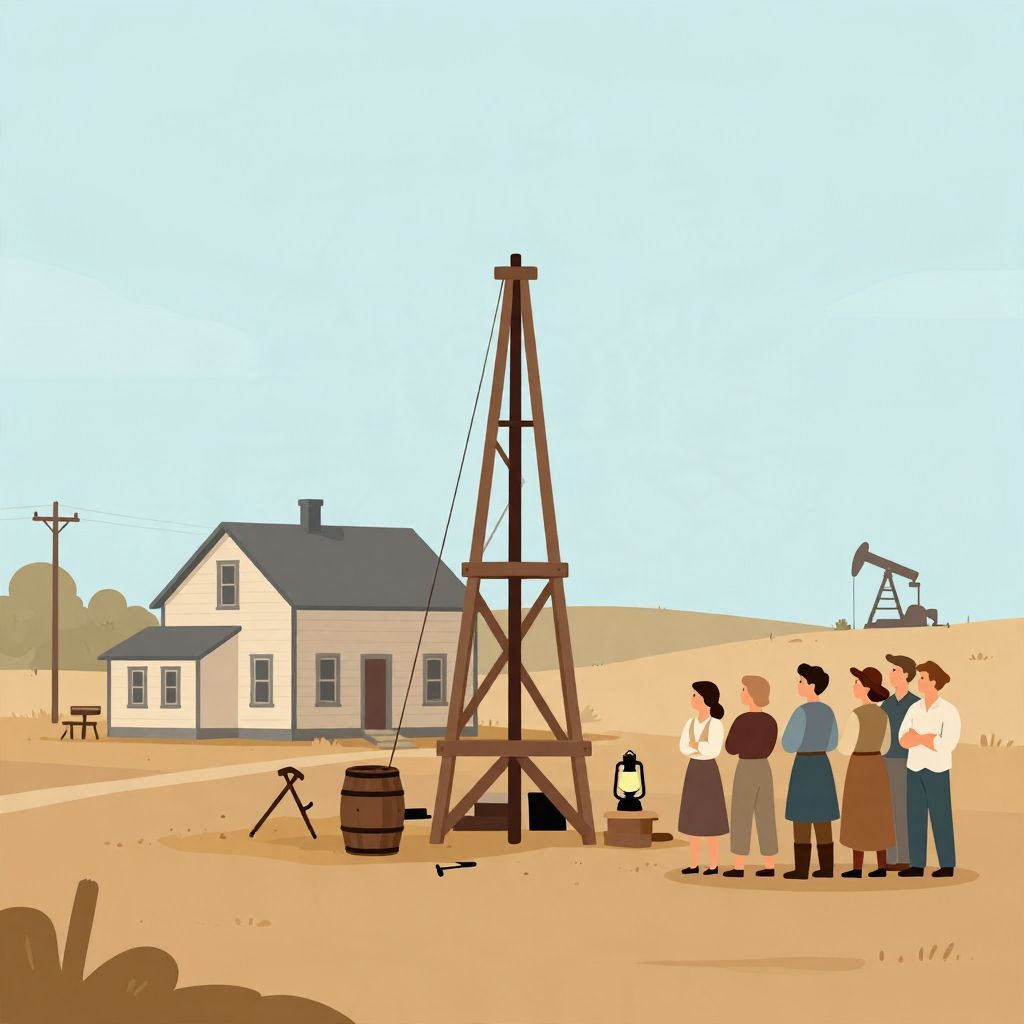
Is Sarah’s Oil based on a true story? The short answer is that the title strongly suggests a historical inspiration, but the exact answer depends on which work you mean and how the story is framed. For any film, book, or television project with this kind of title, the key question is whether it adapts a documented person, event, or family history—or whether it uses a real-sounding setting for a largely fictional narrative.
To answer that responsibly, we need to separate confirmed historical evidence from promotional language, legend, and dramatization. In stories about oil, land, family wealth, or early resource discovery, writers often draw on real historical patterns even when individual characters and scenes are invented.
Is Sarah’s Oil based on a true story?
There is no single historical event universally known as “Sarah’s Oil,” so the safest answer is that the title alone does not prove a true story. If the work is a drama “based on” real events, it may be inspired by an actual person or incident, but unless the creators identify their source material, much of the plot may still be fictionalized.
In historical storytelling, “based on a true story” usually means a blend: a real setting, a real social problem, or a real person’s broad experience, combined with invented dialogue and compressed chronology. That is especially common in stories involving oil booms, inheritance disputes, frontier life, or women navigating male-dominated industries.
What counts as a true story in historical drama?
Fact, inspiration, and dramatization are not the same
When audiences ask whether something is “true,” they often mean one of three different things. First, did the central person actually exist? Second, did the main events happen? Third, is the emotional message faithful even if the details are changed? Historical dramas often answer yes to one or two of these, but not all three.
- Documented history: events, people, and dates supported by records, newspapers, letters, government files, or other evidence.
- Historical inspiration: a story shaped by real conditions or a loosely similar case, but not a direct retelling.
- Fictionalization: invented scenes, merged characters, altered timelines, or imagined motives used to make the story work dramatically.
That distinction matters because a title can sound biographical without being a strict biography. A work about oil may borrow from the history of land speculation, drilling rights, or family conflict without being tied to one verifiable “Sarah.”
Why oil stories often feel historical even when they are not fully documentary
The oil industry created dramatic real-life conflicts
Oil history is full of the kinds of conflicts that make compelling drama: sudden wealth, fraud, land grabs, environmental change, labor conflict, and legal battles over ownership. In the late 19th and early 20th centuries, oil discoveries transformed communities in places such as Pennsylvania, Texas, California, Oklahoma, and beyond. Those transformations produced countless true stories that later inspired novels and films.
Because of that history, a title like Sarah’s Oil immediately suggests a period setting and a struggle over resources. It may evoke the era when oil prospecting could turn ordinary land into a fortune overnight, or when families fought to protect property from powerful interests. But that atmosphere alone does not establish that the plot is a direct historical record.
Women’s roles in oil history are often overlooked
If the story centers on a woman named Sarah, it may be drawing attention to a real historical pattern: women were often central to family landholding, inheritance, and local business decisions, even when official histories favored male entrepreneurs. In some cases, women defended property rights, managed estates, or benefited from land that later became valuable because of mineral discoveries.
That said, the historical record is uneven. Many women’s contributions were underreported, especially in frontier and industrial settings. So a film or book may be inspired by a real woman’s experience while still filling in gaps with imagined scenes. That is common in historical storytelling, but it should not be mistaken for a fully documented biography.
How historians evaluate a “based on true story” claim
Look for the source of the narrative
To determine whether Sarah’s Oil is based on a true story, historians would ask: What is the source material? Is it adapted from a memoir, court case, newspaper account, oral history, or archival record? Does the creator identify a specific person or place? Without that information, the claim remains broad and open to interpretation.
Reliable historical interpretation depends on evidence. If a story is connected to a real person, there should usually be some trace of that person in records such as censuses, land deeds, probate files, local newspapers, or company documents. If those records are absent or unclear, the work may still be meaningful, but its historical status becomes harder to verify.
Watch for common signs of dramatization
Even when a story has a real foundation, filmmakers and authors often adjust it for narrative clarity. Common changes include combining several real people into one character, moving events forward or backward in time, simplifying legal disputes, or inventing a single villain to represent a broader system.
- Compressed timelines make events seem faster than they were.
- Composite characters merge several people into one role.
- Invented dialogue fills gaps where no transcript exists.
- Heightened conflict can make ordinary disputes look more dramatic.
These techniques do not automatically make a story dishonest. They are standard in historical drama. But they do mean that “true story” should be read as “historically inspired,” not as a guarantee of exact accuracy.
The historical background that stories like Sarah’s Oil often draw from
Oil booms changed land, law, and local power
In the United States, major oil booms reshaped entire regions. The Pennsylvania oil rush began in the mid-19th century after the famous Drake well of 1859, and later discoveries in Texas and Oklahoma accelerated industrial growth. Oil could turn a modest farm into a contested asset, especially when mineral rights were separated from surface ownership.
This created a legal and social world that is ideal for drama: families disputed inheritance, companies negotiated or pressured landowners, and local communities struggled with rapid change. Stories set in this environment often revolve around whether a person can protect land, dignity, or family legacy against more powerful forces.
Race, class, and regional inequality often shaped access to wealth
Oil wealth did not reach everyone equally. In many places, access to land and legal protection depended on race, class, citizenship, and social status. Historical stories about oil can therefore reveal more than business history; they can show how inequality shaped who profited from natural resources and who was pushed aside.
If Sarah’s Oil is set in a period of rapid development, it may be engaging with those broader historical themes. Even if the central plot is fictional, it may still reflect real tensions from the era: who owned the land, who controlled the drilling, and who benefited from the discovery.
Why audiences ask this question
Because historical stories feel more meaningful when they are real
People often want to know whether a story is true because real history adds emotional weight. If a character’s struggle actually happened, the story can feel like testimony rather than entertainment. That is especially true for stories involving hardship, injustice, or overlooked figures, where audiences hope the drama will help recover a forgotten past.
But the desire for truth can also lead to confusion. Marketing language sometimes blurs the line between “inspired by” and “based on.” A title may sound biographical even if it is not. That is why the best historical answer is careful rather than absolute: the title suggests a connection to reality, but the degree of that connection must be verified case by case.
So what is the most accurate conclusion?
The most historically responsible answer is that Sarah’s Oil cannot be assumed to be a literal true story from the title alone. It may be based on real historical conditions, a real person named Sarah, or a specific oil-related event, but that requires confirmation from the creators or source material. Without that evidence, it should be treated as a dramatized historical work rather than a fully documented account.
In other words, the story may be true in theme, setting, or inspiration, while still being partially fictional in detail. That is common in historical drama, especially when the subject involves oil, land, and family memory.
For readers interested in how history becomes storytelling, it can be useful to compare this kind of question with broader discussions of historical interpretation and the ways cultures reshape real events into narrative, including topics like cultural divergence. The key takeaway is simple: a title can point toward history, but only evidence can confirm how much of the story is actually true.