
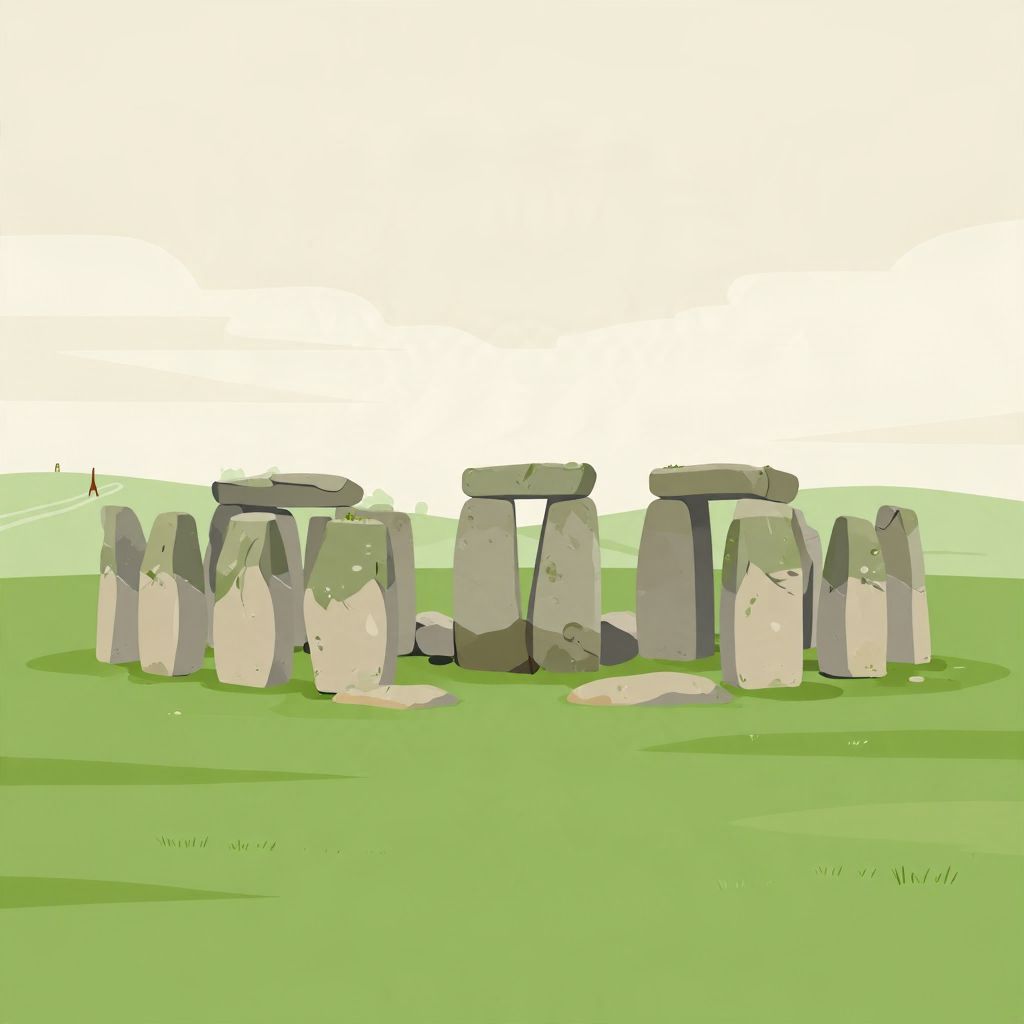
Is Stonehenge a Wonder of the World? The short answer is yes in a cultural sense, but not in the formal ancient-list sense. Stonehenge is one of the world’s most famous prehistoric monuments, and many people describe it as a wonder because of its age, scale, and mystery.
It is not one of the original Seven Wonders of the Ancient World, but it is often treated as a wonder of human achievement. Its meaning has changed over time, from sacred landscape to tourist icon, and that history helps explain why it continues to fascinate people today.
Is Stonehenge a Wonder of the World?
Stonehenge is widely regarded as a wonder of the world, but it is not officially one of the ancient Seven Wonders. Instead, it is a prehistoric monument in England that has earned global fame for its construction, symbolism, and survival across thousands of years.
What Stonehenge Is and Why It Matters
Stonehenge is a circular stone monument on Salisbury Plain in Wiltshire, in southern England. It was built in stages over many centuries, beginning around 3000 BCE and continuing into the late Neolithic and early Bronze Age. The monument matters because it reflects the beliefs, skills, and social organization of prehistoric communities that left no written records.
Unlike a palace, temple, or fortress built by a known ruler, Stonehenge was created by people whose names are lost to history. Archaeology shows that it was part of a larger ceremonial landscape, not an isolated structure. That broader setting is one reason historians and archaeologists treat it as more than just a pile of stones.
Why People Call Stonehenge a Wonder
People call Stonehenge a wonder because it combines engineering, scale, and mystery. The monument includes massive sarsen stones and smaller bluestones, some of which were transported from distant sources in Wales. Moving and arranging such stones without modern machinery required planning, labor, and technical knowledge.
Its exact purpose is still debated. Scholars have proposed uses ranging from ritual and burial to astronomical observation and seasonal gathering. The uncertainty does not weaken its importance; in fact, the lack of a single definitive explanation is part of what makes Stonehenge so compelling.
Reasons Stonehenge is often seen as a wonder
- It is extremely old, with origins around 3000 BCE.
- It was built in multiple phases over a long period.
- Some stones were transported from far away, showing impressive prehistoric logistics.
- It has survived for millennia despite weathering, reuse, and human interference.
- It remains one of the most recognizable monuments in the world.
Stonehenge and the Seven Wonders of the Ancient World
Stonehenge is not part of the traditional Seven Wonders of the Ancient World. Those wonders were a later Greek idea, referring to famous monuments around the Mediterranean and Near East, such as the Great Pyramid of Giza and the Hanging Gardens of Babylon. Stonehenge was not included because it lies outside that ancient cultural list and was not known in the same way to the classical world.
That distinction matters. When people ask whether Stonehenge is a wonder of the world, they may mean one of two things: whether it belongs to the formal ancient list, or whether it is widely admired as a world-class monument. In the first sense, the answer is no. In the second, the answer is clearly yes.
How Stonehenge Was Built
Stonehenge was not built all at once. Archaeologists generally divide its development into several phases. The earliest activity at the site may have included a circular earthwork enclosure and timber features. Later builders added stone settings, including the famous standing stones and lintels that form the monument’s iconic shape.
The construction process reveals a great deal about prehistoric Britain. The builders had to quarry, transport, and position stones weighing many tons. They likely used sledges, rollers, ropes, timber frameworks, and coordinated labor. While the exact methods remain debated, there is no need to invoke lost technology or supernatural explanations; human ingenuity is enough to explain the achievement.
Broad phases of development
- Early enclosure — around 3000 BCE, with earthworks and possible ritual use.
- Bluestone arrangements — later in the Neolithic period, with stones brought from western Britain.
- Sarsen circle and trilithons — the most famous stone arrangement, likely completed around 2500 BCE.
- Later modifications — continued use and adjustment into the Bronze Age.
What Was Stonehenge For?
No one knows Stonehenge’s original purpose with certainty, and it may have served more than one function. Archaeological evidence suggests it was linked to ritual activity, burial, and perhaps seasonal gatherings. Human remains found nearby indicate that the area had funerary significance, while the monument’s alignment with the solstices suggests attention to the sun’s movement.
Some popular accounts describe Stonehenge as an ancient observatory. That idea contains a grain of truth, since the monument’s orientation does relate to solar events. But calling it only an observatory oversimplifies it. Prehistoric monuments often had overlapping religious, social, and ceremonial meanings that do not fit neatly into modern categories.
Common scholarly interpretations
- Ritual and ceremonial center for communal gatherings.
- Burial landscape connected to ancestors and the dead.
- Solar alignment site associated with solstices.
- Symbol of social power showing the ability to organize labor and belief.
Why Stonehenge Has Survived in the Historical Imagination
Stonehenge has remained famous not only because of its age, but because later generations kept reinterpreting it. Medieval writers attached legends to the monument, including stories about giants, Merlin, and ancient kings. These tales are not historical evidence, but they show that Stonehenge was already seen as mysterious long before modern archaeology.
In the early modern period, antiquarians began to study the site more systematically. By the nineteenth and twentieth centuries, Stonehenge had become a major subject of archaeological research and public debate. Its meaning shifted from myth to science, though it never lost its aura of wonder.
Stonehenge as a Cultural and National Symbol
Today Stonehenge is both a heritage site and a symbol of Britain’s deep past. It appears in schoolbooks, travel writing, documentaries, and popular culture. For many visitors, it represents continuity with a remote prehistoric world that otherwise would be nearly invisible.
Its status also reflects modern ideas about preservation. Stonehenge has been protected because it is not only an archaeological site but also a cultural landmark. The monument’s importance lies partly in what it can tell us about ancient people and partly in what it means to later societies that inherited it.
Why preservation matters
- It protects fragile archaeological evidence.
- It allows ongoing research into prehistoric Britain.
- It preserves a shared heritage site for future generations.
- It helps explain how ancient monuments become modern symbols.
Myths, Legends, and Historical Evidence
Stonehenge has inspired many legends, but history and myth should not be confused. The claim that Merlin magically moved the stones is a medieval story, not a factual explanation. Likewise, theories that the monument was built by Romans, Druids, or lost advanced civilizations do not match the archaeological record.
Evidence-based history points instead to Neolithic and early Bronze Age communities in Britain. These people were capable of large-scale construction, long-distance exchange, and complex ritual practice. Stonehenge is extraordinary precisely because it was created by societies often underestimated in older histories.
So, Is Stonehenge a Wonder of the World?
Yes, Stonehenge is a wonder of the world in the broad, modern sense: it is an extraordinary human-made monument of global significance. No, it is not one of the classical Seven Wonders of the Ancient World. The difference is important, but it does not diminish Stonehenge’s importance. If anything, its survival, scale, and mystery make it one of the most remarkable prehistoric sites on Earth.
Its lasting value lies in the combination of evidence and uncertainty. We can see how it was built, when it was built, and how it changed over time, yet we still cannot reduce it to a single simple purpose. That balance of knowledge and mystery is part of what makes Stonehenge a true wonder. For related reading, see what the Seven Wonders of the World were and how cultural preservation shapes historic architecture.