
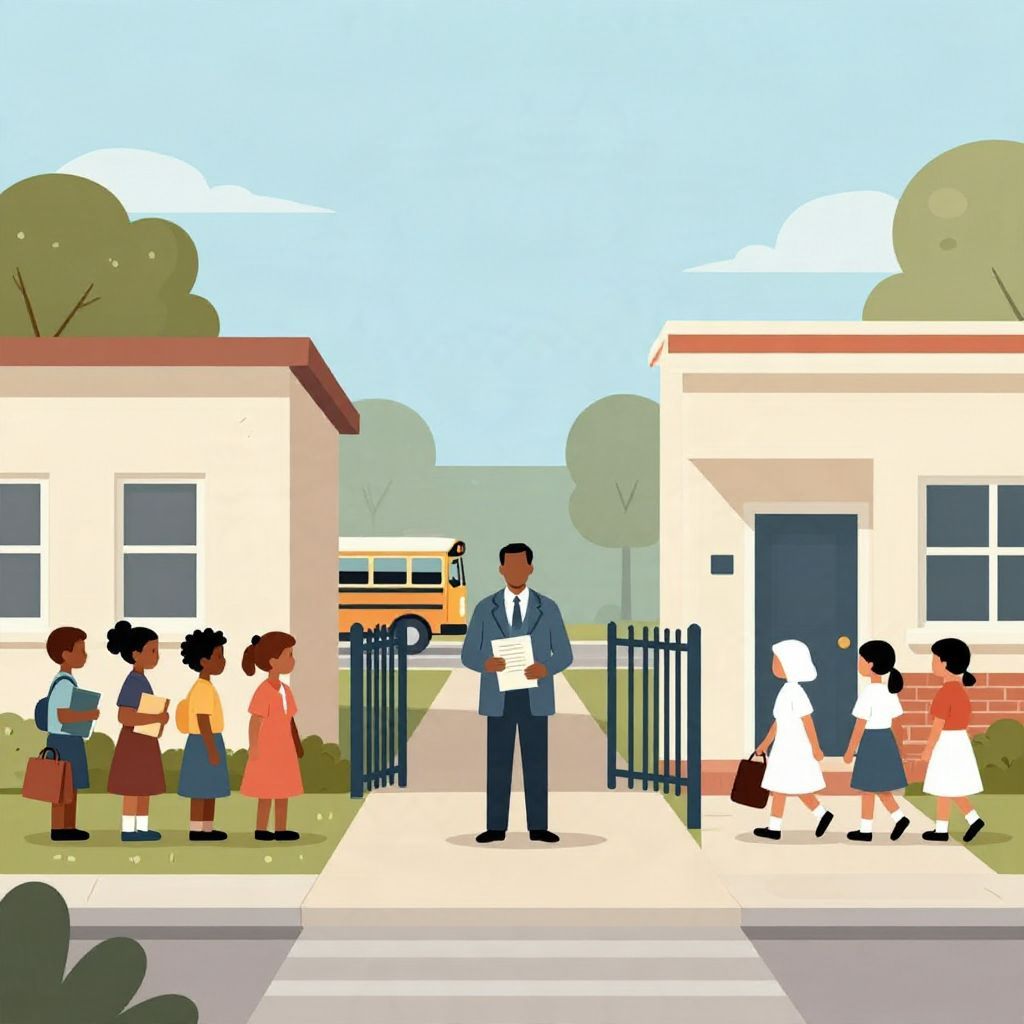
“Separate Is Never Equal” is a phrase most closely associated with the long struggle against school segregation in the United States. It captures the central historical truth that separate facilities for different racial groups were rarely, if ever, truly equal in practice.
The phrase is especially linked to the 1946–1947 case Mendez v. Westminster, which challenged the segregation of Mexican American children in California schools. That case helped weaken legal segregation in the Southwest and set important precedents for the broader civil rights movement.
What does “Separate Is Never Equal” mean in history?
“Separate Is Never Equal” means that laws or policies that divide people by race, ethnicity, or another identity usually produce unequal treatment, even when authorities claim the separation is fair. Historically, the phrase is tied to school segregation in the United States, where “separate” schools, transportation, and public services were typically worse for marginalized communities.
The idea became famous through civil rights activism and later through a children’s book about Mendez v. Westminster. But the historical meaning reaches beyond one case: it describes a wider system of racial hierarchy built into law, housing, education, and public life.
How did school segregation develop in the United States?
School segregation grew out of slavery, racial discrimination, and the legal systems created after the Civil War. In the South, “Jim Crow” laws separated Black and white Americans in schools and many other public spaces. In the West and Southwest, segregation also affected Mexican Americans, Native Americans, Asian Americans, and other groups, though the rules varied by state and locality.
The legal foundation for racial separation was strengthened by the Supreme Court’s 1896 decision in Plessy v. Ferguson, which upheld “separate but equal” public facilities. In reality, the “equal” part was usually false. Schools for nonwhite children often had fewer books, poorer buildings, shorter terms, underpaid teachers, and limited resources.
Why did officials defend segregation?
Supporters of segregation claimed it preserved order, reflected local custom, or prevented conflict. In practice, segregation protected white political power and social privilege. It also normalized the idea that racial difference justified unequal access to opportunity.
That is why the phrase “separate is never equal” became so powerful: it exposed the gap between the legal language of equality and the lived reality of discrimination.
The Mendez v. Westminster case and its importance
Mendez v. Westminster was a federal court case decided in 1947 in California. It involved Mexican American families in Orange County who challenged the segregation of their children into separate “Mexican schools.” The court ruled that this segregation was unconstitutional and not justified by any educational need.
The case mattered because it was one of the first major federal victories against school segregation in the 20th century. It did not end segregation nationwide, but it helped build the legal and moral argument that separate schools harmed children and violated democratic principles.
Who were the Mendez family and their allies?
The case is named after Sylvia Mendez’s family, especially her father, Gonzalo Mendez, one of several parents who led the challenge. Other families joined the lawsuit, and civil rights advocates supported them. Their effort was not only about one school district; it was about the dignity and citizenship of Mexican American children throughout California.
One important feature of the case is that it showed school segregation was not only a Black-white issue. Mexican Americans were also targeted by discriminatory policies, often on the basis of language, appearance, and assumptions about social status.
What did the court decide?
The federal district court found that the segregation of Mexican American students was unlawful. The decision argued that separating children by ancestry created harm and denied equal protection. In 1947, the U.S. Court of Appeals for the Ninth Circuit affirmed the ruling.
Although the case did not directly strike down all school segregation in the United States, it became a crucial stepping stone. It helped set the stage for later civil rights litigation, including Brown v. Board of Education in 1954.
How did “Separate Is Never Equal” influence Brown v. Board of Education?
The logic behind “Separate Is Never Equal” strongly influenced the legal strategy that led to Brown v. Board of Education. Civil rights lawyers argued that segregation itself caused harm, even if schools claimed to provide equal resources. In 1954, the Supreme Court agreed that segregated public schools were inherently unequal.
Mendez v. Westminster was not the only case that shaped Brown, but it was one of several important precedents. It showed that courts could recognize the psychological and civic damage caused by segregation, not just the material inequality of school buildings and supplies.
Why was Brown so significant?
Brown overturned the “separate but equal” principle in public education. It did not instantly integrate schools, and resistance was fierce, especially in the South. Still, the decision became a landmark in American constitutional history and a major victory for the civil rights movement.
In that sense, “Separate Is Never Equal” is not only a slogan. It is a summary of a legal and moral argument that changed the country.
Was segregation only a Southern issue?
No. Although the South is often the focus, segregation existed across the United States in different forms. In California and other Western states, Mexican American children were placed in separate schools. Native American children were also forced into assimilationist schooling systems, including boarding schools designed to erase language and culture. Northern cities often had segregated neighborhoods and schools through housing discrimination and local policy.
This broader history matters because it shows segregation was a national problem, not a regional exception. The forms differed, but the underlying pattern was similar: people of color were denied equal access to education and public life.
How did language and ethnicity shape discrimination?
In many places, officials justified school separation by claiming Mexican American children needed special instruction because they spoke Spanish or were “behind” academically. These claims often masked prejudice. Many children were segregated not because of educational need, but because white communities wanted to keep them apart.
That distinction is important historically. Not every educational accommodation is discriminatory, but forced separation based on ancestry or race is a different matter entirely.
The broader meaning of the phrase in civil rights history
“Separate Is Never Equal” became part of a larger civil rights vocabulary that challenged unequal systems in education, housing, transportation, employment, and voting. The phrase reflects a key historical insight: inequality is often built into institutions long before it appears in statistics or court records.
Activists used this idea to show that segregation was not a neutral arrangement. It shaped children’s expectations, limited social mobility, and taught society that some groups mattered less than others.
What did segregation do to children?
Segregated schools often had fewer resources, but the damage was not only material. Separation could communicate shame, inferiority, and exclusion. Children learned that the state itself treated them differently. That psychological harm was one reason civil rights advocates argued so forcefully against segregation.
At the same time, segregated communities often built resilience, leadership, and activism in response. Many parents, teachers, and students resisted discrimination through lawsuits, protests, and community organizing.
How is “Separate Is Never Equal” remembered today?
Today, the phrase is remembered through books, museums, school curricula, and civil rights history. It is especially associated with the story of Sylvia Mendez and the broader fight for educational equality. The phrase remains relevant because debates over school funding, district boundaries, language access, and racial inequality continue in new forms.
Historians also use the phrase as a reminder that formal equality on paper is not enough. If schools, neighborhoods, or public services are separated by race or class, the result is often unequal opportunity.
Why does the phrase still matter?
It matters because it names a recurring pattern in history: institutions can present discrimination as orderly, practical, or even benevolent while producing deep inequality. The phrase challenges that logic directly and reminds us that equal rights require more than separate systems.
That is why “Separate Is Never Equal” remains a concise and enduring lesson from American history. It points to the failure of segregation, the courage of families who challenged it, and the long struggle to make equality real rather than merely promised. For related reading, see No One Is Illegal on Stolen Land and What Does Oppression Mean?