
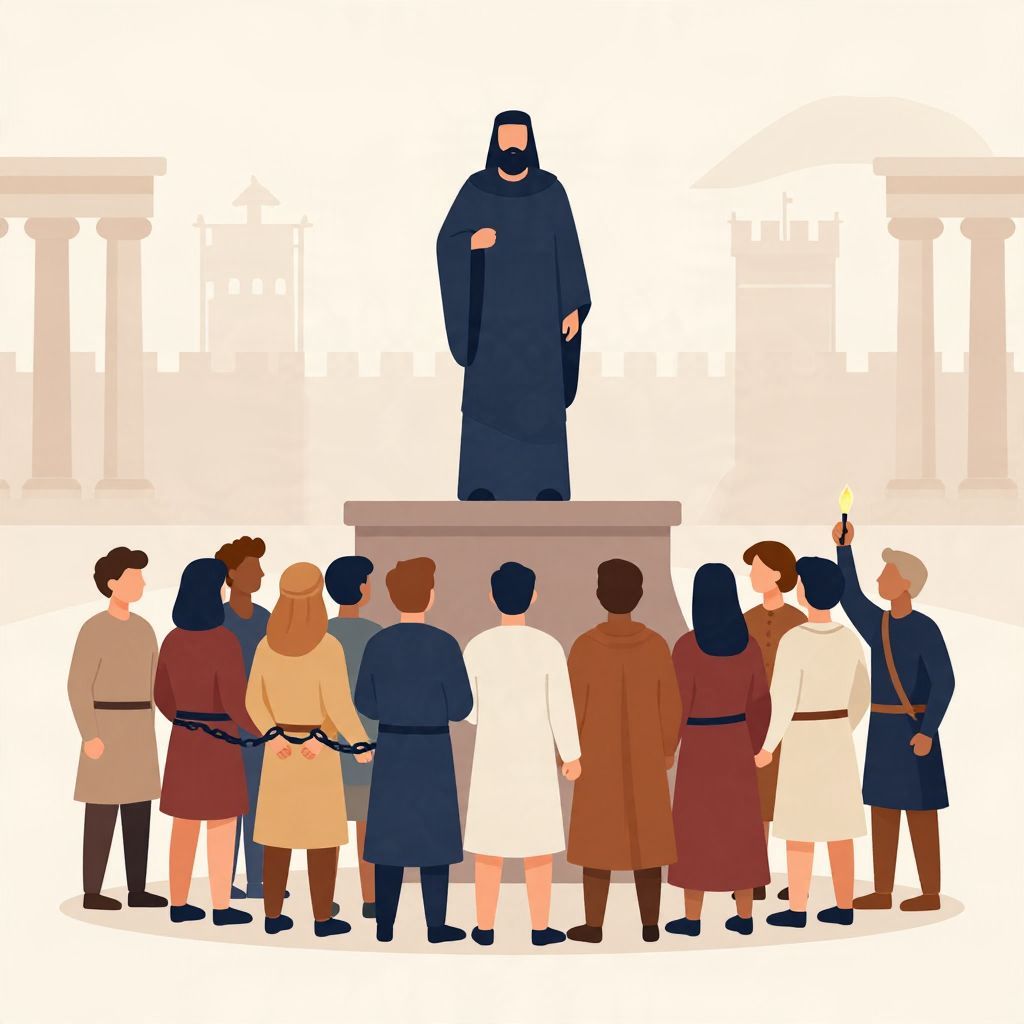
What does oppression mean, and why has the word mattered so much in history? In simple terms, oppression is the prolonged, unjust use of power to control, exclude, exploit, or silence people or groups. Historians use the term to describe systems, laws, and practices that keep inequality in place over time.
The idea is older than the modern word itself. Across empires, kingdoms, colonies, and modern states, people have recognized oppression in different forms: slavery, forced labor, legal discrimination, religious persecution, colonial rule, and political repression. Its history is really the history of power and resistance.
What does oppression mean in history?
Historically, oppression means more than one cruel act. It refers to a pattern in which authority, institutions, or dominant groups impose unfair restrictions on others and make those restrictions hard to escape. That can involve violence, law, custom, economic exploitation, or social exclusion, often all at once.
The core idea: power used unfairly
At its heart, oppression is about asymmetrical power. One group has the ability to decide who may work, worship, move, speak, own property, vote, or even live freely. The oppressed are not simply unhappy or disadvantaged; they are systematically denied rights, dignity, or opportunity.
How historians use the term
Historians use “oppression” to describe both direct and structural forms of domination. Direct oppression includes imprisonment, torture, censorship, or forced removal. Structural oppression includes laws and institutions that appear ordinary but consistently favor one group over another, such as caste systems, racial segregation, or colonial administrations.
Where did the idea of oppression come from?
The word itself comes through Latin and French roots meaning to press down or weigh heavily upon. But the experience it describes is much older than the modern term. Ancient societies had words for tyranny, subjugation, bondage, and injustice long before “oppression” became common in political language.
Ancient and classical roots
In the ancient Mediterranean world, writers often discussed tyranny and domination rather than oppression in the modern sense. Greek political thought, for example, contrasted lawful rule with tyranny, while Roman law recognized slavery and the power of masters over enslaved people. These societies normalized forms of inequality that later generations would identify as oppressive.
Religious and moral language
Many traditions also condemned oppression as a moral wrong. In biblical texts, for instance, oppression is associated with the abuse of widows, orphans, foreigners, and the poor. Similar moral critiques appear in Islamic, Christian, Jewish, Buddhist, and other traditions, where unjust power is often treated as a spiritual failing as well as a social one.
What are the main historical forms of oppression?
Oppression has taken many forms across history, but several patterns recur. The details differ by place and era, yet the underlying logic is similar: a powerful group uses institutions to benefit itself while limiting the freedom or security of others.
- Slavery — the ownership or forced control of human beings.
- Serfdom and bonded labor — systems that tie workers to land, lords, or creditors.
- Colonial rule — foreign powers governing conquered peoples for profit and control.
- Religious persecution — punishment or exclusion based on belief.
- Racial and ethnic discrimination — unequal treatment based on ancestry or identity.
- Political repression — censorship, surveillance, imprisonment, or violence against dissent.
- Gender oppression — legal and social systems restricting women and gender minorities.
Slavery and forced labor
Slavery is one of the clearest historical examples of oppression. In many societies, enslaved people were treated as property, denied family rights, and compelled to labor without freedom. From ancient empires to the Atlantic slave trade, slavery combined economic profit with extreme human domination.
Colonialism and empire
Empires often justified conquest as order, civilization, or religion, but colonial rule frequently depended on coercion, land seizure, and racial hierarchy. Indigenous peoples in the Americas, Africa, Asia, and the Pacific were often displaced, taxed, conscripted, or governed without meaningful consent. Colonial oppression could reshape language, education, labor, and identity for generations.
Political repression
Oppression also appears when states crush opposition. Autocratic regimes, military dictatorships, and one-party states have used secret police, prison camps, exile, and censorship to silence rivals. Even where governments claim to preserve stability, historians examine whether they did so by denying basic freedoms to large parts of the population.
How did oppression work in everyday life?
Oppression was not only visible in grand events like conquest or revolution. It shaped daily life through small but persistent controls: who could enter a city, marry whom, learn to read, testify in court, travel safely, or keep wages. Over time, these restrictions created habits of submission and fear.
Laws, customs, and social norms
Some oppressive systems were written into law; others were enforced by custom. In many places, women were denied property rights or political voice. Caste and class systems could determine occupation and social status from birth. Racial segregation and exclusion laws made inequality appear normal, even when they were deeply contested.
Violence and the threat of violence
Oppression does not always require constant force. Often, the threat of punishment is enough. Public executions, whippings, police raids, or military reprisals could make resistance seem impossible. The fear created by such violence was itself a tool of control.
How did people resist oppression?
Resistance is as old as oppression. People resisted through revolt, escape, protest, legal challenge, cultural survival, and everyday acts of defiance. Historians emphasize that oppressed people were never merely passive victims; they made choices, built communities, and fought back in ways large and small.
Open rebellion
Some of the most famous uprisings in history were responses to oppression. Enslaved people revolted in many societies, colonized populations fought imperial rule, and workers or peasants rose against harsh systems of exploitation. These movements did not always succeed, but they often forced rulers to reform or exposed the instability of oppressive regimes.
Legal and political reform
Other resistance took place through petitions, lawsuits, speeches, newspapers, and organizing. Abolitionist movements, anti-colonial campaigns, civil rights struggles, and feminist activism all challenged oppressive systems by appealing to law, morality, and public opinion. In many cases, rights expanded only after long pressure from below.
Cultural survival
When direct resistance was dangerous, people preserved identity through language, religion, music, family life, and memory. Cultural survival mattered because oppression often tried to erase not just freedom, but belonging. Maintaining traditions could become a quiet but powerful form of resistance.
How has the meaning of oppression changed over time?
The term has broadened in modern history. Earlier uses often focused on rulers, tyrants, or religious persecution. In the 18th, 19th, and 20th centuries, political thinkers increasingly used oppression to describe structural inequality, especially in relation to class, race, gender, and empire. The word became central to reform movements and social theory.
From tyranny to systems of inequality
In older political language, oppression often meant abuse by a ruler. Modern scholarship and activism expanded the concept to include institutions and social structures. This shift matters because injustice is not always the result of one cruel leader. It can also be built into ordinary systems that outlast any single government.
Modern debates about the term
Today, people sometimes use oppression broadly, and that can create disagreement. Some historians prefer precise terms such as slavery, segregation, authoritarianism, or colonialism. Others argue that “oppression” is useful because it connects these different practices as forms of sustained domination. Both approaches can be valid when used carefully.
Why is oppression such an important historical concept?
Oppression helps historians explain why inequality persists even when many people recognize it as unjust. It shows how power can be embedded in law, economy, culture, and violence. It also helps connect local histories to larger global patterns, from empire and enslavement to modern state repression and social exclusion.
It reveals structure, not just events
A battle or a dictator may be dramatic, but oppression often lasts longer than any single event. The concept helps explain continuity: why certain groups remain disadvantaged across generations, and how institutions can reproduce inequality even after formal reforms.
It also highlights human agency
At the same time, the history of oppression is also the history of resistance. People have challenged domination through revolt, organizing, art, religion, and everyday endurance. That is why the term matters: it names injustice, but it also points to the long struggle to overcome it.
What is the historical takeaway?
What does oppression mean? Historically, it means a sustained system of unfair control that limits freedom, rights, and dignity. It can be enforced by law, violence, custom, or economic power, and it has appeared in slavery, empire, segregation, and political repression across many eras. Understanding it helps explain both injustice and the movements that fought it. For related reading, see when tyranny becomes law and what is American imperialism.