
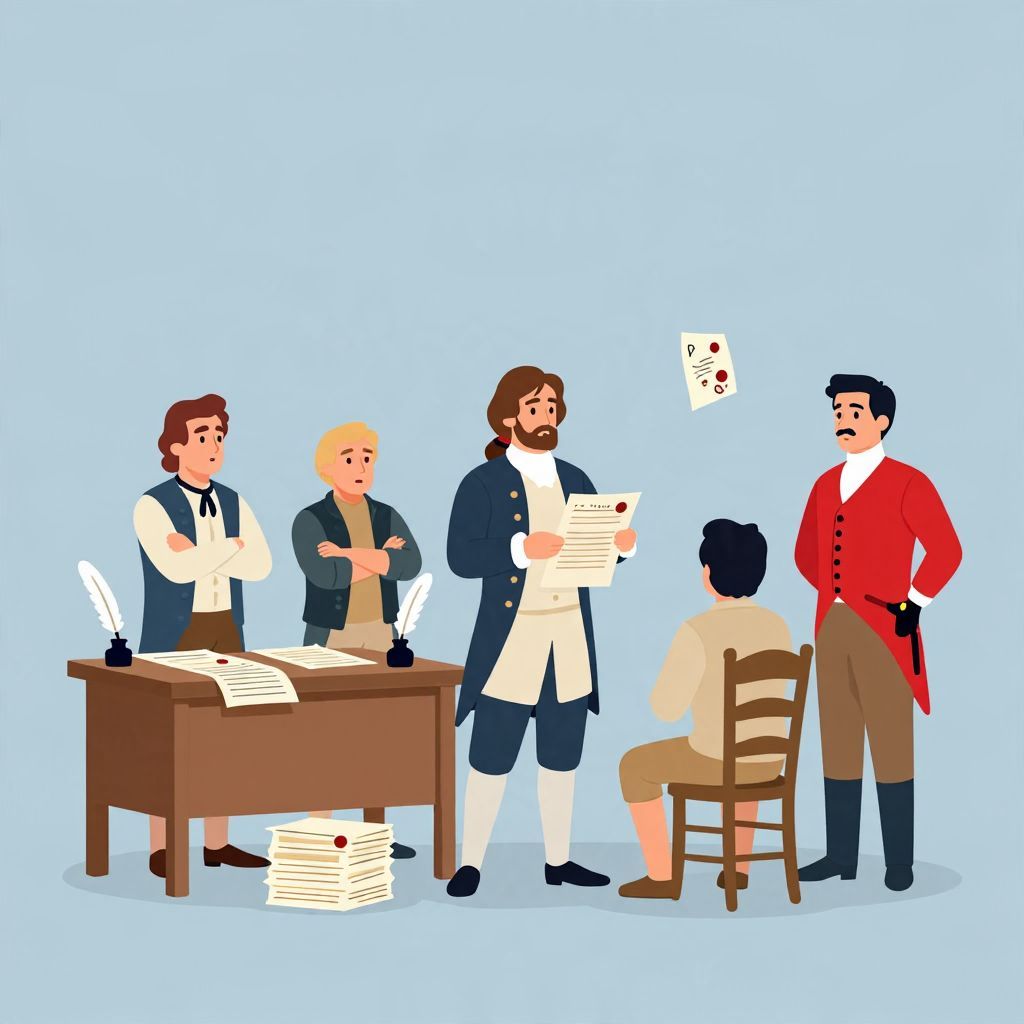
The Stamp Act is one of the best-known taxes in American colonial history, but what exactly did it tax? Enacted by the British Parliament in 1765, it did not tax land, tea, or everyday imported goods. Instead, it required a paid stamp on many printed and legal documents used in the colonies.
That detail mattered because the tax touched ordinary business, law, and communication. It became a symbol of Parliament’s claim to tax the colonies without their direct consent and helped ignite resistance that moved the British Empire closer to revolution.
What did the Stamp Act tax?
The Stamp Act taxed printed paper goods and official documents in Britain’s American colonies. This included newspapers, pamphlets, legal papers, licenses, almanacs, dice, and many other items that had to carry an official stamp showing the tax had been paid. In practice, it was a tax on the use of paper in daily colonial life.
How the Stamp Act worked
The law passed in 1765 required colonists to buy special stamped paper from authorized distributors. Without the stamp, a document could be invalid or unusable in court or commerce. The tax was different from a customs duty on imported goods because it applied inside the colonies to activities such as printing, filing lawsuits, making wills, and publishing newspapers.
Examples of items taxed under the act
- Legal documents such as deeds, wills, contracts, and court papers
- Newspapers and pamphlets
- Almanacs and calendars
- Licenses and permits
- Playing cards and dice
- Some commercial papers and official forms
The exact list varied by document type and by the way the law was administered, but the core idea was simple: if a paper item had legal or commercial value, it often needed a stamp.
Why Parliament created the Stamp Act
The British government introduced the Stamp Act after the costly Seven Years’ War, known in North America as the French and Indian War. Britain had gained territory, but it also carried a heavy debt and wanted the colonies to help pay for imperial defense. Parliament believed the colonies should contribute to the costs of governing and protecting the empire.
Revenue and imperial control
The Stamp Act was designed to raise money directly from the colonies, unlike earlier trade regulations that mostly affected imports and exports. It also gave Britain a way to strengthen administrative control. Because the tax touched lawyers, printers, merchants, and local officials, it reached into the structures of colonial society.
For many colonists, that was exactly the problem. They did not object only to paying money; they objected to Parliament imposing an internal tax on them when they had no elected representatives in Parliament. Their protest became known in the phrase “no taxation without representation,” though the exact wording developed over time as a political slogan rather than a single founding statement.
Why the tax caused such a strong reaction
The Stamp Act was unpopular not simply because it cost money, but because it seemed to challenge colonial rights and self-government. Many colonists believed only their own elected assemblies had the authority to tax them internally. Parliament, by contrast, claimed sovereignty over the entire empire and argued that colonial subjects were represented in a broader, virtual sense.
Who was most affected?
The tax hit several influential groups especially hard. Printers feared the cost would reduce newspapers and pamphlets. Lawyers and merchants faced higher costs for documents and contracts. Ordinary colonists also saw the tax as a threat because it reached into everyday civic life rather than only luxury consumption.
Because newspapers and pamphlets were central to political debate, taxing them had an unintended effect: it helped spread opposition. The same print culture the law targeted became a tool for resistance.
Colonial resistance and protest
Resistance to the Stamp Act was broad and often coordinated. Colonial assemblies passed resolutions against it, merchants organized nonimportation agreements, and crowds protested in the streets. Groups such as the Sons of Liberty emerged in several colonies to oppose the law through demonstrations, intimidation, and organized action.
Forms of opposition
- Political protest: colonial assemblies argued that Parliament had overstepped its authority.
- Economic pressure: merchants agreed to limit British imports to force repeal.
- Public demonstrations: protests targeted stamp distributors and symbols of British authority.
- Printed resistance: newspapers and pamphlets criticized the law and spread arguments against it.
In some places, stamp distributors resigned under pressure. In others, mobs destroyed property or intimidated officials. These protests were not uniform or peaceful in every case, and they reflected both ideological opposition and local anger. Still, they showed a colonial political network becoming more coordinated than before.
The Stamp Act Congress
One of the most important responses was the Stamp Act Congress, held in New York in October 1765. Delegates from several colonies met to draft petitions and statements defending colonial rights. This was not yet a united revolutionary government, but it was an important step toward intercolonial cooperation.
The Congress helped establish a pattern that would matter later: colonies could work together against British policy even while remaining separate political units. That cooperation was one of the early building blocks of the American resistance movement.
How and when the Stamp Act ended
The Stamp Act was repealed in 1766, less than a year after it took effect. British merchants, who were hurt by colonial boycotts, pressured Parliament to change course. At the same time, ministers worried that continuing unrest might damage imperial trade and authority. Parliament repealed the tax but passed the Declaratory Act, asserting that it still had the power to legislate for the colonies “in all cases whatsoever.”
Why repeal did not end the conflict
Repeal relieved immediate pressure, but it did not settle the deeper dispute. Colonists celebrated the end of the tax, yet many remained wary because Parliament had not abandoned its claim to authority. In the years that followed, new taxes and trade regulations reignited tensions, especially the Townshend duties and later the Tea Act. The Stamp Act crisis had shown both sides that the issue was not just money; it was political power.
What the Stamp Act reveals about colonial America
The Stamp Act is important because it exposed a fundamental disagreement about empire. Britain saw the colonies as part of a larger imperial system that could be taxed and governed from London. Many colonists increasingly saw themselves as communities with the right to govern their own internal affairs. The conflict over a tax on paper helped transform local complaints into a broader constitutional struggle.
Lasting significance
The crisis also helped shape the language and tactics of resistance. Boycotts, petitions, public meetings, and intercolonial congresses became familiar tools of protest. These methods would reappear in the years leading to the American Revolution. In that sense, the Stamp Act was not just a tax law; it was a turning point in the political relationship between Britain and its American colonies.
Quick answer: what did the Stamp Act tax?
The Stamp Act taxed printed and legal paper goods in the American colonies, including newspapers, pamphlets, wills, contracts, court documents, licenses, almanacs, playing cards, and dice. It required an official stamp to show payment, making it a tax on everyday paperwork and a major source of colonial protest.
Understanding the Stamp Act helps explain why a seemingly narrow tax became so explosive. It was not only about paper; it was about authority, representation, and the future of British rule in America. For related background, you may also want to explore colonial resistance in the American Revolution and the broader causes of the French and Indian War.