
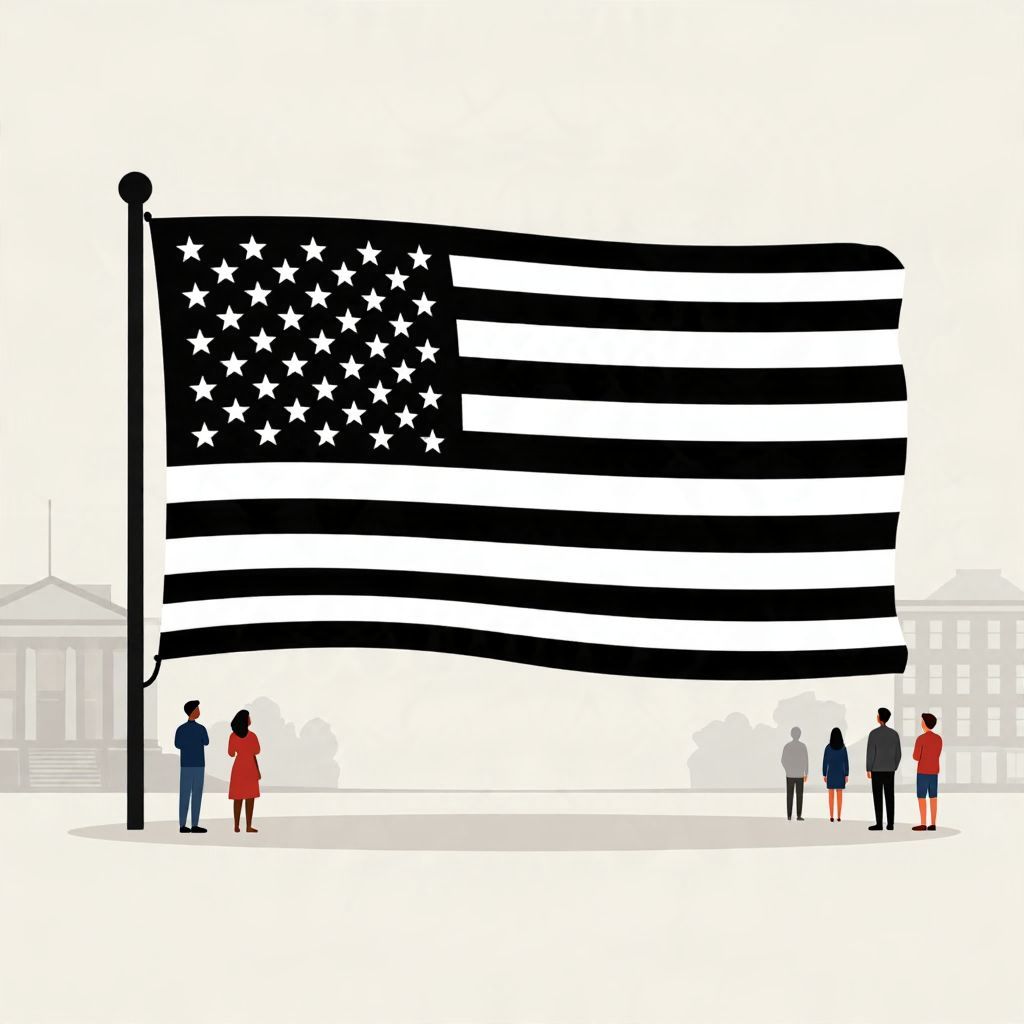
What does the black American flag mean? The short answer is that it is not an official U.S. national flag, but a modern symbol used in several different ways. Most commonly, it signals mourning, defiance, or a refusal to “surrender,” and in some settings it is also used by activist, military, or political groups with different meanings.
Because the black American flag is an informal symbol rather than a legally standardized one, its meaning depends heavily on context. Its history reflects both long-standing flag traditions and newer cultural uses in the United States.
What Does the Black American Flag Mean?
The black American flag usually means mourning, resistance, or a rejection of surrender. It is not an official government flag. In modern use, it can also express solidarity, protest, or a particular group identity, so its meaning changes by who is displaying it and why.
The Historical Roots of the Black Flag Symbol
The black flag has a long history well before the modern black-and-white American flag appeared. In many cultures, black flags have represented death, rebellion, piracy, anarchism, or battlefield defiance. Over time, that broad symbolic tradition influenced American uses of the color black on flags and banners.
Black as a symbol of mourning
In Western history, black has often been associated with grief and loss. That made it a natural color for memorial banners, funeral drapery, and wartime mourning symbols. When a black version of the American flag appears, one common interpretation is that it is meant to honor the dead or express national sorrow.
Black as a symbol of resistance
Black flags have also long been associated with resistance and refusal. In military and revolutionary settings, a black flag could signal “no surrender” or a willingness to fight to the end. That older tradition helps explain why some Americans see a black American flag as a sign of toughness, independence, or opposition to authority.
How the Black American Flag Became a Modern Symbol
The black American flag is a relatively modern visual adaptation of the Stars and Stripes. It is not part of the official flag code as a separate national design, but it has become popular in the 20th and 21st centuries through military culture, protest movements, and commercial flag production.
Military and tactical associations
One of the most visible modern uses of the black American flag comes from military and tactical culture. In this setting, the flag often suggests subdued patriotism, camouflage, or a “no surrender” attitude. Black-and-gray versions are especially common on uniforms, vehicles, and gear where a low-visibility design is preferred.
Some people also interpret the black flag in this context as a tribute to service members, especially in memorial settings. However, that meaning is not universal. For some viewers, it simply looks like a stylistic variation of the national flag rather than a formal symbol with a single fixed message.
Protest and political symbolism
In protests, the black American flag can mean dissatisfaction with the government, anger over national policy, or a sense that the country is in crisis. In these uses, black may symbolize grief, anger, or a warning that normal civic life has broken down. The message is usually political rather than ceremonial.
Because the symbol is flexible, it has been used by different groups across the political spectrum. That makes it important not to assume one fixed ideology from the flag alone. A black American flag in one place may express anti-government sentiment, while in another it may simply be a decorative or tactical item.
Is the Black American Flag an Official Flag?
No. The black American flag is not an official flag of the United States. The legally recognized national flag remains the red, white, and blue Stars and Stripes. A black version is an unofficial variation, and its meaning comes from custom rather than federal designation.
How the U.S. Flag Code fits in
The U.S. Flag Code sets standards for the respectful display of the national flag, but it does not create an official black American flag. People may alter the flag’s colors for art, fashion, protest, or branding, yet those versions are symbolic reinterpretations, not replacements for the national flag.
This distinction matters historically. The American flag has always been a powerful civic symbol, and changes to its appearance often carry political meaning. A black version is therefore best understood as a commentary on the original flag, not a new official emblem of the United States.
Common Meanings of the Black American Flag
There is no single universally accepted meaning. The same black flag can communicate different ideas depending on where and how it is used. These are the most common interpretations:
- Mourning — grief for people, events, or a perceived loss of national ideals.
- Resistance — refusal to surrender, comply, or accept authority.
- Protest — criticism of government, war, injustice, or social conditions.
- Military identity — a subdued or tactical version of patriotic symbolism.
- Memorial use — tribute to fallen service members or victims of violence.
These meanings can overlap. A person flying a black American flag may intend several messages at once, and observers may read it differently based on their own politics and experiences.
Why the Meaning Can Be Controversial
The black American flag can be controversial because it is visually powerful but historically ambiguous. Some people see it as a sincere expression of grief or patriotism under strain. Others see it as a symbol of extremism, anti-government anger, or hostility toward democratic institutions.
Context changes interpretation
Where the flag is displayed matters. On a memorial wall, it may seem solemn and respectful. On a political banner, it may seem confrontational. On a T-shirt or patch, it may be mostly stylistic. The same image can carry different meanings depending on the setting and the audience.
Why ambiguity matters historically
Symbols often become more flexible over time. The black American flag is a good example of how a national emblem can be adapted for mourning, identity, or dissent. That flexibility gives it broad appeal, but it also makes it easy to misunderstand or misuse.
How It Differs from Other Flag Variations
The black American flag is only one of several color variations based on the U.S. flag. Each variation tends to have its own social meaning, though none are official national replacements.
Black-and-white versions
These are the most common. They are often used for memorial, tactical, or protest purposes. In many cases, the absence of color is part of the message, suggesting solemnity or a stripped-down, harder-edged patriotism.
Blue-line flags
Some black-and-white flags include a single blue stripe, usually associated with police support. That version has a distinct meaning and should not be confused with the plain black American flag. The blue line adds a specific law-enforcement message that the plain black design may not have.
Red-line and other variants
Other versions use red, green, or additional markings to signal support for firefighters, military units, or other causes. These are part of a broader trend of modifying the American flag to express identity or solidarity through color.
What Historians Can Say with Confidence
Historically, the black American flag is best understood as a modern symbolic adaptation rather than an ancient tradition or official national emblem. Its meaning comes from older associations of black with mourning, rebellion, and defiance, combined with newer American uses in military, protest, and memorial culture.
What historians cannot say with confidence is that the black American flag has one fixed meaning for all people. It does not. Like many political symbols, it is shaped by context, audience, and intention. That is why the same flag can be read as patriotic, mournful, rebellious, or provocative.
Bottom Line: What the Black American Flag Means
The black American flag usually means mourning, resistance, or a refusal to surrender, but its meaning is not fixed. It is an unofficial modern symbol whose message depends on who is using it and where. If you want to understand it accurately, always look at the historical and political context around the flag itself.
For related reading, you may also want to explore what the black flag means in history and the meaning of a black American flag.