
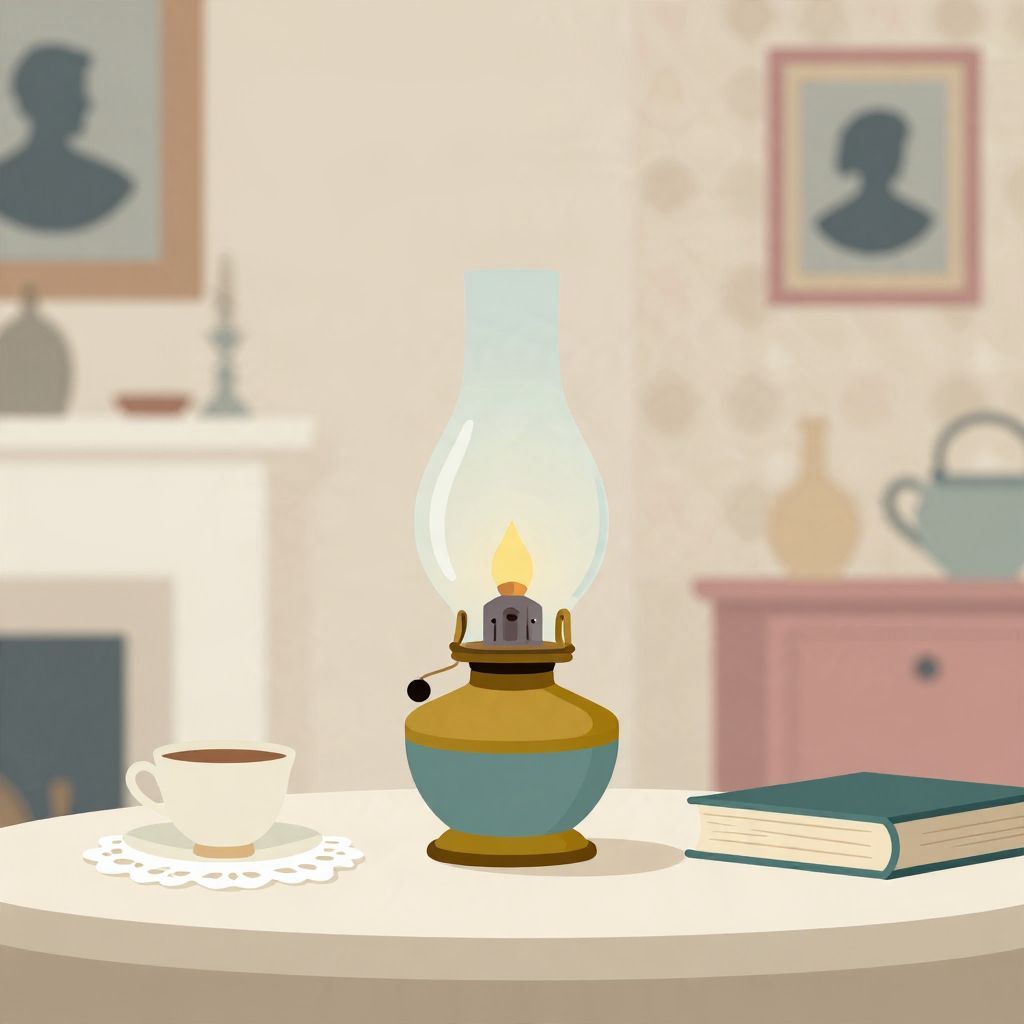
What is a fairy lamp? The term usually refers to a small decorative lamp, most often a late 19th-century glass or metal vessel designed to hold a tiny wick and a little oil or wax. Fairy lamps were made to give a soft, steady glow, and they became especially popular in Victorian homes as charming, practical household objects.
They are also remembered today as collectible antiques. Because the phrase can describe a few related lamp styles, the history of fairy lamps is best understood as part of the broader story of domestic lighting, industrial glassmaking, and changing tastes in home decoration.
What Is a Fairy Lamp?
A fairy lamp is a small ornamental lamp, usually made of glass, that held a miniature candle, oil, or spirit burner to produce a gentle light. In the Victorian period, the name was used for compact lamps with a protective shade or cover, often sold as decorative household items rather than serious sources of illumination.
The term does not point to one single standardized design. In practice, “fairy lamp” could describe a range of petite lamps, especially those made in the 19th century with colorful pressed glass, a base or holder, and a small reservoir for fuel. Their appeal came from both usefulness and beauty.
Where Did Fairy Lamps Come From?
Fairy lamps emerged in the 19th century, when domestic lighting was changing rapidly. Before widespread electrification, households relied on candles, oil lamps, and later gas lighting. As glassmaking improved and decorative household goods became more affordable, manufacturers began producing small lamps that were both functional and attractive.
Most fairy lamps are associated with the Victorian era, especially the mid-to-late 1800s. Their popularity fit a broader culture of domestic display, in which middle-class homes were filled with objects meant to signal refinement, comfort, and modern taste.
The Victorian home and small-scale lighting
Victorian interiors often used lamps for specific tasks: bedside reading, nursery lighting, hallways, or a gentle nightlight. Fairy lamps were well suited to these purposes because they gave a low flame that was less harsh than a larger lamp and could be placed safely in a small room or on a table.
They were not usually intended to light an entire room. Instead, they served a niche role in the household, which helped make them especially appealing as decorative gifts and novelty items.
How Were Fairy Lamps Made?
Many fairy lamps were made of pressed glass, a technique that became increasingly common in the 19th century. Molten glass was pressed into molds, allowing manufacturers to create patterned, colorful, and relatively inexpensive pieces in large quantities. This made decorative lamps accessible to more buyers than earlier hand-blown luxury glass.
Some fairy lamps were made from clear glass, while others came in ruby, amber, blue, green, opalescent, or frosted varieties. Metal fittings, chimneys, or candle holders might be added depending on the design. The result was a small object that could look delicate and elaborate even when mass-produced.
Common design features
- A small base or footed stand
- A cup or holder for a tiny candle or wick
- A glass shade, dome, or chimney
- Decorative patterns such as fluting, diamonds, ribs, or floral motifs
- Occasional colored or opalescent glass for a jewel-like effect
Why Were They Called Fairy Lamps?
The name “fairy lamp” reflects Victorian taste for whimsy, fantasy, and delicate domestic objects. The word “fairy” suggested something small, graceful, and magical, which suited the soft light these lamps produced. The term also helped market them as charming ornaments rather than merely practical tools.
The exact origin of the phrase is not always clear, and the name was applied somewhat loosely. In some cases, it referred to lamps with a tiny flame hidden beneath a glass cover; in others, it was used for small decorative oil lamps more generally. What remained consistent was the idea of a miniature lamp with a pleasing, almost enchanted appearance.
How Were Fairy Lamps Used in Everyday Life?
Fairy lamps were part of ordinary domestic life, especially in homes that wanted a gentle light after dark. They were useful in bedrooms, nurseries, sickrooms, and on mantels or side tables. Their low flame made them suitable for settings where a brighter lamp might be too glaring or inconvenient.
They also had social and decorative value. A fairy lamp could be placed on a dining table, used during evening visits, or given as a gift. In an age when home decoration carried cultural meaning, even a small lamp could express taste, gentility, and attention to comfort.
Practical advantages
- They were small and portable.
- They created a soft, subdued light.
- They could be decorative as well as useful.
- They were suitable for intimate domestic spaces.
Were Fairy Lamps Safe?
Compared with candles left uncovered, fairy lamps could be relatively safer because the glass enclosure helped protect the flame from drafts and reduced the chance of accidental contact. However, they were still open-flame devices and therefore carried the usual risks of fire, soot, and spilled fuel.
Safety depended on design, fuel, and careful use. As with other 19th-century lighting, they required attention. They were an improvement in convenience and appearance, but not a modern safety device by today’s standards.
Fairy Lamps and the History of Lighting
Fairy lamps belong to a long history of lighting technology that moved from candles toward more efficient and controllable forms of illumination. In the 19th century, households experimented with improved oil lamps, gas fixtures, and eventually electric lights. Fairy lamps occupied a small but distinctive place in that transition.
They were not a major technological breakthrough like electric lighting, but they show how everyday objects evolved in response to changing domestic habits. People wanted light that was practical, economical, and pleasant to look at. Fairy lamps met that need on a modest scale.
Why they mattered historically
Fairy lamps are important because they reveal how ordinary households experienced modernity. Industrial production made attractive glassware more available, while new social ideals encouraged people to beautify the home. A fairy lamp was both a tool and a symbol: it illuminated a room and reflected the era’s fascination with domestic elegance.
Are All Fairy Lamps the Same Thing?
No. The phrase has been used for more than one type of lamp, and collectors sometimes apply it broadly. Some fairy lamps were oil lamps with a small reservoir and shade; others were tiny candle lamps; still others were decorative glass pieces made in the Victorian style. Because terminology varied by maker and region, the label can be imprecise.
That uncertainty is important. When historians or collectors discuss fairy lamps, they often mean the late 19th-century decorative versions, but the name was never perfectly standardized. If you encounter the term in a catalog or antique shop, the exact design may differ from one example to another.
Fairy Lamps as Collectibles
Today, fairy lamps are popular antiques. Collectors value them for their color, craftsmanship, and connection to Victorian domestic culture. Many surviving examples are admired as decorative glass objects even when they are no longer used for lighting.
Their collectability comes from several factors: the beauty of pressed glass, the variety of forms, and the historical charm of a household object that once served a practical purpose. Some are common, while others are prized for unusual colors, rare patterns, or intact original fittings.
What collectors often look for
- Original glass shades and bases
- Unusual colors or finishes
- Maker’s marks or identifiable manufacturers
- Good condition without chips or cracks
- Complete matching parts
What Fairy Lamps Tell Us About the Victorian Era
Fairy lamps reflect several key Victorian values: domestic comfort, decorative abundance, and the growing influence of industrial manufacturing. They were small objects, but they belonged to a larger world of changing consumption and taste. Middle-class households increasingly filled their rooms with goods that were affordable, attractive, and expressive of identity.
They also show how technology and aesthetics could overlap. A lamp was not only a source of light; it could be designed to delight the eye. In that sense, fairy lamps are a good example of how the 19th century often blurred the line between utility and ornament.
Key Facts About Fairy Lamps
- Period: Most closely associated with the Victorian era, especially the 19th century.
- Function: A small lamp for soft, localized light.
- Materials: Often glass, sometimes with metal fittings.
- Fuel: Tiny candles, oil, or similar small burners depending on the design.
- Meaning: Both practical household lighting and decorative domestic art.
- Today: Commonly collected as antiques and admired for their design.
So, What Is a Fairy Lamp?
A fairy lamp is a small decorative lamp, usually Victorian in origin, designed to give off a soft glow through a tiny flame enclosed or framed by glass. It was a practical household object, but also a product of 19th-century taste, industry, and domestic culture. Its name captures the sense of delicacy and charm that made it memorable.
As a historical object, the fairy lamp is a reminder that everyday things can reveal a great deal about the past. It reflects how people lit their homes, what they valued in decoration, and how industry transformed ordinary life. If you are exploring Victorian material culture, antique glassware, or the history of household lighting, the fairy lamp is a small but illuminating place to begin.