
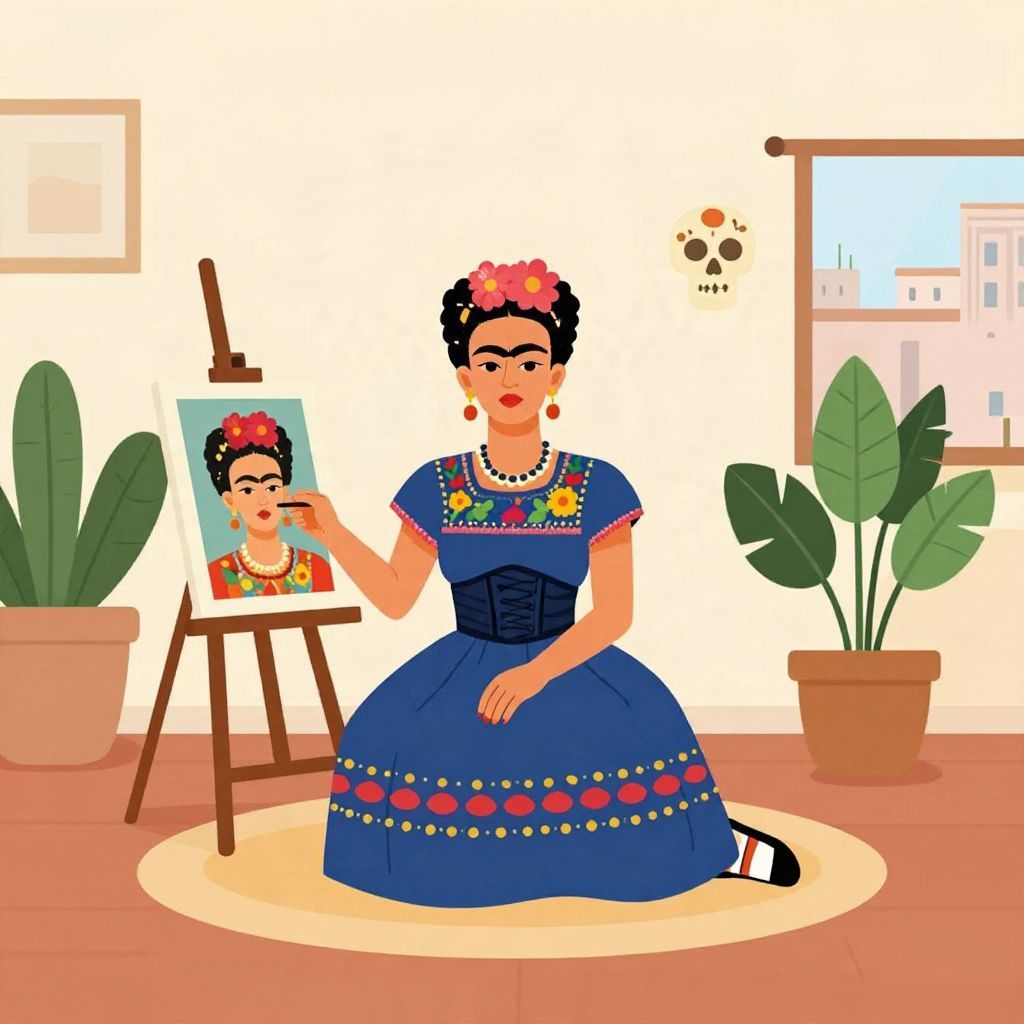
Why is Frida Kahlo famous? The short answer is that she became one of the most recognizable artists of the 20th century because of her intensely personal paintings, her distinctive visual style, and the way her life story became inseparable from her art. Her fame grew from both artistic achievement and a powerful public image.
She is remembered not only as a Mexican painter, but also as a cultural symbol of pain, resilience, identity, and self-expression. Over time, her work moved from relative obscurity to global renown, especially as scholars, museums, feminists, and popular culture embraced her as a major modern artist.
Why Is Frida Kahlo Famous?
Frida Kahlo is famous because she created striking self-portraits and symbolic paintings that expressed suffering, identity, politics, and Mexican culture in a deeply personal way. Her fame also comes from her dramatic life: a childhood illness, a devastating bus accident in 1925, a turbulent marriage to Diego Rivera, and her later transformation into an international icon of art and individuality.
The Artistic Reasons Behind Her Fame
She Made Her Own Life the Subject of Her Art
Kahlo’s paintings often center on her own body, emotions, and experiences. Rather than painting idealized scenes, she used self-portraiture to explore pain, illness, miscarriage, love, betrayal, and identity. This directness makes her work feel intimate and unforgettable. Many viewers connect with her because she turned private suffering into public art.
Her self-portraits are not simple likenesses. They often include symbolic details such as animals, blood, roots, thorns, surgical imagery, or split bodies. These elements help explain why her art is studied not just as biography, but as visual symbolism and modern expression.
Her Style Was Distinctive and Memorable
Kahlo’s paintings combine realism, folk art, surreal imagery, and Mexican visual traditions. She did not fully belong to one school of art, which is part of what makes her so interesting to historians and art critics. Some early viewers compared her work to Surrealism, but Kahlo herself resisted that label, saying she painted her reality rather than dreams.
That distinction matters historically. She was not simply a surrealist artist in the European sense. Her work drew on Mexican retablo traditions, Catholic iconography, indigenous imagery, and modern portraiture. This blend gave her art a style that was both personal and culturally specific.
She Painted Themes That Later Audiences Found Powerful
Frida Kahlo became especially famous in the late 20th century because later audiences saw her as ahead of her time. Her work speaks to subjects that became central in modern cultural history: gender, bodily autonomy, disability, nationalism, and the politics of identity. Her paintings resonated strongly with feminist viewers, LGBTQ+ audiences, and people interested in art as self-definition.
Her fame therefore grew not only from the quality of her paintings, but also from the way later generations interpreted them. In this sense, her reputation expanded as cultural values changed.
The Historical Context of Frida Kahlo’s Life
She Was Born in Revolutionary Mexico
Frida Kahlo was born in 1907 in Coyoacán, then a town outside Mexico City. She later said 1910, the year of the Mexican Revolution, as her birth year, likely to align herself symbolically with the new revolutionary Mexico. That choice reflects how closely her identity became tied to national history and political meaning.
She grew up during a period when Mexico was redefining itself after revolution. Artists and intellectuals were searching for a national culture that emphasized indigenous roots, social justice, and anti-colonial identity. Kahlo’s later self-presentation fit this atmosphere well.
Her Childhood Illness and Accident Shaped Her Life
As a child, Kahlo contracted polio, which left one leg thinner than the other and contributed to lifelong medical problems. In 1925, she suffered a severe bus accident that caused multiple injuries, including fractures to her spine, pelvis, and legs. The accident was a turning point: it ended her plans for a medical career and led her toward painting during long periods of recovery.
This is one of the clearest reasons she became famous. Her art was born from physical suffering, but it was not reduced to suffering alone. She transformed injury into creative expression, which made her story especially compelling to later audiences.
She Married Diego Rivera, Which Increased Her Visibility
In 1929, Kahlo married the muralist Diego Rivera, one of Mexico’s most famous artists. Their relationship was passionate, difficult, and widely discussed. Rivera’s fame initially overshadowed hers, but it also placed her in influential artistic and political circles in Mexico and abroad.
The marriage mattered historically because it connected Kahlo to the broader Mexican mural movement and to left-wing intellectual life. Yet it is important not to reduce her to Rivera’s wife. She developed a strong artistic identity of her own, and her reputation eventually came to stand independently.
How Frida Kahlo Became an International Icon
She Was Recognized During Her Lifetime, But Not Yet as a Global Legend
Kahlo did receive some recognition while alive. She exhibited in Mexico, the United States, and France, and she had supporters among artists and collectors. However, she was not yet the global celebrity she would later become. For much of her life, Rivera was the more famous figure.
Her fame expanded significantly after her death in 1954. That posthumous rise is common in art history: many artists become more influential after later generations reinterpret their work.
Feminist Art History Helped Reframe Her Work
From the 1970s onward, feminist scholars and artists played a major role in reviving interest in Kahlo. They saw her as someone who challenged traditional expectations of women, especially through her unflinching depictions of the female body, motherhood, miscarriage, and emotional pain. Her life story also defied conventional ideas of femininity.
This reinterpretation was crucial. Kahlo was no longer seen only as a painter in Rivera’s shadow; she became a major figure in her own right and a symbol of female artistic agency.
Her Image Became Part of Popular Culture
Kahlo’s fame also grew because her face became instantly recognizable: the braided hair, bold eyebrows, Tehuana dresses, floral crowns, and direct gaze. These visual markers made her a powerful icon in posters, books, fashion, film, and merchandise. Her image became almost as famous as her paintings.
That popularity has a double edge. It helped spread awareness of her work, but it also sometimes simplified her into a brand. Historians and curators often note the difference between the real artist and the commercial image of “Frida.”
What Makes Frida Kahlo Different from Other Famous Artists?
Her Fame Comes from Biography and Art Together
Many artists are admired mainly for style, technique, or innovation. Kahlo’s fame is broader because her biography is so tightly linked to her art. People are drawn to her because her life story is dramatic and emotionally powerful, but they stay interested because the paintings are sophisticated and layered.
This combination is unusual. Her art is not merely illustrative of her life, and her life is not merely a backdrop to her art. Each deepens the other.
She Represents Multiple Histories at Once
Kahlo can be understood through several historical lenses: Mexican nationalism, modern art, disability history, feminist history, and political culture. She was a member of the Communist Party for part of her life, and her politics mattered to her self-image and artistic world. At the same time, she was deeply engaged with Mexican folk traditions and indigenous symbolism.
Because she sits at the intersection of so many histories, she remains useful to scholars and meaningful to the public. That is one reason her fame has endured.
Major Works That Contributed to Her Reputation
Kahlo painted relatively few works compared with some artists, but several became especially famous and widely reproduced. Among the best known are:
- The Two Fridas (1939), a double self-portrait often read as expressing divided identity and emotional rupture.
- The Broken Column (1944), a stark image of physical suffering after spinal surgery.
- Self-Portrait with Thorn Necklace and Hummingbird (1940), which combines pain, symbolism, and self-presentation.
- Henry Ford Hospital (1932), a powerful painting about miscarriage and loss.
These works are famous because they are visually striking, emotionally direct, and rich in symbolism. They helped establish Kahlo as an artist whose work could be read on many levels.
Why Her Fame Still Grows Today
Frida Kahlo remains famous because her life and art continue to speak to modern concerns. People respond to her honesty about pain, her challenge to gender norms, her Mexican identity, and her refusal to present a polished or conventional self. Museums, books, exhibitions, and films have kept her visible, while social media has amplified her image even further.
At the same time, her legacy invites careful historical reading. She was not simply a saintly icon or a tragic victim. She was a complex artist working in a politically charged era, making art from a life marked by suffering, love, creativity, and contradiction.
The Historical Answer in Brief
Frida Kahlo is famous because she turned her own life into powerful art and because later generations recognized the originality of that art. Her paintings, especially her self-portraits, made her a major modern artist. Her biography, political identity, and distinctive image then transformed her into a global cultural icon. For readers interested in how fame works in art history, her story sits alongside other enduring icons such as the Mona Lisa and broader questions about celebrity and image in culture, including figures like Marilyn Monroe.