
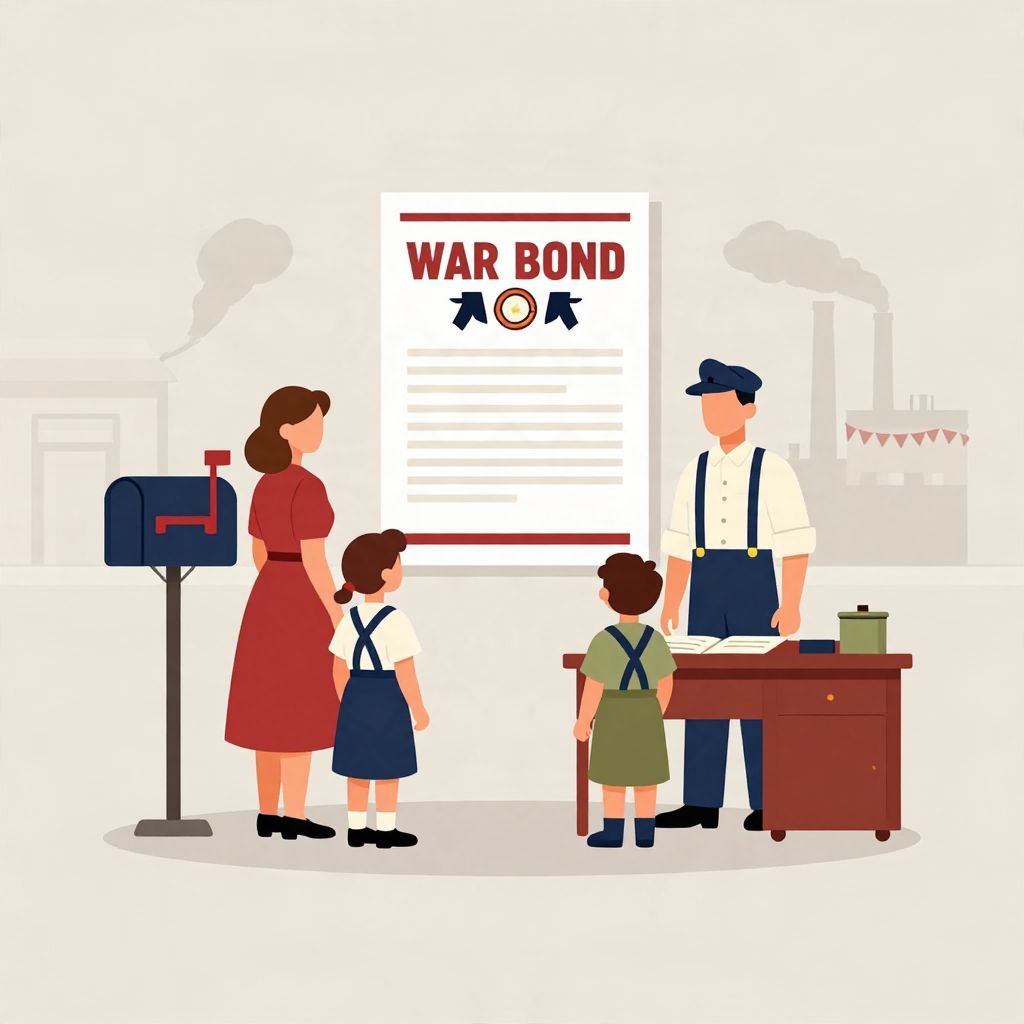
What is a war bond, and why did governments ask ordinary people to buy them during wartime? War bonds were debt securities issued by a government to raise money for military spending, usually by selling them to civilians at a discount and redeeming them later for full value. They became especially important in the two World Wars, when nations needed huge sums quickly.
Beyond finance, war bonds were also a tool of persuasion: they linked private savings to national survival and turned buying a bond into a patriotic act. Their history reveals how modern states mobilized money, morale, and mass participation in total war.
What Is a War Bond?
A war bond is a government bond issued to help pay for war expenses. In practice, the buyer lends money to the state, which promises repayment later with interest or at a fixed maturity value. During the 20th century, many governments sold war bonds directly to the public as a way to fund military operations and encourage civilian support.
How War Bonds Worked
War bonds were usually sold at a price below their face value, then redeemed later at full value. For example, a person might pay $18.75 for a bond that would be worth $25 at maturity. This structure made the bond affordable to small savers and gave buyers a guaranteed return if they held it long enough.
Why governments used them
War is expensive. Armies, navies, weapons, transport, food, fuel, and industrial production all require massive spending. Rather than relying only on taxes or bank loans, governments used war bonds to spread the financial burden across millions of citizens. This reduced immediate pressure on public finances and helped channel private savings into state needs.
Who bought them
In many countries, war bonds were marketed not just to wealthy investors but to workers, families, and even children. Schools, employers, churches, and civic groups often promoted bond drives. The idea was that everyone could contribute, even if only in a small amount.
The Origins of War Bonds
Governments had borrowed money for wars long before the 20th century, but the modern war bond campaign emerged alongside mass politics, industrial war, and national propaganda. Earlier states issued war loans to financiers and elites; later governments widened the audience and turned borrowing into a public campaign.
Early borrowing for war
European states in the early modern period often financed wars through loans from bankers, merchants, and wealthy subjects. These were not always called war bonds, but they served a similar purpose: they gave the state immediate cash in exchange for future repayment. Over time, public credit systems became more organized and reliable.
The rise of mass war finance
The modern war bond is most closely associated with the late 19th and 20th centuries, when national governments could appeal directly to large populations through newspapers, posters, radio, and mass rallies. That made it possible to sell bonds as both a financial product and a civic duty. The First World War especially transformed war lending into a mass phenomenon.
War Bonds in the First World War
During World War I, governments in Britain, France, Germany, the United States, and other countries launched large bond campaigns to finance the conflict. These drives were often accompanied by patriotic slogans, public ceremonies, and pressure to participate. Buying bonds became a visible sign of loyalty to the nation.
The United States and Liberty Bonds
In the United States, the federal government issued Liberty Bonds beginning in 1917. These campaigns were heavily promoted through posters, parades, celebrity endorsements, and public speeches. The goal was not only to raise money but also to build support for the war effort and encourage thrift, sacrifice, and national unity.
Britain and war loans
Britain relied on war loans and government borrowing to finance a long and costly conflict. The state used both financial markets and public appeals. As the war dragged on, the line between economic policy and morale work blurred: citizens were asked to save, lend, and accept shortages as part of wartime duty.
War Bonds in World War II
War bonds reached their best-known form during World War II. Governments once again needed enormous sums, but they also faced the challenge of managing inflation and public morale. Bond drives helped absorb excess civilian money, reduce consumer spending, and reinforce the idea that the whole population was part of the war effort.
Bond drives as propaganda
World War II bond campaigns were highly visual and emotional. Posters, films, radio programs, and celebrity appearances urged people to buy bonds. In the United States, bond rallies and payroll deduction plans made participation easier. In Britain and other Allied countries, similar campaigns framed bond purchases as a contribution to victory.
Not just a financial tool
War bonds were meant to do more than raise cash. They helped governments shape behavior at home. By encouraging people to save instead of spend, authorities could limit inflation and direct resources toward military production. Bonds also gave civilians a concrete way to feel involved in the war, especially those not serving in uniform.
Why War Bonds Mattered Historically
War bonds mattered because they linked finance, citizenship, and state power. They showed that modern war was not fought only by soldiers at the front but also by civilians at home. The bond campaigns of the world wars became part of the broader system of “total war,” in which economies, industries, and populations were mobilized on a national scale.
Economic consequences
War bonds helped governments borrow at scale, but they also created long-term public debt. After the wars ended, states had to manage repayment, interest, and inflation. In some cases, bond campaigns were successful because citizens trusted the government’s credit. In others, the burden of debt shaped postwar policy for years.
Social and cultural consequences
Bond drives also changed public culture. They turned financial participation into a moral act and made patriotism visible in everyday life. Purchasing a bond could be presented as a sacrifice comparable, in symbolic terms, to rationing or military service. That message was powerful, even if the reality of who could afford to buy varied widely.
Were War Bonds the Same Everywhere?
No. The term “war bond” is used broadly, but the exact design varied by country and period. Some bonds paid interest, some were sold at a discount, and some were marketed under different names such as liberty bonds or war loans. The common feature was that the state borrowed from the public to finance war.
Differences in access and pressure
In some countries, bond buying was voluntary but strongly encouraged through social pressure. In others, the state relied more heavily on banks, institutions, or compulsory lending arrangements. The public image of war bonds as a cheerful patriotic purchase sometimes concealed the real financial strain they placed on households.
Not all wartime borrowing was a bond drive
It is also important to distinguish war bonds from other wartime financial measures. Governments used taxes, money creation, price controls, and institutional borrowing alongside bond sales. War bonds were one part of a larger financing system, not the only source of wartime money.
What Happened to War Bonds After the Wars?
After World War II, war bond campaigns declined in importance, though governments continued to issue bonds for public borrowing. The dramatic mass campaigns of the world wars became less common because states had more developed financial systems and different methods of borrowing. Still, the idea of a government bond remained central to modern finance.
Legacy in public memory
War bonds remain a familiar symbol of home-front participation, especially in countries that experienced the world wars. Posters, slogans, and bond certificates are now often remembered as artifacts of wartime culture. They remind us that war was financed not only through battle but through the savings and consent of civilians.
Key Facts About War Bonds
- Definition: A government debt instrument sold to raise money for war expenses.
- Main era: Especially important during World War I and World War II.
- Purpose: To finance military spending, reduce inflation, and mobilize public support.
- Buyers: Citizens, institutions, and sometimes businesses, often through public campaigns.
- Historical significance: They turned wartime finance into a mass civic activity.
Conclusion
A war bond was more than a loan to the government. It was a financial instrument, a propaganda tool, and a symbol of civilian participation in wartime. Most closely associated with the world wars of the 20th century, war bonds helped governments pay for conflict while drawing ordinary people into the national effort. For related reading, see what war bonds were and the broader historical context of the longest war.