
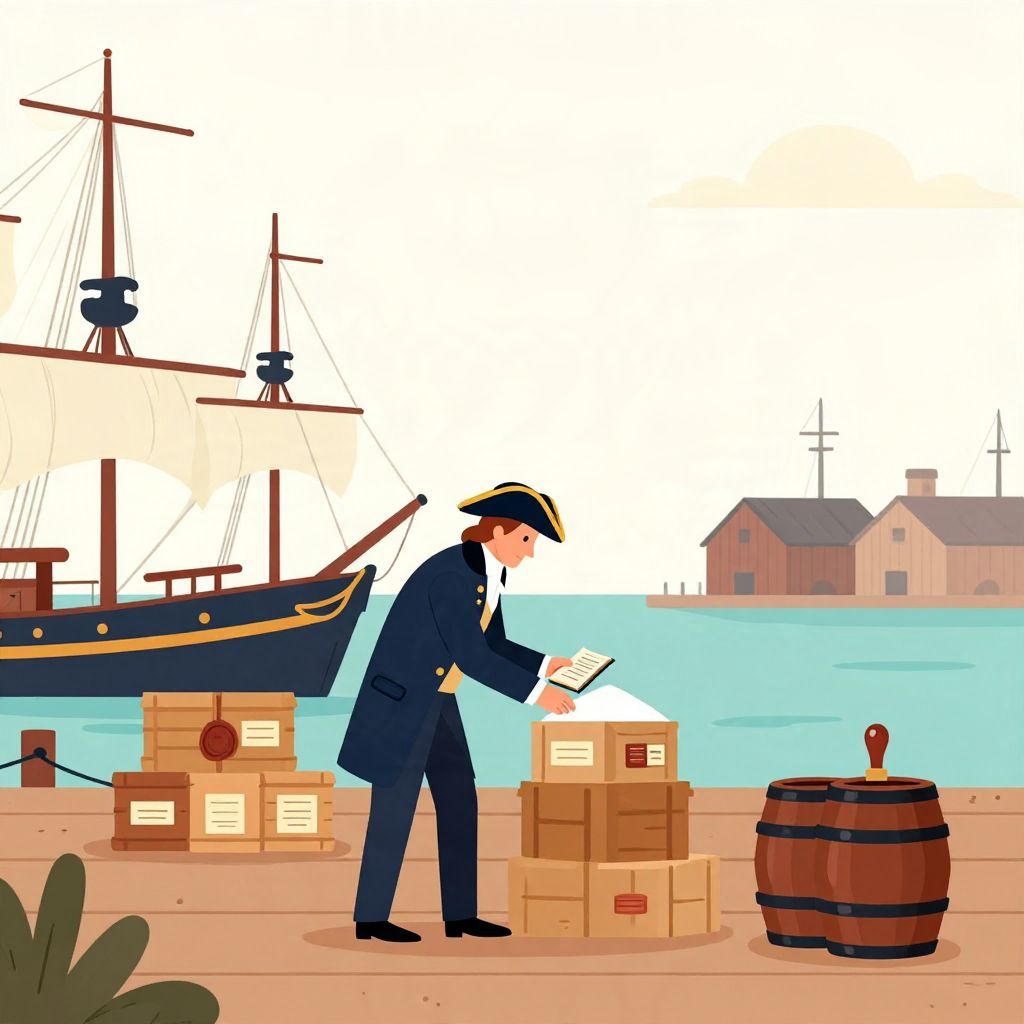
What is the Sugar Act? It was a British law passed in 1764 that tightened customs enforcement and lowered the tax on imported molasses in the American colonies. Officially called the American Revenue Act, it was meant to raise money after the Seven Years’ War and reduce smuggling, but it also helped spark colonial anger over taxation and imperial control.
Although the Sugar Act is sometimes remembered simply as a tax on sugar, its real importance lies in how it changed the relationship between Britain and its colonies. It marked an early step in the chain of disputes that eventually led to the American Revolution.
What Is The Sugar Act?
The Sugar Act was a British parliamentary law of 1764 that taxed molasses and other imported goods, strengthened customs enforcement, and expanded Britain’s efforts to collect revenue from the American colonies. It was designed to increase imperial income and curb smuggling, but colonists saw it as an unfair burden and a dangerous precedent for taxation without representation.
Why Did Britain Pass the Sugar Act?
Britain passed the Sugar Act because the empire was deeply in debt after the Seven Years’ War, known in North America as the French and Indian War. The war had expanded Britain’s territory and military responsibilities, especially in North America, and ministers believed the colonies should help pay for their own defense and administration.
The earlier Molasses Act of 1733 had imposed a high duty on molasses imported from non-British sources, especially the French Caribbean. In practice, many merchants ignored it or paid bribes to evade enforcement. By the 1760s, British officials concluded that the old law was ineffective. The Sugar Act lowered the legal duty on molasses but made it much harder to avoid paying.
The economic logic behind the law
British policymakers hoped that a lower tax, enforced more strictly, would bring in more revenue than a high tax that was widely evaded. The law also aimed to steer colonial trade toward British-controlled markets and strengthen the mercantile system that linked colonies to the empire. In that sense, the Sugar Act was both a revenue measure and a trade regulation.
What Did the Sugar Act Do?
The Sugar Act did more than tax molasses. It reorganized colonial customs enforcement and gave British authorities stronger tools to police trade. The law reduced the duty on foreign molasses from the old, largely unenforced rate of six pence per gallon to three pence per gallon, while improving the machinery for collection.
Main provisions of the act
- Lowered the tax on foreign molasses imported into the colonies.
- Placed duties on certain imported goods, including sugar, wine, coffee, and some textiles.
- Strengthened customs supervision and anti-smuggling enforcement.
- Required stricter documentation for colonial merchants and ship captains.
- Expanded the use of vice-admiralty courts, which heard cases without juries.
These vice-admiralty courts were especially controversial. Colonists distrusted them because they removed local juries from the process and seemed to favor imperial officials. To many Americans, the issue was not just the tax itself but the way Britain was changing legal procedures to enforce it.
How Did Colonists React?
Colonial reaction was mixed but increasingly hostile. Merchants, shipowners, and traders were especially alarmed because the law threatened profitable smuggling networks and raised the cost of doing business. Many colonists also objected in principle, arguing that Parliament should not tax them without their consent.
Opposition was not yet as widespread or unified as it would become after the Stamp Act in 1765, but the Sugar Act still mattered because it sharpened political debate. Colonial newspapers, merchants’ petitions, and local assemblies criticized the law as an infringement on colonial rights. Some colonists argued that Parliament could regulate trade, but not raise revenue from the colonies without representation.
Why the reaction mattered
The Sugar Act helped transform a practical smuggling dispute into a constitutional argument. Colonists began to ask whether Parliament had the right to tax them at all. That question would become central to the revolutionary crisis over the next decade.
How Was the Sugar Act Enforced?
Enforcement was one of the most important features of the law. Britain did not simply pass a tax and hope for compliance; it tried to make collection more effective through customs officials, naval patrols, and legal changes. This reflected a broader shift in imperial policy from loose oversight to active administration.
Customs officers were given greater authority, and the British navy was more closely involved in suppressing smuggling. The law also encouraged prosecutors to bring cases before vice-admiralty courts, where convictions were easier to secure than in local colonial courts. This made the Sugar Act feel less like a trade regulation and more like an assertion of imperial power.
Why enforcement caused resentment
Colonists were not only losing money; they were also losing influence over how laws were applied. Many believed the British government was treating them as subjects to be managed rather than partners in the empire. That sense of political exclusion deepened colonial suspicion of future British measures.
What Was the Historical Background of the Sugar Act?
The Sugar Act emerged from a longer history of British colonial trade policy. Since the seventeenth century, Britain had used navigation laws and customs regulations to control commerce within its empire. These policies were meant to keep colonial trade profitable for Britain and to prevent rival powers from benefiting from imperial markets.
In the North American colonies, however, enforcement was often loose. Distance, war, and limited administrative capacity made smuggling common. Merchants in New England and the Middle Colonies frequently traded with the French and Spanish Caribbean because it was profitable and practical. The Sugar Act tried to close that gap between law and reality.
The role of the Caribbean
The Caribbean was central to the story. Molasses from French and Dutch islands was often cheaper and more available than British sugar products. Colonial distillers, especially those producing rum in New England, depended on it. By taxing molasses and tightening enforcement, Britain threatened a key part of the colonial economy.
What Was the Sugar Act’s Place in the Road to Revolution?
The Sugar Act was not the only cause of the American Revolution, and by itself it did not make rebellion inevitable. But it was one of the first major imperial measures to trigger organized colonial resistance in the 1760s. It showed that Britain intended to raise revenue from the colonies and enforce policy more aggressively after the war.
Many historians see the Sugar Act as part of a sequence of escalating disputes: the Sugar Act in 1764, the Stamp Act in 1765, the Townshend duties in 1767, and later the Tea Act and coercive measures of the early 1770s. Each law added to colonial fears that Parliament was trying to govern the colonies without their consent.
Connection to the Stamp Act
The Sugar Act also set a precedent. Once Parliament had claimed the right to tax the colonies for revenue, it became easier for British ministers to justify additional taxes. The Stamp Act would soon extend the controversy beyond trade to newspapers, legal papers, and everyday documents, widening resistance across the colonies.
Key Facts About the Sugar Act
- Official name: American Revenue Act of 1764
- Passed by: The British Parliament
- Main purpose: Raise revenue and suppress smuggling
- Major target: Imported molasses and related trade goods
- Important date: 1764
- Historical significance: Helped provoke colonial resistance to British taxation and imperial authority
Did the Sugar Act Really Lower Taxes?
Yes, in a narrow sense, the Sugar Act lowered the legal duty on molasses compared with the old Molasses Act. But that does not mean it was welcomed. The lower rate was paired with much stricter enforcement, so many colonists experienced it as a heavier burden than before. A tax that can actually be collected often feels more serious than a tax that exists mostly on paper.
This is why the Sugar Act is sometimes misunderstood. It was not simply a “tax on sugar,” and it was not only about revenue. It was a test of imperial authority, commercial control, and colonial obedience.
What Was Its Long-Term Impact?
The Sugar Act’s long-term impact was political as much as economic. It helped convince many colonists that Britain was changing the rules of empire without colonial consent. That perception mattered because the colonies had long enjoyed a degree of practical autonomy, especially in local taxation and internal affairs.
By challenging smuggling networks, colonial courts, and merchant interests, the law touched multiple parts of colonial society. It also encouraged intercolonial discussion about rights, representation, and resistance. In that sense, the Sugar Act helped move the colonies from scattered complaints toward a shared political language.
Why Historians Still Pay Attention to the Sugar Act
Historians pay attention to the Sugar Act because it reveals how the American Revolution began not with a single dramatic event, but with a series of policy decisions that altered everyday life. It shows the importance of trade, law, and administration in imperial conflict, not just battles and declarations.
The act also illustrates a broader historical pattern: governments often try to solve financial problems through taxation and enforcement, but those measures can provoke resistance when people believe they are being taxed unfairly or governed without a voice. In the British Atlantic world, that tension became revolutionary.
So, what is the Sugar Act? It was a 1764 British revenue law that taxed colonial imports, strengthened customs enforcement, and helped ignite the constitutional conflict between Britain and its American colonies. For a closer look at the timeline and related legislation, see when the Sugar Act was passed and what the Stamp Act taxed.