
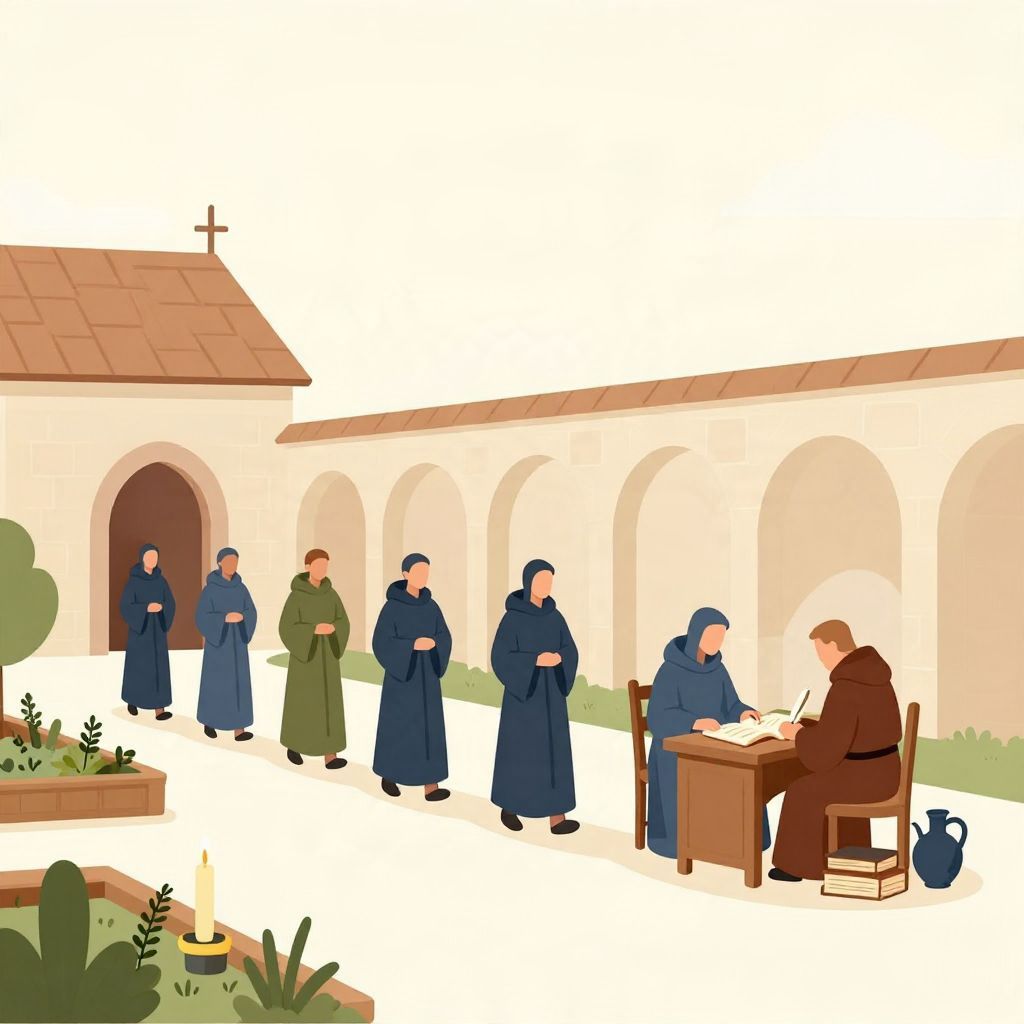
“Monks” are religious men who live apart from ordinary society in order to devote their lives to prayer, discipline, study, and service. In most historical traditions, the word refers especially to Christian monks, though similar religious communities have existed in Buddhism, Hinduism, Jainism, and other faiths. Their history is tied to ideas of withdrawal, devotion, and community life.
Over time, monks became important not only in religion but also in education, manuscript preservation, agriculture, and politics. Understanding who monks were means looking at both their spiritual purpose and their changing role in society.
What are the monks?
Monks are members of a religious community who usually take vows of poverty, chastity, and obedience, or comparable commitments in non-Christian traditions. They live a disciplined life centered on worship, meditation, work, and study. Historically, monks often withdrew from family life and ordinary social obligations to pursue spiritual goals.
Where did monastic life begin?
Monastic life did not begin in one single place. It developed in several religious traditions over many centuries. The best-known early Christian monasticism emerged in Egypt, Syria, and Palestine in the 3rd and 4th centuries CE, while Buddhist monastic communities were already established earlier in South Asia. The basic impulse was similar: to seek holiness through separation and discipline.
Early Christian monks
In Christianity, monks first appeared as desert ascetics in the late Roman Empire. Men such as Anthony of Egypt became famous for leaving society to live alone in the desert, where they fasted, prayed, and resisted temptation. Their example inspired others, and solitary asceticism gradually evolved into organized communities.
From hermits to communities
At first, many monks lived as hermits, but communal monastic life soon became more common. Pachomius, an Egyptian Christian of the 4th century, is often credited with organizing one of the earliest known monastic communities. Instead of living alone, monks lived together under rules, shared labor, and followed a common spiritual schedule.
Why did monks become important in history?
Monks mattered because they were not only religious specialists but also cultural and social agents. In medieval Europe, monasteries preserved books, trained clergy, offered hospitality, and sometimes managed land and agriculture. In Asia, Buddhist monasteries became centers of learning, pilgrimage, and patronage. Monks often served as guardians of texts, ritual experts, and moral authorities.
Spiritual ideals
The monk’s life was meant to model devotion. Common ideals included humility, self-denial, silence, prayer, and obedience to a rule or teacher. In Christianity, monks sought salvation through renunciation and constant spiritual practice. In Buddhism, monks aimed at liberation from suffering through meditation, ethical conduct, and insight.
Practical roles in society
Although monks often withdrew from ordinary life, their communities were rarely isolated in practice. Monasteries could become economic centers, owning land and employing workers. They also offered charity, education, and lodging to travelers. In some periods, monks were among the few literate people in a region, which gave them unusual influence.
How did Christian monasticism develop?
Christian monasticism expanded rapidly after the 4th century, especially after Christianity became legal in the Roman Empire. As persecution declined, some believers feared that the faith was becoming too worldly. Monastic life offered an alternative: a radical commitment to the Gospel through withdrawal, poverty, and prayer.
Rules and organization
By the early Middle Ages, many monasteries followed formal rules. The most influential in Western Europe was the Rule of St. Benedict, written in the 6th century. It balanced prayer, work, and communal life. Benedictine monasteries became a major force in medieval Europe and influenced later religious orders.
Monks in medieval Europe
During the Middle Ages, monks helped shape European culture. They copied manuscripts by hand, preserving classical literature and Christian texts. They cultivated farmland, developed new techniques, and sometimes advised rulers. Monasteries were also places of art, music, and scholarship, contributing to the intellectual life of the period.
Reform and change
Monastic life was never static. Reform movements repeatedly tried to restore discipline when monasteries became wealthy or politically entangled. New orders arose, including the Cluniacs, Cistercians, and later mendicant groups such as the Franciscans and Dominicans, though these last two were technically friars rather than monks. The distinction matters: monks usually live in enclosed communities, while friars are more mobile and preach among the people.
What did monks do each day?
A monk’s daily life varied by tradition and era, but it usually followed a structured rhythm. Prayer and meditation were central, often repeated at fixed times throughout the day. Work, reading, and communal meals filled the remaining hours. Silence, fasting, and manual labor were common disciplines designed to train the body and mind.
- Prayer: repeated liturgical worship or meditation
- Study: reading sacred texts and, in some traditions, philosophy or theology
- Manual labor: farming, copying manuscripts, cooking, or maintenance
- Silence and discipline: practices intended to reduce distraction
- Community life: shared meals, rules, and obedience to an առաջնորդ or abbot
Were all monks the same?
No. “Monk” is a broad term that covers many traditions and very different ways of life. Even within Christianity, Eastern Orthodox monks, Roman Catholic monks, and later Protestant observers understood monasticism differently. In Buddhism, monastic rules and daily life also vary widely between Theravada, Mahayana, and Vajrayana traditions.
Buddhist monks
Buddhist monks emerged from the early sangha, the community formed around the Buddha in the 5th century BCE, though precise dates are debated. They usually shave their heads, wear simple robes, and live by vows that emphasize non-attachment, celibacy, and discipline. Many Buddhist monasteries became major centers of learning and pilgrimage across Asia.
Hindu and Jain ascetics
Hindu traditions include renunciants and ascetics who may live in monasteries or wander as holy men. Jain monks are especially known for strict nonviolence and austerity. These traditions show that monasticism is not unique to Christianity; it is a recurring religious response to the desire for spiritual discipline and detachment.
How did monks influence politics and culture?
Monks often had influence far beyond their cloisters. Kings and nobles patronized monasteries to gain prestige, prayers, and legitimacy. Monasteries could shape local economies, control land, and advise rulers. In some places, monks also became political actors, especially when religious authority and state power overlapped.
Education and literacy
One of the most lasting contributions of monks was educational. Monasteries preserved and transmitted texts, especially in Europe after the fall of the Western Roman Empire. Monastic schools trained clergy and sometimes educated lay elites. In Asia, monastic universities and study centers helped develop philosophy, grammar, logic, and medicine.
Art, architecture, and music
Monastic communities produced illuminated manuscripts, chant traditions, sculpture, and architecture. Monasteries were often built to embody order and sacred space. Their churches, cloisters, libraries, and gardens reflected the ideal of a disciplined life directed toward the divine.
What criticisms and conflicts surrounded monks?
Monks were admired, but they were also criticized. Some people questioned whether withdrawing from society was truly virtuous, especially when monks accumulated wealth or influence. Reformers inside and outside monastic life repeatedly attacked corruption, lax discipline, and political entanglement. In some periods, monasteries were dissolved or restricted by secular authorities.
Reformation and dissolution
In 16th-century Europe, Protestant reformers often rejected monastic vows, arguing that salvation did not depend on monastic withdrawal. In England, Henry VIII dissolved the monasteries in the 1530s, transferring much of their property to the Crown and its supporters. This was a major turning point in the history of Western monasticism.
Modern survival
Monastic life did not disappear. Catholic, Orthodox, Buddhist, and other monastic communities continue today, though often in smaller numbers or adapted forms. Modern monks may teach, run schools, care for pilgrims, or focus on contemplative life. Their role has changed, but the basic ideal of disciplined spiritual commitment remains.
Key facts about monks
- Monks are religious men who live under vows or disciplines dedicated to spiritual life.
- Christian monasticism grew strongly in the 3rd and 4th centuries CE, especially in Egypt and the eastern Mediterranean.
- Monastic communities often combined prayer with work, study, and service.
- Monks helped preserve books, educate people, and shape medieval culture.
- Similar monastic traditions also developed in Buddhism, Jainism, and some Hindu traditions.
- Monastic life has been praised for holiness and criticized for wealth, withdrawal, or political power.
Why monks still matter in history
Monks matter because they show how religious ideals can shape institutions, learning, and society over long periods. They were not simply isolated holy men; they were part of wider historical systems of belief, labor, patronage, and power. Their communities preserved knowledge, influenced rulers, and helped define the moral imagination of many civilizations.
So, what are the monks? They are men who commit themselves to a disciplined religious life, usually in community, and their history reaches from ancient ascetics to modern monasteries. If you want to explore related topics, you may also enjoy broader historical context at My Life is History.