
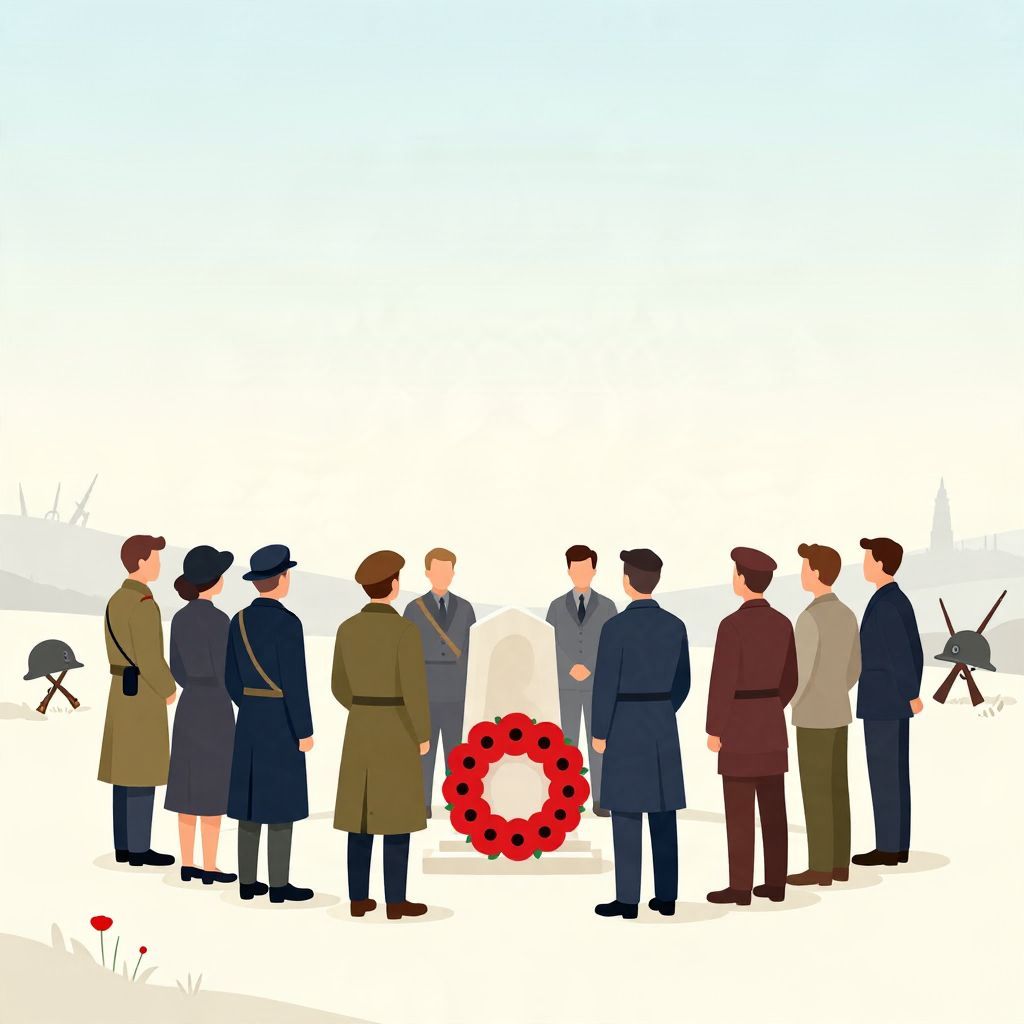
What is Remembrance Day? It is a day set aside to honor members of the armed forces who died in war, especially those lost in the First World War and later conflicts. In many countries, it is observed on 11 November, the anniversary of the armistice that ended fighting on the Western Front in 1918.
Its meaning has broadened over time from mourning the dead of World War I to remembering all who served and sacrificed in war. The exact form of observance varies by country, but the poppy, silence, wreath-laying and memorial services are now widely recognized symbols of remembrance.
What Is Remembrance Day?
Remembrance Day is a memorial observance that honors military personnel who died in service, particularly in the First World War. It grew out of the aftermath of that conflict, when societies across Europe and the wider world sought a shared way to grieve, commemorate sacrifice and mark the end of the war on 11 November 1918.
Why Is Remembrance Day Observed on 11 November?
The date comes from the armistice signed between the Allied powers and Germany, which took effect at the 11th hour of the 11th day of the 11th month in 1918. The fighting stopped, though the war had not yet formally ended; the Treaty of Versailles would follow in 1919. The date became a powerful symbol because it marked both relief and loss.
The significance of the armistice
For many people, the armistice represented the end of years of industrialized warfare on an unprecedented scale. Millions had been killed, wounded or displaced. The moment was therefore remembered not simply as a military event, but as a turning point in modern history and a time for collective mourning.
How Did Remembrance Day Begin?
Remembrance Day emerged from postwar commemoration after 1918. Governments, veterans’ groups, churches and local communities all helped shape the rituals. In Britain and the Commonwealth, the day was originally known as Armistice Day. The first observances focused on the dead of the First World War, whose graves and memorials became central to public memory.
Early commemorations
In the years after the war, many countries adopted moments of silence, public ceremonies and wreath-laying at memorials. These practices were meant to be solemn and inclusive, allowing people of different faiths and political views to participate. The two-minute silence, associated with Armistice Day, became one of the best-known features of the observance.
From Armistice Day to Remembrance Day
As the twentieth century progressed, the meaning of the day widened. After the Second World War, many countries recognized that remembrance should include those who died in later conflicts as well. In Britain, the name Remembrance Day became more common, while the Sunday nearest 11 November was set aside for national services of remembrance.
How Is Remembrance Day Observed?
Observance varies by country, but several customs are common. These include a period of silence, the wearing of red poppies, parades by veterans and serving personnel, and wreaths laid at war memorials. The day is usually solemn rather than celebratory, emphasizing reflection, gratitude and loss rather than military victory.
The two-minute silence
The silence is intended to give people a shared moment of reflection. It is often observed at 11 a.m. on 11 November, echoing the timing of the armistice. The practice spread widely in the British Empire and later the Commonwealth, becoming one of the most recognizable forms of remembrance.
The red poppy
The red poppy became a symbol of remembrance because poppies grew on the battlefields of northern France and Belgium after the First World War. The flower was popularized in remembrance culture through poetry and fundraising campaigns. Over time, the poppy came to symbolize both sacrifice and hope, though not everyone uses it in exactly the same way or for the same reasons.
Wreaths and memorials
Wreath-laying at cenotaphs, war memorials and graves is another central ritual. A wreath is a circular arrangement of flowers, traditionally associated with honor and remembrance. Many towns and cities built memorials after 1918, giving local communities a place to name and remember the dead.
What Does Remembrance Day Commemorate?
At its core, Remembrance Day commemorates those who died in military service. Historically, it began with the dead of the First World War, but in many places it now includes the fallen from the Second World War and later conflicts. It also acknowledges the suffering of veterans, civilians and families affected by war, though the primary focus remains military sacrifice.
Not the same everywhere
Different countries have developed their own versions of remembrance. In the United Kingdom, Canada, Australia and New Zealand, the day is closely tied to 11 November. In the United States, a similar date, Veterans Day, honors all who served in the armed forces, while Memorial Day is reserved for those who died in service. These distinctions matter because they reflect different national histories and commemorative traditions.
How Did World War I Shape Remembrance Culture?
World War I transformed remembrance because of its scale, its trench warfare and its enormous death toll. The war touched nearly every family in many countries involved. As a result, remembrance was not only a state ceremony but also a deeply personal act. Communities built memorials, families kept photographs and medals, and schools taught children about sacrifice and duty.
The role of grief after mass war
Before the twentieth century, war memorials existed, but the scale of loss in World War I changed public mourning. The dead were often buried far from home, and many bodies were never recovered. Memorials and remembrance rituals helped fill that absence by creating places and dates where grief could be expressed collectively.
Literature and memory
Poetry, letters and memoirs from the war also shaped public understanding. While popular memory sometimes emphasizes heroism, many contemporary voices stressed suffering, exhaustion and the cost of war. This tension remains part of Remembrance Day today: it honors service while also inviting reflection on the human price of conflict.
What Is the Difference Between Remembrance Day and Armistice Day?
Historically, Armistice Day referred specifically to the commemoration of the 1918 armistice and the dead of the First World War. Remembrance Day is a broader term used in several countries for observances that remember all war dead, especially after the Second World War. In practice, the two terms overlap in some places, but the wording can signal a different emphasis.
Why the name changed
The change reflected changing historical experience. After 1939–45, the First World War was no longer the only major conflict in living memory. Governments and communities wanted a commemorative day that could include later wars without losing the original meaning of 11 November. The result was a broader, more inclusive remembrance tradition.
Key Facts About Remembrance Day
- Date: 11 November in many countries.
- Origin: The 1918 armistice that ended fighting on the Western Front.
- Original name: Armistice Day in many places.
- Main purpose: To honor military dead and reflect on the cost of war.
- Common symbols: Red poppies, wreaths, war memorials and moments of silence.
- Broader scope today: Often includes remembrance of later conflicts beyond World War I.
Why Does Remembrance Day Still Matter?
Remembrance Day remains important because it connects historical memory with public ritual. It reminds people that wars are not abstract events but human experiences involving loss, duty, trauma and sacrifice. The day also helps societies think about the consequences of conflict and the responsibilities of citizenship, peace and commemoration.
In that sense, Remembrance Day is both a historical marker and a living tradition. It began with the end of World War I, but its deeper purpose is enduring: to remember the dead, honor service and reflect on the cost of war. For related background, you may also want to read about when World War I began and how remembrance connects to later military history such as the legacy of Pearl Harbor and its survivors.