
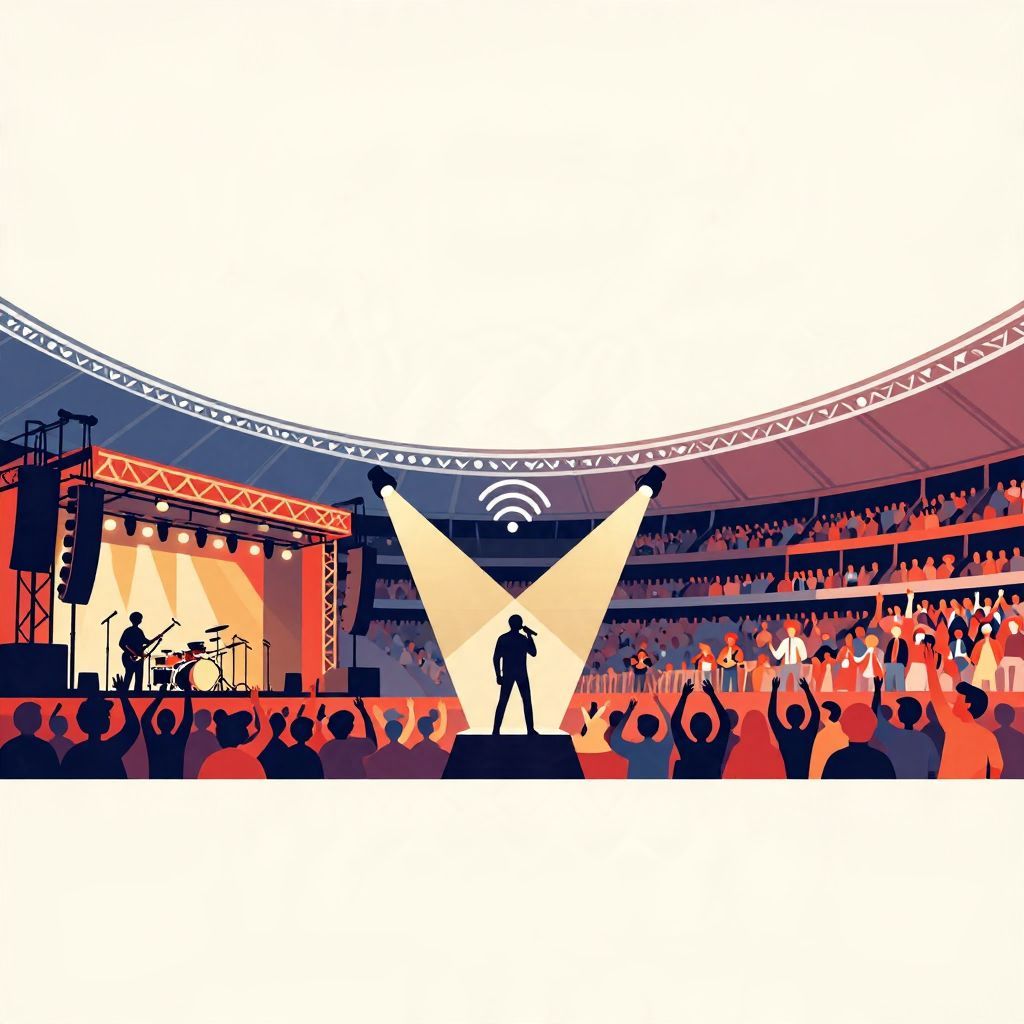
Live Aid was one of the biggest charity concerts in modern history, and many people still ask a simple question: what year was Live Aid?
The answer is 1985. The twin concerts took place on 13 July 1985, with major events held simultaneously at Wembley Stadium in London and John F. Kennedy Stadium in Philadelphia, raising money for famine relief in Ethiopia.
What year was Live Aid?
Live Aid was in 1985, specifically on 13 July 1985. It was a transatlantic benefit concert organized to raise funds for famine relief, and it became a defining cultural event of the 1980s. The concert linked two huge stadium shows, one in the United Kingdom and one in the United States, with live television coverage reaching a vast global audience.
Why Live Aid happened in 1985
Live Aid did not appear out of nowhere. It grew from the humanitarian crisis caused by famine in Ethiopia in the early 1980s, which was brought to wider public attention through television news reports. The event was also shaped by the rise of global pop culture, satellite broadcasting, and a growing belief that musicians could mobilize public action on an international scale.
The crisis that inspired the concert
The famine in Ethiopia was severe and politically complicated. Drought played a major role, but so did war, displacement, and government policy. By 1984, images of hunger and suffering had reached audiences in Europe and North America, prompting public concern and charitable responses. Live Aid emerged from that moment of urgency.
Bob Geldof and the road to Live Aid
Irish musician Bob Geldof became one of the central figures behind the project after helping organize Band Aid, which released “Do They Know It’s Christmas?” in late 1984. The record’s success showed that popular music could generate significant donations and public attention. Live Aid was conceived as a much larger follow-up, designed to sustain that momentum.
What happened on 13 July 1985?
On 13 July 1985, Live Aid unfolded as a split-location concert across two continents. The London show took place at Wembley Stadium, while the American concert was held at John F. Kennedy Stadium in Philadelphia. Performers moved through a packed schedule of rock and pop acts, with the two venues connected by satellite for a live global broadcast.
Two stadiums, one broadcast
The technical ambition of Live Aid was remarkable for its time. The event depended on satellite technology to create a single shared experience across time zones. That made it more than a concert: it was a media event that demonstrated how television could turn entertainment into a worldwide charitable campaign.
Major performers and memorable moments
Live Aid featured many of the era’s biggest names, including Queen, U2, David Bowie, Elton John, Madonna, The Who, Paul McCartney, and Phil Collins. Queen’s Wembley performance is often remembered as one of the most celebrated live rock sets ever televised. Phil Collins also performed in both cities the same day, traveling by Concorde between London and Philadelphia.
How Live Aid was organized
The concert was organized quickly and at enormous scale. It relied on promoters, broadcasters, venue staff, artists, and volunteers working under pressure. The fundraising goal was straightforward, but the logistics were complex: coordinating schedules, sound systems, security, television feeds, and international communication across two major stadiums.
From charity single to mega-event
Band Aid had shown that a single song could raise money and awareness. Live Aid expanded that idea into a full-day spectacle. The concert’s format reflected the 1980s, when large-scale televised events were becoming central to popular culture. It also showed how charity, celebrity, and mass media could be combined for a humanitarian cause.
The role of television and global audiences
One reason Live Aid became so famous is that it was not limited to the people in the stadiums. Millions watched on television around the world, making the event feel immediate and shared. For many viewers, the concert was their first direct exposure to the famine crisis and to the idea that music could be used as a tool for international activism.
Was Live Aid successful?
Yes, Live Aid was successful in raising money and awareness, though its legacy is more complicated than the most famous memories suggest. It generated substantial donations for famine relief and helped keep the crisis in public conversation. At the same time, historians and aid experts have noted that charity concerts alone could not solve the deeper political and economic causes of famine.
Immediate impact
In the short term, Live Aid helped direct attention and funds toward relief efforts in Ethiopia and surrounding regions. It also encouraged a broader wave of humanitarian fundraising in the 1980s. The event proved that a music concert could become a major international fundraiser, influencing later benefit performances and campaigns.
Limits and criticism
Over time, some critics argued that Live Aid simplified a complex crisis. Ethiopia’s famine was not only a natural disaster; it was also shaped by conflict, state policy, and international politics. Critics have also questioned whether the event’s imagery sometimes reinforced stereotypes about Africa. These critiques do not erase the concert’s importance, but they do place it in historical context.
Why Live Aid still matters
Live Aid matters because it captured a turning point in the relationship between popular culture and humanitarian action. It showed that a concert could become a global political and emotional event. It also helped establish a model for celebrity-led charity campaigns that continues to influence fundraising and awareness efforts today.
A landmark of the 1980s
As a product of the 1980s, Live Aid reflected the decade’s media landscape, musical culture, and growing global consciousness. It was part of a broader era in which television could rapidly shape public opinion and mobilize donations. The event remains one of the clearest examples of how entertainment and activism intersected in late 20th-century history.
Its place in music history
For music fans, Live Aid is remembered not only as a charity event but also as a landmark live performance showcase. Several artists’ sets became legendary, and the concert has been replayed, discussed, and analyzed for decades. Its reputation endures because it combined spectacle, urgency, and star power in a way few events have matched.
Quick facts about Live Aid
- Year: 1985
- Date: 13 July 1985
- Main venues: Wembley Stadium, London, and John F. Kennedy Stadium, Philadelphia
- Purpose: Famine relief, especially for Ethiopia
- Key organizer: Bob Geldof, with other collaborators and broadcasters
- Format: Simultaneous live benefit concerts linked by satellite
The answer in historical context
If you are asking what year Live Aid was, the direct answer is 1985. But the deeper story is that Live Aid was a product of famine, media, and activism coming together at a particular moment in the 1980s. It was both a concert and a symbol: a reminder of how quickly music could become history when the world was watching.
For more context on the decade that produced Live Aid, you may also want to explore what happened in 1986.