
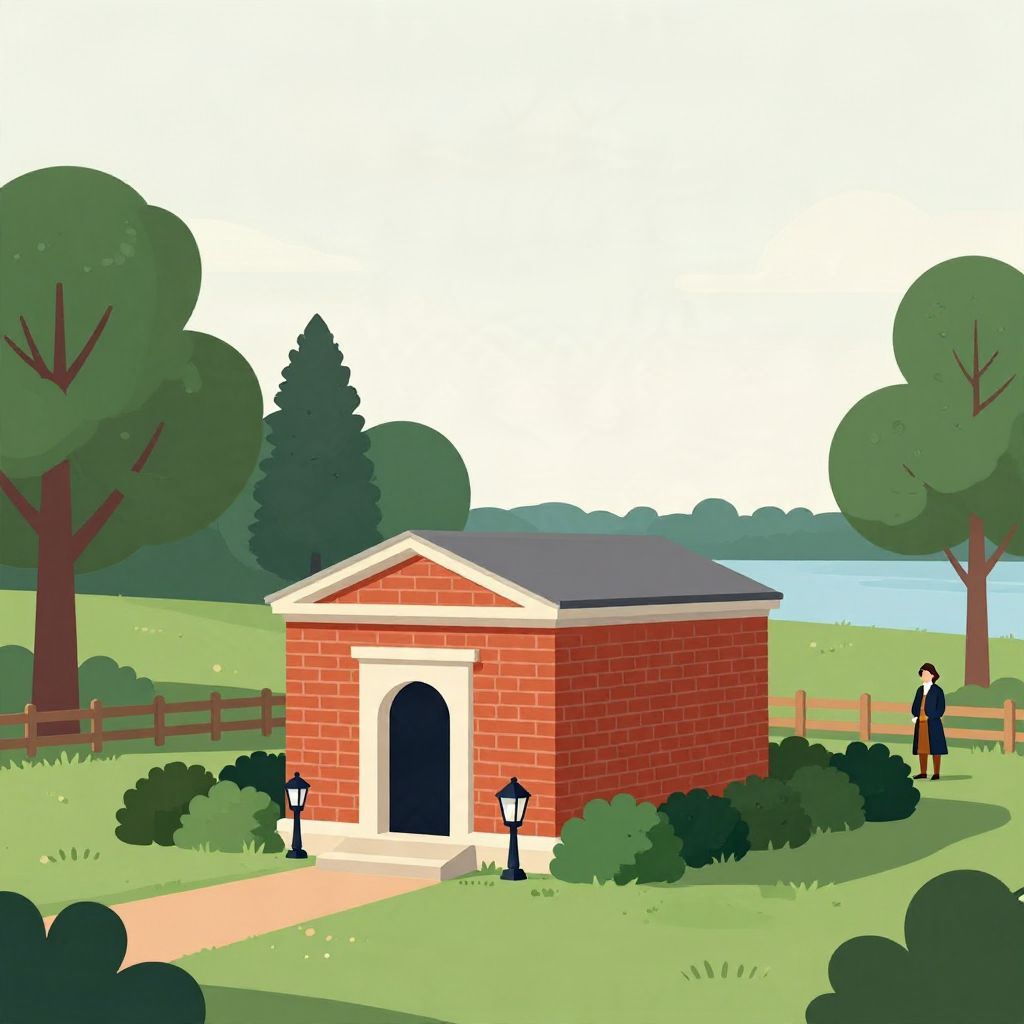
Where is George Washington buried? The first U.S. president is interred at Mount Vernon, his family estate on the Potomac River in Virginia. After his death on December 14, 1799, Washington was placed in the family tomb there, where his remains were later moved into a more secure vault in the 19th century.
His burial place is one of the most visited historic sites in the United States, and it reflects both Washington’s personal wishes and the early republic’s reverence for him. The story also reveals how Americans remembered him after his death.
Where Is George Washington Buried?
George Washington is buried at Mount Vernon in Fairfax County, Virginia, in the family tomb on his estate overlooking the Potomac River. He was first placed in the original Washington family vault after his death in 1799, and his remains were later transferred to a newer brick tomb at Mount Vernon in 1837. The site remains his final resting place today.
Why Mount Vernon Was His Burial Place
Mount Vernon was not just Washington’s home; it was the place he had chosen as the center of his private life and legacy. He had a strong attachment to the estate, which he expanded and managed for decades. Although he became a national figure, Washington remained deeply tied to Virginia and to Mount Vernon in particular.
In his will, Washington asked to be buried at Mount Vernon. That request mattered because it showed his preference for a modest, family-centered burial rather than a grand public monument. His choice also reflected the values of the era, when elite families often used private tombs to preserve lineage and memory.
The original family vault
The first burial site was the Washington family vault, a brick tomb near the estate. It had already held other family members, and Washington was laid there after his death. The vault was functional rather than elaborate, which fit the restrained tone of his funeral arrangements.
The newer tomb
By the 1830s, the original vault had deteriorated and was considered insecure. In 1837, Washington’s remains were transferred to a new brick tomb built nearby at Mount Vernon. This newer structure is the one visitors see today, and it is the recognized burial place of George Washington.
What Happened After Washington Died?
Washington died on December 14, 1799, after a brief illness at Mount Vernon. The cause of death is commonly described as a severe throat infection or acute laryngitis, though medical historians have long debated the exact diagnosis. What is clear is that his death was sudden and deeply felt across the young nation.
His funeral followed the customs of a prominent Virginia planter and military leader, but the public response reached far beyond a local family event. Washington was already seen as the central figure of the American Revolution and the first president under the Constitution. His burial became part of the early national effort to honor him as a founding hero.
The funeral and immediate burial
- Date of death: December 14, 1799
- Burial place: The Washington family vault at Mount Vernon
- Later transfer: 1837, into the newer tomb at Mount Vernon
The burial was carried out quickly, as was common at the time, especially in winter. Washington’s body was prepared and placed in the vault at Mount Vernon, where it remained for nearly four decades before the move to the present tomb.
How the Burial Site Became a National Landmark
Washington’s grave gradually became more than a family burial place. As the United States grew, Mount Vernon turned into a site of national memory. Visitors came not only to see the estate but also to pay respect to the man many considered the nation’s indispensable founder.
The preservation of Mount Vernon in the 19th century helped cement this status. The estate was saved from neglect through private preservation efforts, and Washington’s tomb became a focal point of patriotic pilgrimage. In that sense, his burial site helped shape how Americans remembered the Revolution and the presidency.
Private estate, public memory
There is an important historical distinction here: Washington is buried on private family land, not in a national cemetery or at the U.S. Capitol. Yet the public meaning of the site has long been national. That tension between private burial and public veneration is part of what makes Mount Vernon historically significant.
What Visitors See at Mount Vernon Today
Today, visitors to Mount Vernon can view the tomb area associated with George Washington and Martha Washington. The site is maintained as part of the historic estate and interpreted as a place of remembrance, not simply a grave. It is one of the most important pilgrimage sites in American historical memory.
The tomb is simple compared with the monumental graves of later presidents and statesmen. That simplicity is historically fitting. Washington was buried according to his own wishes, and the modest setting reflects the public image he cultivated in life: disciplined, restrained, and duty-bound.
George and Martha Washington
Martha Washington was also buried at Mount Vernon. Her remains were placed in the family tomb after her death in 1802. The shared burial site underscores the estate’s role as the Washington family’s final resting place and helps explain why Mount Vernon remains so closely associated with both figures.
Common Misunderstandings About Washington’s Burial
Because Washington is such a famous national figure, people sometimes assume he was buried in Washington, D.C., or in a grand federal monument. He was not. His grave is in Virginia, at the estate where he lived and died. That location is historically accurate and has never been relocated outside Mount Vernon.
Another common confusion concerns the original vault versus the present tomb. Washington’s remains were not moved far away; they were transferred within the Mount Vernon grounds to a newer tomb in 1837. So while the structure changed, the burial place remained at the same estate.
Not the Washington Monument
It is also worth noting that the Washington Monument in the nation’s capital is a memorial, not a burial site. The obelisk honors Washington’s legacy, but his body is not there. His actual grave remains at Mount Vernon, where he requested to be buried.
Why His Burial Place Matters Historically
George Washington’s burial site matters because it connects his private life, his personal wishes, and the public memory of the American founding. Mount Vernon preserves the physical place where the first president was laid to rest, but it also tells a larger story about how the early republic created national heroes.
The fact that Washington chose a family tomb rather than a state burial says something important about his character and about the culture of the late 18th century. He was a public man, but he did not seek the kind of monumental self-display that later generations sometimes associated with greatness. His burial at Mount Vernon remains a powerful expression of that restraint.
Quick Facts About George Washington’s Burial
- Buried at: Mount Vernon, Virginia
- Original burial date: December 1799
- Original location: Washington family vault
- Current tomb: A newer brick tomb at Mount Vernon, built in the 1830s
- Also buried there: Martha Washington
Conclusion
George Washington is buried at Mount Vernon in Virginia, where his remains rest in the family tomb on the estate he called home. His burial was modest, but the meaning of the site grew over time into a major symbol of American memory. For related history reading, see what George Washington’s teeth were made of and how many presidents were there before George Washington.