
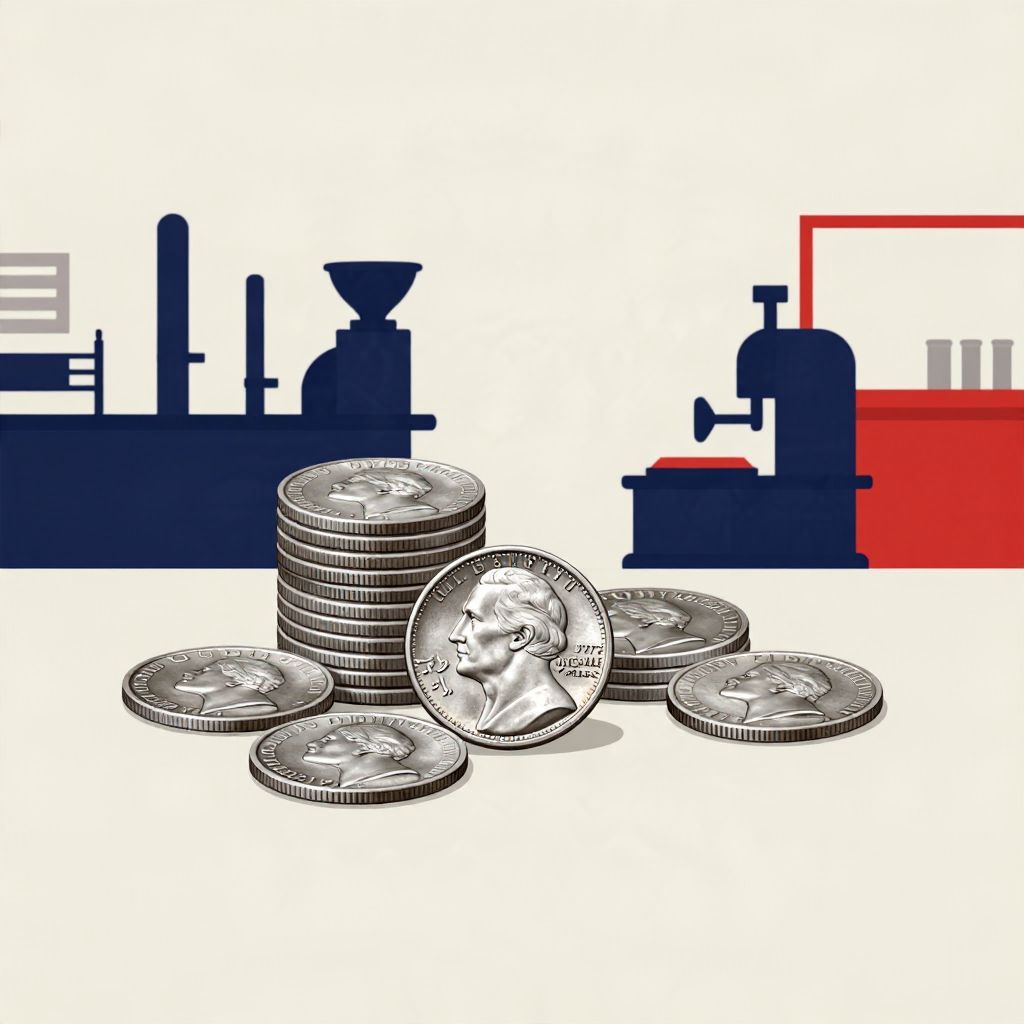
When did they stop making silver nickels? The short answer is that the United States stopped making the wartime “silver nickels” in 1945. These coins were not made of pure silver, but of a special alloy used during World War II to conserve nickel for military production. Regular five-cent nickels returned in 1946.
The story behind them is tied directly to wartime shortages, coinage policy, and the practical needs of a country at war. Silver nickels are a small but revealing example of how even everyday money can change when history puts pressure on materials and industry.
When did they stop making silver nickels?
The U.S. Mint stopped making wartime silver nickels at the end of 1945. They were produced from late 1942 through 1945, and the standard copper-nickel five-cent coin returned in 1946. The last year of issue was 1945, though some 1945-dated coins were struck early in the year and released afterward.
Why were silver nickels made in the first place?
Silver nickels were created because the government needed nickel for World War II. Nickel was an important metal for armor plating, steel alloys, and other military uses, so the U.S. Mint changed the composition of the five-cent coin to save it for the war effort. The substitute alloy contained 35% silver, 56% copper, and 9% manganese.
The wartime shortage
By 1942, the United States was deeply involved in World War II, and industrial demand for strategic metals was rising fast. The ordinary nickel coin was made of 75% copper and 25% nickel. That nickel content, though small in a single coin, mattered on a national scale when millions of coins were minted each year.
The Treasury and Mint needed a composition that would:
- avoid using nickel, which was needed for war production
- work in vending machines and coin-operated equipment
- be easy to identify so it would not be confused with other coins
How the wartime alloy was chosen
The solution was a silver-based alloy that could be produced without nickel. The manganese was added to help give the coin the right electrical properties and appearance for coin-operated machines. To make the new nickels distinguishable, the Mint also added a large mintmark above Monticello on the reverse—something not used on earlier nickels from Philadelphia. This was done for all three mints: P, D, and S.
The timeline of silver nickels
The wartime nickel program was brief, but it unfolded in a clear sequence.
- 1942: The first silver nickels were introduced late in the year after the Mint changed the alloy.
- 1943–1945: Wartime nickels continued in circulation and production.
- 1945: The final year of silver nickel production.
- 1946: Regular copper-nickel nickels returned after the war.
Why 1945 is the stopping point
Although the coinage change was driven by wartime necessity, the Mint did not switch back instantly when the war ended in Europe or even after Japan’s surrender. Coinage transitions took planning, and the Mint had to resume standard production once wartime material pressures eased. That is why collectors usually say silver nickels were made from 1942 to 1945, with 1945 as the final date of issue.
Were silver nickels actually made of silver?
Yes, but only partly. They contained 35% silver, which is why collectors often call them “silver nickels.” However, they were not pure silver coins, and their value today depends on both the silver content and collector demand. Their silver content makes them historically notable, but their real importance lies in the wartime policy that created them.
How to identify a wartime nickel
Wartime nickels are easy to spot if you know what to look for:
- Dates from 1942, 1943, 1944, or 1945
- A large mintmark above Monticello on the reverse
- Mintmarks P, D, or S
One important exception is the 1942 Philadelphia issue. In 1942, some nickels were struck before the composition change and some after it, so not every 1942 nickel is a silver nickel. The wartime version is the one with the large mintmark above Monticello.
What happened after silver nickels ended?
After the war, the Mint returned to the familiar copper-nickel composition in 1946. The wartime design changes were removed, including the large mintmark above Monticello. The postwar nickel looked more like the prewar coin, signaling a return to normal peacetime production.
Why the change mattered
The end of silver nickels marked more than a technical adjustment. It reflected the broader shift from wartime mobilization to postwar normalcy. During the war, even small coins were shaped by military needs. Afterward, the government could restore standard coinage and reclaim the metals that had been diverted to defense production.
Why collectors care about silver nickels today
Wartime nickels are popular with collectors because they are both historically meaningful and relatively easy to find compared with many other old coins. They are a tangible reminder of the home-front economy during World War II, when factories, transportation, and even pocket change were affected by the war.
Historical significance beyond numismatics
These coins show how governments can adapt everyday objects to meet emergency needs. The silver nickel was not created as a luxury issue or a commemorative coin. It was a practical response to wartime scarcity. That makes it a useful example of how total war reaches into ordinary life, from rationing and scrap drives to the composition of loose change.
Quick answer: the date and the story
The United States stopped making silver nickels in 1945, and regular nickels returned in 1946. They were produced because World War II created a need to conserve nickel for military use, so the Mint replaced the usual alloy with one that included silver. Their brief run captures a moment when even a five-cent coin became part of the war effort.
If you want to explore the topic further, you may also like when nickels were silver and what year nickels were silver.