
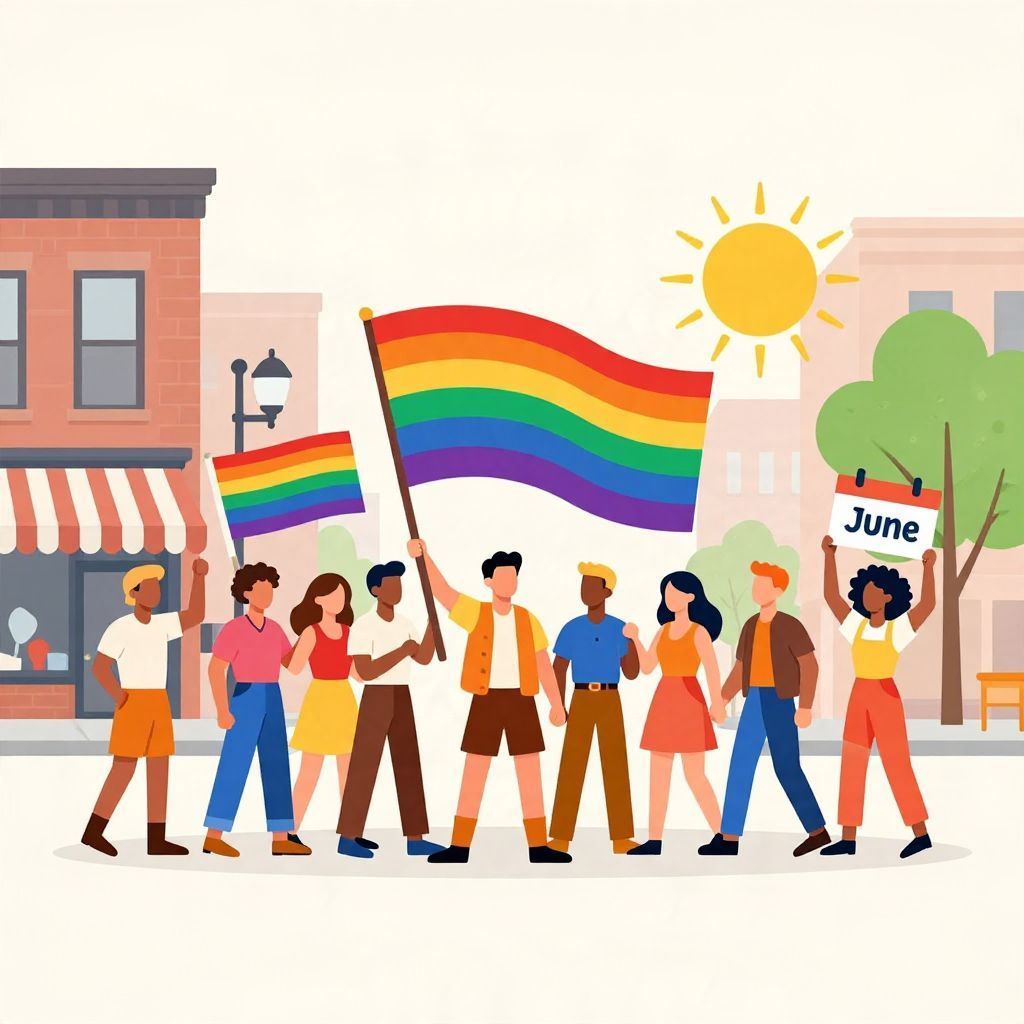
When was Pride Month established? The short answer is that Pride Month was established in the United States in June 1999 by President Bill Clinton, when he issued the first presidential proclamation designating June as Gay and Lesbian Pride Month. The observance grew out of earlier Pride marches, the Stonewall uprising, and decades of LGBTQ+ activism.
That said, the story begins well before 1999. Pride Month did not appear all at once as a single invention; it evolved from local commemorations of the 1969 Stonewall riots into a broader annual tradition that later expanded in scope and visibility.
When Was Pride Month Established?
Pride Month was officially established in the United States in June 1999, when President Bill Clinton proclaimed June as Gay and Lesbian Pride Month. The designation was later broadened in public usage to include the wider LGBTQ+ community. Its roots, however, go back to the first anniversary marches after the Stonewall uprising in 1970.
The Historical Roots of Pride Month
Pride Month grew out of a specific moment in modern LGBTQ+ history: the Stonewall uprising in New York City in June 1969. After a police raid on the Stonewall Inn, patrons and neighborhood residents resisted, sparking several nights of protest. Stonewall became a turning point because it helped transform gay liberation from a relatively small movement into a more visible and militant public campaign for rights.
Stonewall and the first Pride marches
On the first anniversary of Stonewall, activists organized marches and demonstrations in New York, Los Angeles, and Chicago in June 1970. These events were not yet called “Pride Month,” but they established the pattern of annual June commemorations. The month became symbolically important because it tied remembrance, protest, and community celebration to the anniversary of Stonewall.
Why June mattered
June remained the natural choice for later observances because it marked the anniversary of Stonewall and the beginning of the modern Pride tradition. Over time, June became associated not only with protest but also with visibility, education, and the celebration of LGBTQ+ identity and history.
The 1999 Proclamation and Its Meaning
The formal federal recognition of Pride Month came in 1999. President Clinton’s proclamation named June as Gay and Lesbian Pride Month, making it the first presidential designation of this kind. This was historically significant because it represented a shift from marginalization toward limited federal acknowledgment of LGBTQ+ communities, even though full legal equality was still far from achieved.
What the proclamation did—and did not do
The proclamation was symbolic rather than a law. It did not create a federal holiday, mandate school curricula, or require government observance. But symbolism matters in history: presidential proclamations can shape public memory, signal political priorities, and legitimize social movements in the national conversation.
How the language changed over time
Clinton’s 1999 proclamation used the phrase “Gay and Lesbian Pride Month.” In later years, the language in public discourse broadened to “LGBT Pride Month” or “LGBTQ Pride Month,” reflecting the growing recognition of bisexual, transgender, queer, and other identities within the movement. The change in wording reflects the movement’s own expansion rather than a single moment of redefinition.
Why Pride Month Was Not “Established” in One Single Moment
Historians often treat Pride Month as an evolving tradition rather than a one-time invention. If the question is about the first official federal recognition, the answer is 1999. If the question is about the origin of the celebration itself, the answer reaches back to 1970 and the first anniversary marches after Stonewall. In that sense, Pride Month was established in stages.
A timeline of key developments
- June 1969: Stonewall uprising in New York City.
- June 1970: First anniversary Pride marches and demonstrations.
- 1980s–1990s: Pride events spread widely across the United States and beyond.
- June 1999: President Clinton proclaims Gay and Lesbian Pride Month.
- 2009: President Barack Obama issues a proclamation using broader LGBTQ-inclusive language, helping normalize the expanded framing.
How Pride Month Spread Beyond the United States
Although the federal proclamation was American, Pride Month and Pride events became international through activism, media, and cultural exchange. Many countries developed their own Pride traditions, often tied to local struggles for decriminalization, anti-discrimination laws, and social acceptance. The month of June became especially prominent in places influenced by the Stonewall anniversary, but Pride celebrations now occur around the world at different times as well.
Local histories matter
It is important not to assume that every Pride celebration has the same origin story. In some countries, Pride events emerged from different political contexts, sometimes decades after Stonewall and sometimes in response to local legal reforms or police repression. The global spread of Pride reflects a shared movement, but not a single identical history.
What Pride Month Represents Historically
Pride Month is both commemorative and political. It remembers past struggles, honors activists and communities, and celebrates visibility. It also reflects a broader historical shift in how LGBTQ+ people have been represented in public life: from criminalization and secrecy toward recognition, though unevenly and incompletely.
From protest to public culture
Early Pride marches were often confrontational, with participants demanding equal rights and resisting police harassment and social stigma. Over time, Pride events also became cultural festivals with parades, performances, educational programs, and corporate sponsorship. This evolution has sparked debate within LGBTQ+ communities about commercialization, but it also shows how a protest tradition can enter mainstream public culture.
Continuing significance
Even after official recognition, Pride Month remained tied to ongoing political struggles. Issues such as discrimination, violence, healthcare access, family rights, and trans equality have continued to shape Pride observances. The month is therefore not only a celebration of progress but also a reminder that history is unfinished.
Common Misunderstandings About Pride Month
Because Pride Month is so widely recognized today, it is easy to assume it has always existed in its current form. In fact, it developed gradually and has been defined differently by different institutions and communities.
It was not created by one law
Pride Month was not established by a single act of Congress. Instead, it emerged through activism, annual commemorations, municipal support, and later presidential proclamations. That gradual process is typical of many modern observances, which often begin as grassroots traditions before gaining official recognition.
It was not always called “Pride Month”
The earliest events were usually described as Pride marches, liberation marches, or anniversary commemorations. The phrase “Pride Month” became common later, after June had already become the central month for these observances. The name reflects the broader cultural shift from protest language to a more inclusive public celebration.
The Short Answer, in Historical Context
If you want the clearest direct answer: Pride Month was officially established in the United States in June 1999. But the deeper history begins with the Stonewall uprising in 1969 and the first Pride marches in 1970. The observance is best understood as the product of decades of activism, remembrance, and expanding LGBTQ+ visibility.
So, when was Pride Month established? Officially, 1999. Historically, its roots run back to Stonewall and the first Pride marches that followed. For more on the broader context of modern social movements, you may also be interested in the Stonewall riots and the LGBTQ+ rights movement.