
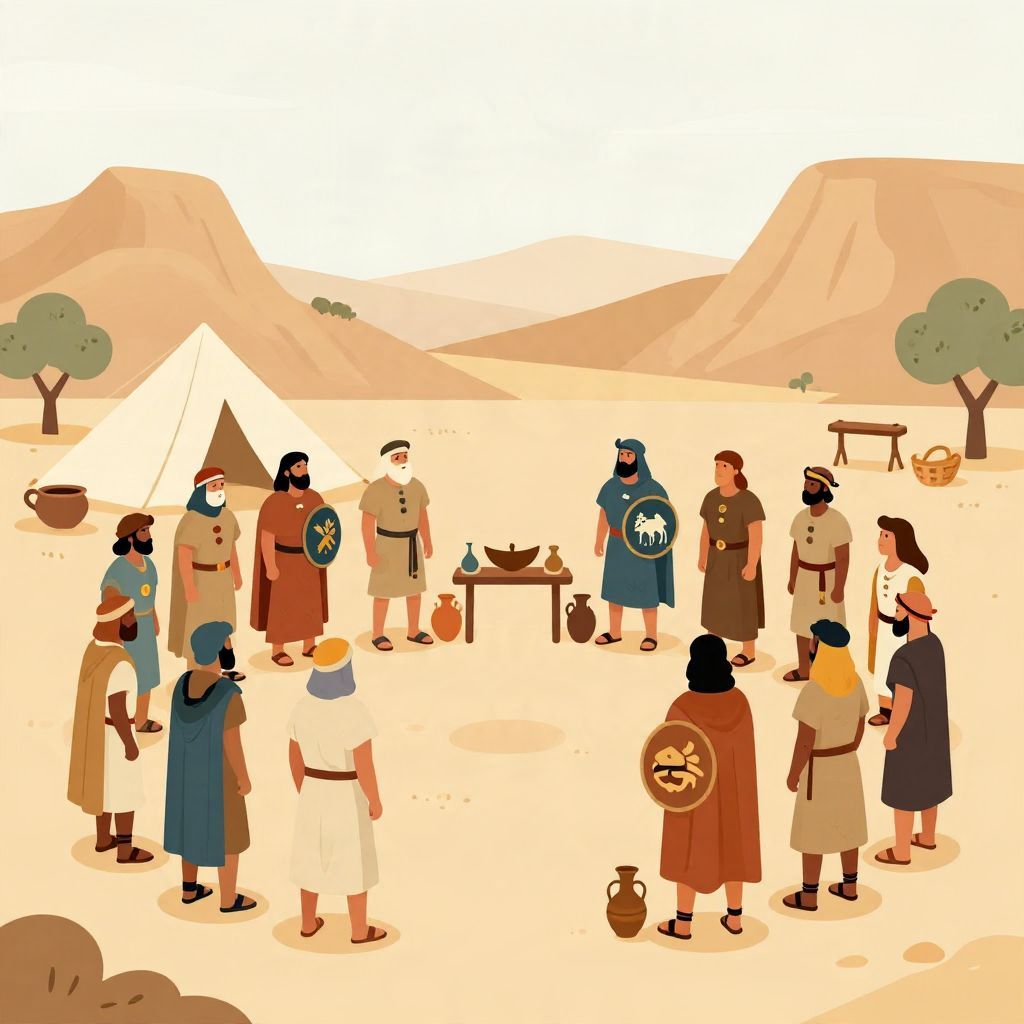
The question “How many tribes of Israel were there?” sounds simple, but the historical answer depends on which period and tradition you mean. In the Bible, Israel is commonly described as having twelve tribes descended from the sons of Jacob, also called Israel.
In later history, however, that number was not always preserved in the same way. Political division, exile, and changing religious traditions altered how the tribes were counted and remembered.
How Many Tribes of Israel Were There?
Traditionally, there were twelve tribes of Israel. This number comes from the biblical tradition that Jacob had twelve sons, each regarded as the ancestor of a tribe. In historical practice, though, the list of tribes could vary, and the tribe of Levi was often treated differently because of its priestly role.
The Biblical Origin of the Twelve Tribes
The idea of twelve tribes is rooted in the Hebrew Bible, especially in the ancestral stories of Genesis. Jacob, renamed Israel, is said to have had twelve sons: Reuben, Simeon, Levi, Judah, Dan, Naphtali, Gad, Asher, Issachar, Zebulun, Joseph, and Benjamin. These names became the basis for the tribal identity of Israel.
This tradition likely reflects more than family genealogy. In ancient societies, tribal origin stories often explained political alliances, land claims, and shared identity. The “twelve tribes” may preserve a memory of a confederation of groups that later saw themselves as one people.
Why Twelve?
The number twelve was symbolically powerful in the ancient Near East. It could represent completeness or a full social order. That does not mean the number was invented out of thin air, but it does suggest that the tribal system was remembered in a structured and idealized form.
Scholars generally treat the twelve-tribe scheme as a traditional framework rather than a simple census record. It reflects how ancient Israelites understood themselves, not necessarily a precise administrative count from one moment in time.
Which Tribes Were Counted?
The standard list includes the twelve sons of Jacob, but the tribal count becomes more complicated because Levi and Joseph are handled differently in different texts. Levi was set apart for religious service, so it often did not receive a normal land allotment. Joseph, meanwhile, was frequently represented through his two sons, Ephraim and Manasseh.
The Common Tribal List
- Reuben
- Simeon
- Levi
- Judah
- Dan
- Naphtali
- Gad
- Asher
- Issachar
- Zebulun
- Joseph
- Benjamin
In many later lists, Joseph is not counted as a single tribe. Instead, Ephraim and Manasseh replace Joseph, keeping the total at twelve while allowing Levi to remain distinct. This is one reason readers sometimes encounter different versions of the tribal roster.
Why Levi Is Different
The Levites were associated with worship, sanctuary service, and later priestly functions. Because of that role, they were not always counted among the tribes that received a territorial inheritance. Their special status is one of the main reasons the tribal count can appear inconsistent across biblical books.
How the Tribes Worked in Ancient Israel
The tribes were not just family labels. They also reflected a social and political structure in ancient Israel’s early history. Before the rise of monarchy, Israel may have functioned as a loose tribal league, with local leaders, kinship ties, and shared religious traditions holding communities together.
By the time of the united monarchy under Saul, David, and Solomon, tribal identity still mattered, but royal power increasingly centralized authority. Even so, the old tribal framework remained important in memory, law, and land distribution.
Land and Identity
According to biblical tradition, most tribes received territory in Canaan. These land assignments helped define where each tribe lived and how it related to neighboring groups. Some tribes were more prominent than others, and some may have been absorbed into larger regional identities over time.
Archaeological evidence does not provide a neat map of twelve equal tribes. Instead, it suggests a gradual emergence of Israelite settlement in the highlands of Canaan during the late Bronze Age and early Iron Age, roughly around the 12th to 10th centuries BCE. The tribal model may reflect how those communities later organized their past.
Did the Number Stay the Same?
No. The number twelve remained the ideal, but historical events changed how the tribes were understood. After the split of the united kingdom, the northern kingdom of Israel and the southern kingdom of Judah developed separately. Tribal identity continued, but political unity did not.
The Assyrian conquest of the northern kingdom in the late 8th century BCE had major consequences. Many northern Israelites were deported or assimilated, and later tradition spoke of the “lost tribes.” This phrase is more a historical and religious memory than a precise demographic description.
The Ten Lost Tribes
Popular tradition often speaks of the ten lost tribes of Israel, referring to the northern tribes after Assyrian conquest. This idea became powerful in Jewish, Christian, and later popular imagination. Historically, it is better understood as a simplified way of describing the disappearance or transformation of northern tribal identities.
Some people from the north were likely deported, while others remained and blended into later populations. The idea that entire tribes vanished overnight is not supported by evidence. What did happen was a long process of political collapse, migration, and cultural change.
Different Lists in the Bible
One reason the answer is not always straightforward is that biblical texts do not always list the tribes in the same way. Some lists emphasize landholding tribes, while others emphasize symbolic completeness or priestly roles. The Book of Revelation, for example, presents a highly stylized list that reflects theological symbolism rather than a historical census.
Examples of Variation
- Sometimes Levi is included in the count.
- Sometimes Joseph is replaced by Ephraim and Manasseh.
- Some lists omit Dan or rearrange the order of the tribes.
These variations show that the tribal system was flexible in memory and tradition. The number twelve remained important, but the exact names could shift depending on the author’s purpose.
What Do Historians Think?
Historians generally agree that the twelve-tribe tradition is ancient and meaningful, but they do not treat it as a simple literal record of twelve equal clans formed at one moment. Instead, it is seen as a foundational identity story that likely developed over time among early Israelite communities.
There is also debate about how much of the tribal system reflects actual kinship and how much reflects later political organization. Some tribes may have been real kin groups, while others may have represented regional populations later woven into a shared ancestry narrative.
Historical Caution
Because the evidence is limited, it is best to separate three layers:
- Tradition: Israel had twelve tribes descended from Jacob’s sons.
- Historical development: Early Israel likely emerged from multiple related highland communities.
- Later memory: Exile and religious tradition preserved the twelve-tribe model as a symbol of Israel’s unity.
Why the Tribes Matter Historically
The tribal idea mattered because it shaped how ancient Israelites understood land, worship, kinship, and national identity. Even after kings, exiles, and foreign empires changed the political map, the tribes remained central to Jewish memory and biblical literature.
The twelve tribes also became a durable symbol of wholeness. In later Jewish and Christian tradition, they represented the full people of God, even when the historical reality had changed. That symbolic power explains why the number twelve endured long after the tribal system itself had transformed.
So, How Many Tribes of Israel Were There?
In the traditional biblical sense, there were twelve tribes of Israel. But historically, the answer is more complex because the list could shift, Levi was treated specially, Joseph was sometimes divided into Ephraim and Manasseh, and the northern tribes were disrupted by conquest and assimilation. The number twelve is best understood as both a historical memory and a powerful symbol of Israel’s identity.
If you want to place the tribes in their wider ancient setting, it can help to read about where Canaan was and the later religious landscape linked to biblical tradition, including where Jesus’ tomb is believed to be.