
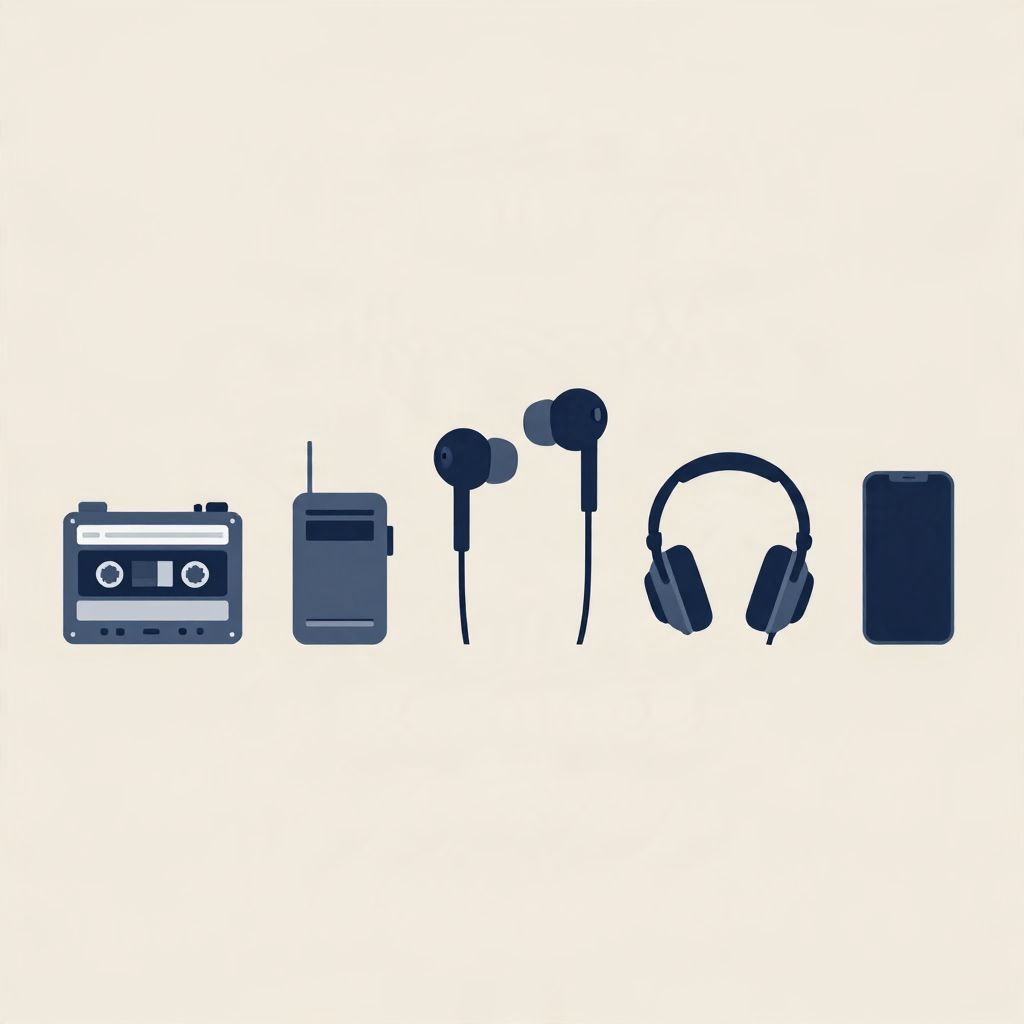
When were earbuds invented? The short answer is that the modern earbud emerged in the late 20th century, with its roots in earlier earphones and portable audio technology. There is no single universally agreed “inventor” of the earbud in the way there is for some patented devices, because the form developed gradually as headphones became smaller, lighter, and more practical for personal listening.
What people usually mean by “earbuds” today is the small speaker that sits in or just at the opening of the ear, especially the kind sold with portable music players and smartphones. That design became common in the 1980s and 1990s, then exploded in popularity in the 2000s and 2010s.
When were earbuds invented?
Earbuds were not invented in one exact year. Their modern form developed from earlier telephone receivers and headphones, then became widely recognizable in the 1980s and 1990s. If you mean the first mass-market earbuds as a consumer product, the clearest answer is the late 20th century, especially with portable audio devices.
The longer history behind earbuds
To understand earbuds, it helps to look at the history of sound technology. Earbuds did not appear out of nowhere; they were the result of decades of work on telephones, radio headsets, and lightweight audio equipment. The basic idea—delivering sound directly to one ear or both ears—goes back well before the modern music era.
From telephone receivers to headphones
In the late 19th and early 20th centuries, telephone operators and radio users relied on headsets and receivers that were bulky by modern standards. These early devices were not earbuds, but they established the principle of personal audio. As electronics improved, engineers made receivers smaller and more comfortable, paving the way for compact listening devices.
Early portable listening devices
By the mid-20th century, headphones were common in radio, aviation, and recording work. Consumers could buy headphones for home use, but they were still relatively large. The real shift came when portable radios, cassette players, and later portable CD players created a demand for smaller audio accessories that could travel easily with the listener.
Why the 1980s and 1990s matter
The modern earbud is closely tied to the rise of portable personal audio. As devices became smaller, manufacturers needed headphones that were light, inexpensive, and easy to carry. Earbuds answered that need. They were especially suited to Walkmans, Discmen, and compact music players because they took up little space and could be used on the move.
The Walkman era
Sony’s Walkman, introduced in 1979, transformed how people listened to music. It made private, mobile listening mainstream. The headphones sold with early portable players were often lightweight over-ear or on-ear models, but the market quickly moved toward smaller designs. Earbuds fit the new lifestyle of commuting, exercising, and listening in public.
Design evolution rather than a single invention
Unlike a machine with one obvious inventor, earbuds evolved through incremental design changes. Engineers worked on size, sound quality, comfort, and cost. The result was a product that was simple enough for mass production and practical enough for everyday consumers. That is why historians of technology usually describe earbuds as an evolutionary invention rather than a single breakthrough.
What counts as an earbud?
The answer changes depending on how narrowly you define the term. Some people use “earbuds” to mean any small earphone. Others mean the specific style that sits in the outer ear without fully sealing the ear canal. In historical terms, this distinction matters because several related products appeared at different times.
- Earphones: a broad term for small listening devices worn on or in the ear.
- Earbuds: usually small, lightweight speakers that rest in the outer ear.
- In-ear monitors: more advanced, often sealing the ear canal for better isolation and sound.
- Headphones: larger devices that cover or rest on the ears.
Because the language is flexible, a company might have marketed a product as an earphone, headset, or earbud depending on the era and audience. That is one reason the historical record does not point to a single neat invention date.
Apple, iPod, and the global earbud boom
Although earbuds existed before the 2000s, they became globally familiar with the rise of the iPod and similar digital music players. Apple’s white earbuds, bundled with early iPods in the early 2000s, became an instantly recognizable symbol of portable digital music. They did not invent the earbud, but they helped make it culturally iconic.
Why the iPod mattered
The iPod era changed the scale of earbud use. Millions of people began carrying music in their pockets, and earbuds became the default accessory for that experience. White cords, small plastic housings, and disposable-style packaging turned earbuds into one of the most visible consumer audio products of the early 21st century.
From accessory to cultural object
By the 2000s, earbuds were no longer just practical accessories. They became part of fashion, identity, and urban life. People wore them on trains, in schools, at work, and while walking. The earbud had moved from a niche audio tool to a global everyday object.
Did one person invent earbuds?
Probably not in the strict historical sense. There is no single universally accepted inventor of the earbud. Instead, the product emerged through a chain of improvements in audio engineering, consumer electronics, and industrial design. Different companies contributed different versions over time, and many patents covered pieces of the technology.
Why invention stories can be messy
Modern inventions often develop this way. One person may improve comfort, another may reduce cost, and another may adapt the design for a new device. Over time, the public remembers the finished product more than the many steps that created it. Earbuds are a good example of this kind of gradual innovation.
How earbuds changed listening habits
Earbuds did more than shrink headphones. They changed how people related to sound in everyday life. Personal audio became portable, private, and constant. That shift had social and cultural effects, from the rise of solo commuting playlists to debates about noise, distraction, and public etiquette.
Convenience and privacy
Earbuds made it easy to listen without disturbing others. They also made listening more intimate, since sound arrived directly and privately. This helped fuel the growth of personalized media, from cassette mixtapes to streaming playlists.
Limits and criticisms
Early earbuds were often criticized for weak bass, poor fit, and limited sound quality compared with larger headphones. Some users found them uncomfortable. Even so, their convenience outweighed those drawbacks for many consumers, and later designs improved both comfort and performance.
Wireless earbuds and the modern era
The next major milestone came with Bluetooth and true wireless technology. In the 2010s, earbuds shed their cords and became even more portable. This was not the invention of earbuds themselves, but a major redesign that changed how people used them.
AirPods and the cordless shift
Apple’s AirPods, introduced in 2016, helped popularize true wireless earbuds. They were not the first wireless earbuds, but they became a high-profile example of the category. After that, many companies rushed to produce similar devices, and wireless earbuds quickly became a dominant form of personal audio.
What changed technologically
Wireless earbuds depended on smaller batteries, low-power chips, better Bluetooth connections, and charging cases. These advances made it possible to combine convenience with acceptable sound quality and battery life. As a result, earbuds became even more central to everyday listening than before.
A simple timeline of earbud development
Here is the broad historical sequence behind the invention of earbuds:
- Late 1800s to early 1900s: telephone receivers and early headsets establish personal audio listening.
- Mid-1900s: headphones become common in radio, aviation, and consumer electronics.
- Late 1970s and 1980s: portable music players create demand for smaller, lighter listening devices.
- 1980s to 1990s: earbuds become a recognizable consumer product.
- 2000s: iPod-era mass adoption makes earbuds globally familiar.
- 2010s: wireless and true wireless earbuds reshape the market again.
So, what is the best historical answer?
If you are asking “When were earbuds invented?” the most accurate answer is: they developed gradually, with their modern consumer form emerging in the late 20th century, especially during the 1980s and 1990s. They were not the work of a single inventor or a single date, but the product of a long evolution in audio technology.
That history matters because earbuds are a reminder that many everyday objects are the result of gradual innovation rather than one dramatic breakthrough. If you want to explore more technology history, you might also enjoy reading about when walkie-talkies were invented.