
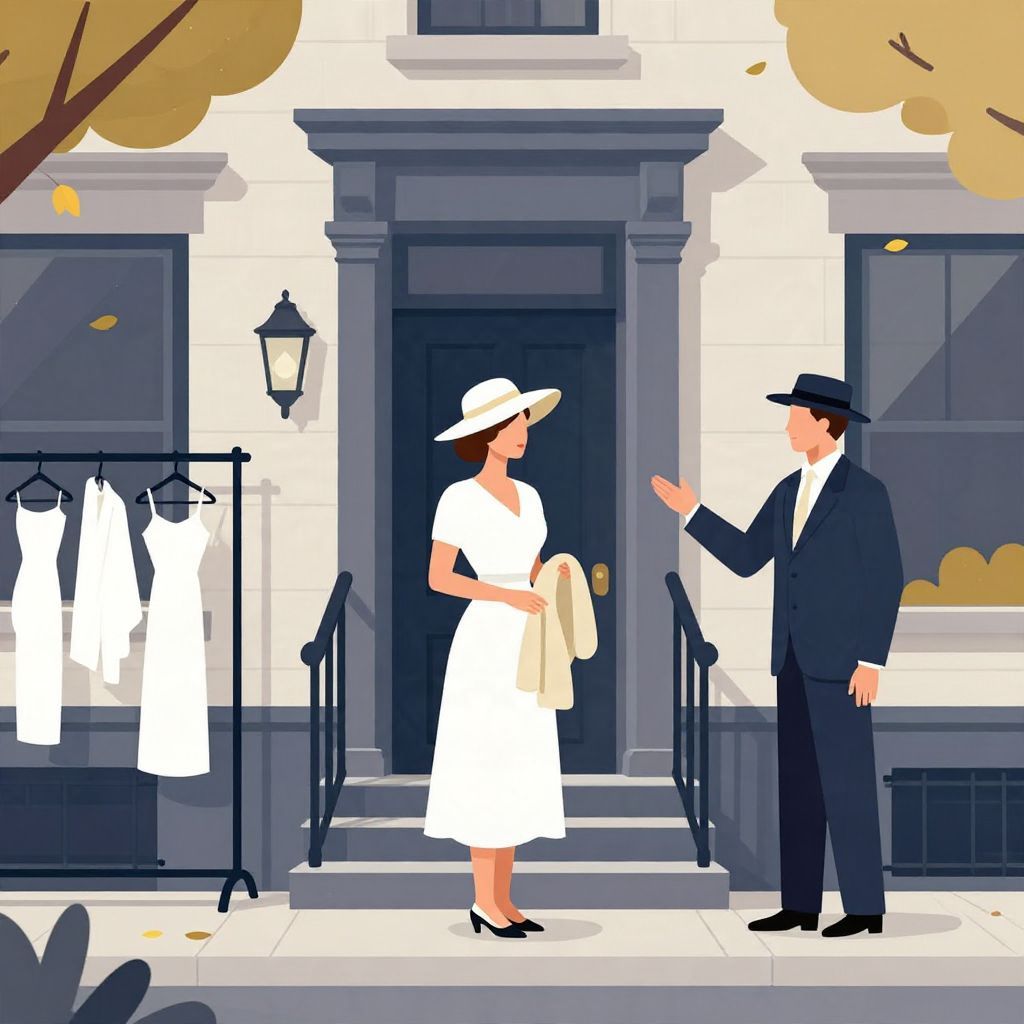
Why can’t you wear white after Labor Day? The short answer is: because a social rule, not a law, grew out of late-19th- and early-20th-century ideas about class, leisure, and seasonal dress. It was most strongly associated with wealthy Americans who used clothing to signal taste and status. Over time, the rule spread into popular fashion advice, even as fashion itself kept changing.
Today, the old “no white after Labor Day” idea survives more as a cultural cliché than a real standard. Most people no longer follow it strictly, and designers, stylists, and everyday wearers treat white as acceptable year-round. But the rule still has a history worth understanding, because it reveals how clothing once marked social identity in the United States.
Why can’t you wear white after Labor Day?
You can wear white after Labor Day because there was never a legal ban. The rule began as a social convention among wealthy Americans in the late 1800s and early 1900s, when seasonal clothing helped distinguish city life from summer leisure. It later became a widely repeated etiquette rule, even after its original meaning faded.
Where did the white-after-Labor-Day rule come from?
The custom emerged in the United States during the Gilded Age and early 20th century, when upper-class dress codes were highly seasonal. White clothing was strongly associated with summer, resort travel, and informal leisure. After Labor Day, people returned to city routines, darker fabrics, and more structured clothing, so white seemed out of place to many observers.
Seasonal dress and social status
In the late 19th century, clothing was more than personal style. It signaled class, occupation, and social discipline. Wealthy Americans often changed wardrobes with the seasons, partly because they could afford multiple sets of clothing and partly because fashion emphasized propriety. White, especially in lightweight fabrics, fit summer vacation life better than urban business life.
Labor Day, first celebrated nationally in the United States in 1894, marked the unofficial end of summer. That made it a convenient dividing line for seasonal fashion. The date did not create the rule, but it helped popularize the idea that white belonged to summer and darker colors to fall and winter.
The role of etiquette and fashion magazines
Fashion magazines, etiquette manuals, and social commentary helped turn a flexible habit into a supposed rule. These publications often presented dress codes as signs of refinement. Once repeated often enough, “don’t wear white after Labor Day” became a shorthand for knowing the “right” social behavior, even though actual practice varied by region, climate, and social group.
Was the rule ever universal?
No. The idea was never universal, and it was never enforced by law. It was strongest among certain urban, upper-class circles in the northeastern United States. In warmer climates, and among people with different work lives and budgets, the rule made far less sense. Fashion customs were always more flexible than the etiquette books suggested.
Climate mattered
In places with long warm seasons, white remained practical well beyond September. Linen, cotton, and other light fabrics were common in hot weather. A strict seasonal rule made less sense in the South, the Southwest, and other regions where summer-like temperatures lasted well into the fall. In those areas, the “rule” was often ignored or adapted.
Practicality versus social signaling
White clothing was not only symbolic; it was also harder to keep clean in an era before modern laundering and stain-resistant fabrics. Darker clothing could be more practical for city life and travel. Still, the social meaning of white mattered more than convenience. Wearing it at the “wrong” time could be read as naïve, fashionable, or even socially clueless.
How did the rule become so famous?
The rule became famous because it was easy to remember and easy to repeat. It fit neatly into advice columns, etiquette lessons, and later pop culture. As American fashion became more mass-produced in the 20th century, the old class-based meaning weakened, but the rule survived as a simple seasonal guideline that people could quote without knowing its origins.
From elite code to popular cliché
By the mid-20th century, many Americans had heard the rule even if they did not follow it. It functioned less as a serious social boundary and more as a piece of inherited wisdom. Like many etiquette rules, it outlived the world that created it. Once white became a mainstream wardrobe color, the old distinction between “summer white” and “fall clothing” blurred.
Hollywood and fashion culture
Film, magazines, and celebrity style also helped keep the idea alive. Public figures often used white clothing to convey glamour, freshness, or wealth. At the same time, fashion media sometimes treated seasonal rules as markers of sophistication. The result was a durable myth: not that white was forbidden, but that “proper” people avoided it after summer ended.
What did white symbolize in American fashion history?
White carried several meanings at once. It suggested leisure, cleanliness, and elegance, but it also implied that the wearer did not need to do manual labor. In that sense, white was a status symbol. The ability to wear and maintain white clothing without worrying about dirt was itself a sign of privilege.
Leisure and the summer resort ideal
In the late 19th and early 20th centuries, summer vacation culture expanded among the wealthy and middle class. Seaside resorts, country houses, and travel created a seasonal wardrobe of light colors and fabrics. White dresses, suits, and accessories fit this world of leisure. After summer, darker clothing better matched the return to work, school, and city life.
Cleanliness, modernity, and restraint
White also suggested modern cleanliness, especially in an era when white uniforms appeared in hospitals, hotels, and service work. Yet in formal fashion, too much white after summer could seem overly showy or out of season. The rule therefore reflected a balance between elegance and restraint, both of which were important in older etiquette culture.
Did the rule apply to men and women equally?
Not exactly. Women’s fashion was more closely watched and more frequently policed by etiquette standards. White dresses, hats, shoes, and gloves were especially visible in women’s style. Men also faced seasonal expectations, but the rule was often discussed more in relation to women’s clothing because women’s dress was more publicly scrutinized in social settings.
Women’s fashion and social judgment
Women’s clothing carried stronger expectations about propriety, class, and occasion. A white dress after Labor Day could be seen as a mistake in taste, especially in formal social circles. That made the rule part of a broader system of gendered fashion discipline, where women were often judged more harshly for violating style norms.
Men’s clothing and changing standards
Men’s suits followed seasonal patterns too, but the rules were less dramatic. A white suit after Labor Day might seem unusual in conservative settings, yet men’s fashion generally allowed more room for practical variation. Over time, as casual dress became more common, the distinction weakened for everyone.
Why does the rule still get repeated today?
The rule survives because it is memorable, easy to teach, and culturally familiar. It also functions as a kind of fashion folklore: a small piece of inherited advice that sounds authoritative even when it no longer reflects modern practice. People repeat it partly out of tradition and partly because it still works as a simple style joke.
Fashion folklore versus real etiquette
Many etiquette rules outlast the conditions that created them. “No white after Labor Day” is one of the best-known examples. It continues to appear in style advice, but usually as a flexible suggestion rather than a serious command. In contemporary fashion, white is worn in every season, from winter coats to summer linens.
Modern fashion has changed the meaning of white
Today, designers use white year-round in many fabrics and silhouettes. Winter whites, ivory coats, and white boots are common examples. Because clothing is now less tied to rigid class codes, the old seasonal boundary has lost much of its force. What once marked social status now mainly signals personal taste.
So is it ever wrong to wear white after Labor Day?
Historically, the answer depended on context, not a fixed rule. In older etiquette culture, wearing white after Labor Day could seem out of season in certain elite settings. In modern life, it is generally acceptable. The only real “rule” now is that clothing should suit the weather, the occasion, and your own style.
When the old rule still appears
You may still hear the phrase in fashion advice columns, wedding etiquette discussions, or family conversations. Sometimes it is used jokingly, and sometimes as a sign that someone grew up with older social norms. But it is no longer a meaningful historical boundary for most people.
The historical takeaway
“No white after Labor Day” was never a law, only a social rule rooted in class, seasonality, and etiquette in the United States. It grew from a world where clothing marked status and where summer leisure had its own dress code. Today it survives mostly as a cultural relic, and white can be worn whenever it suits the wearer. If you enjoy fashion history, you may also like exploring related topics such as the history of Labor Day and the history of fashion etiquette.