
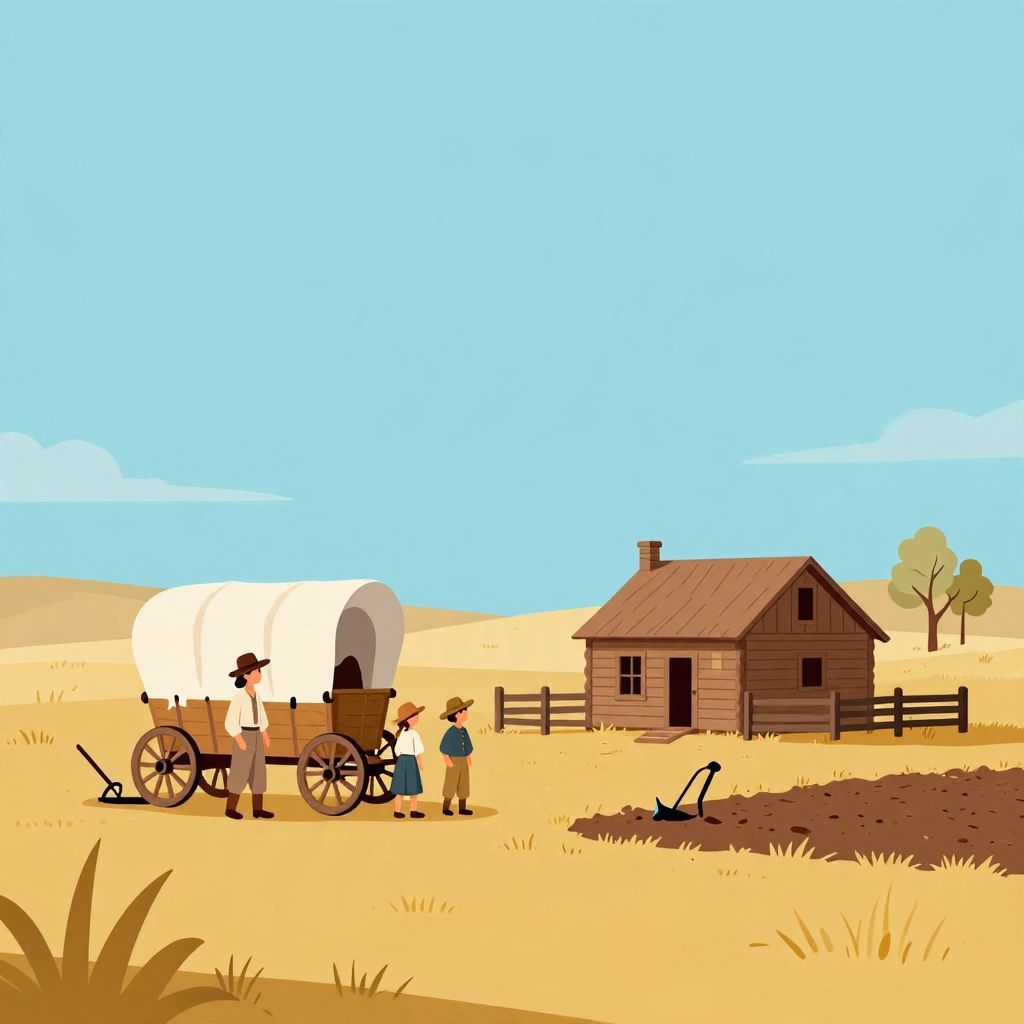
The Homestead Act was a major United States law that helped millions of people claim public land in the West. Signed by President Abraham Lincoln on May 20, 1862, it offered eligible settlers up to 160 acres if they lived on and improved the land for several years.
It became one of the most important laws in the history of American westward expansion. The act shaped migration, farming, Native American dispossession, and the growth of new communities across the Great Plains and beyond.
What Was The Homestead Act?
The Homestead Act was a federal law that made public land available to settlers at little or no cost, provided they met certain requirements. In practice, it encouraged people to move west, build homes, cultivate land, and establish permanent settlement. It was designed to promote small farming and national expansion, though its benefits were not equally available to everyone.
Why Was the Homestead Act Passed?
The law emerged from long-running debates over how the federal government should use western land. Northern politicians and reformers wanted land to be distributed to ordinary families rather than sold in large blocks to speculators and wealthy buyers. Supporters argued that free or cheap land would create independent farmers, strengthen the Union, and populate the West with loyal citizens.
The act passed in the context of the Civil War, when many Southern lawmakers had left Congress. That made it easier for Republicans, who generally supported homesteading, to advance the bill. The government also hoped to encourage settlement in territories that were being organized into states and to tie western development more closely to the national economy.
Earlier land ideas and political conflict
The Homestead Act did not appear out of nowhere. For decades, Americans had argued about whether public land should be sold for revenue or given away to settlers. Free-soil advocates, labor reformers, and many small farmers supported homesteading because they saw land ownership as a path to independence. Opponents often worried about lost federal income or believed land should be sold in ways that favored established interests.
How Did the Homestead Act Work?
Under the law, an applicant could claim up to 160 acres of federal land, usually in the West. To keep the land, the homesteader had to live on it, build a dwelling, and improve it, typically by farming, for five years. After meeting the requirements, the settler could obtain legal title to the property.
Key requirements
- The claimant had to be at least 21 years old, or the head of a household.
- The claimant had to be a U.S. citizen, or have filed an intention to become one.
- The claimant had to live on the land and make improvements.
- After five years, the claimant could prove compliance and receive title.
There was also a shorter route called “commutation,” which allowed some settlers to purchase the land after a shorter period of residence if they chose to pay for it. In theory, the law favored actual settlement over speculation. In practice, fraud, land grabbing, and loopholes often complicated that ideal.
Who Benefited From the Homestead Act?
The act helped many white settlers, immigrants, and families seeking land and opportunity. It offered a legal route for ordinary people to become landowners, and it contributed to the growth of towns, farms, and rail-linked communities across the frontier. For some newcomers, especially immigrants willing to endure hardship, it promised a fresh start.
But the benefits were uneven. Women could sometimes claim land, especially if they were heads of households, widows, or single adults, though social and legal barriers remained. African Americans also used the law, particularly after emancipation, and some became known as “Exodusters” when they moved to Kansas and other western areas in search of land and safety.
At the same time, the law was far less accessible than its supporters often suggested. Settlers needed money for tools, seed, shelter, transport, and survival. Dry climates, poor soil, isolation, and harsh winters caused many claims to fail. Large numbers of homesteaders did not complete the full five-year requirement.
What Was the Impact on Native Americans?
The Homestead Act had devastating consequences for many Native American nations. The law treated western land as federal property available for redistribution, even though those lands were already inhabited and used by Indigenous peoples. Homesteading accelerated the transfer of territory from Native nations to settlers and the U.S. government.
This process was part of a broader pattern of dispossession. Military campaigns, broken treaties, forced removals, reservation policies, and railroad expansion all worked together with homesteading to reduce Native landholdings. For many Indigenous communities, the Homestead Act was not simply a land policy; it was one more instrument of colonization.
Settlement and conflict
As settlers moved onto land that Native peoples used for hunting, travel, farming, and seasonal life, conflict intensified. The federal government often prioritized settler claims over Indigenous sovereignty. The result was not peaceful development but a contested and often violent transformation of the West.
How Did the Homestead Act Shape the American West?
The law helped turn the Great Plains and other western regions into agricultural and commercial landscapes. It encouraged the spread of farms, schools, churches, roads, and small towns. It also helped create a political culture that valued land ownership, self-reliance, and rural settlement.
Railroads played a major role in this process. Companies promoted settlement near rail lines, and many homesteaders depended on rail transport to get supplies and ship crops. The federal land system, railroad expansion, and market agriculture developed together, transforming the West into part of a national economy rather than a distant frontier.
Homesteading and the environment
The act also changed the land itself. Farming in semi-arid regions proved difficult, especially before modern irrigation and dryland farming techniques. In some places, the 160-acre standard was too small for successful agriculture under western conditions. That mismatch contributed to repeated failure, land abandonment, and later calls for policy change.
Important Facts About the Homestead Act
Several facts help explain why the Homestead Act mattered so much in U.S. history:
- Signed: May 20, 1862
- Signed by: President Abraham Lincoln
- Land offered: Up to 160 acres per claimant
- Main condition: Residence and improvement for five years
- Purpose: Encourage settlement and small-scale farming
- Broader effect: Accelerated western expansion and Indigenous dispossession
The law remained influential for decades. Congress later adjusted land policy through related measures, and homesteading continued in different forms well into the 20th century. The original Homestead Act itself was eventually repealed in 1976 for most public lands, though Alaska had a longer transition period.
Did the Homestead Act Really Create a Nation of Small Farmers?
That is the ideal the law promised, but the reality was more complicated. Some families did build lasting farms and communities. Others failed, sold out, or were pushed off the land by debt, drought, or isolation. Large landowners, speculators, and corporations also found ways to accumulate property despite the law’s intent.
So while the Homestead Act did expand opportunity for many people, it did not create a perfectly equal frontier. It was a powerful engine of settlement, but it also revealed the limits of federal idealism when confronted with geography, capitalism, and colonial expansion.
Why Does the Homestead Act Matter Today?
The Homestead Act remains important because it shaped the map, population patterns, and social history of the United States. It helped define the meaning of landownership in American political culture and influenced how people imagined opportunity, citizenship, and frontier life. It also stands as a reminder that expansion for some often meant loss for others.
Understanding the law means seeing both sides of the story: the promise of land for settlers and the profound cost to Native peoples. For more context on the economic and political forces that shaped the United States, see what was the Commercial Revolution and what is American imperialism. The Homestead Act was not just a land law; it was a turning point in the making of modern America.