
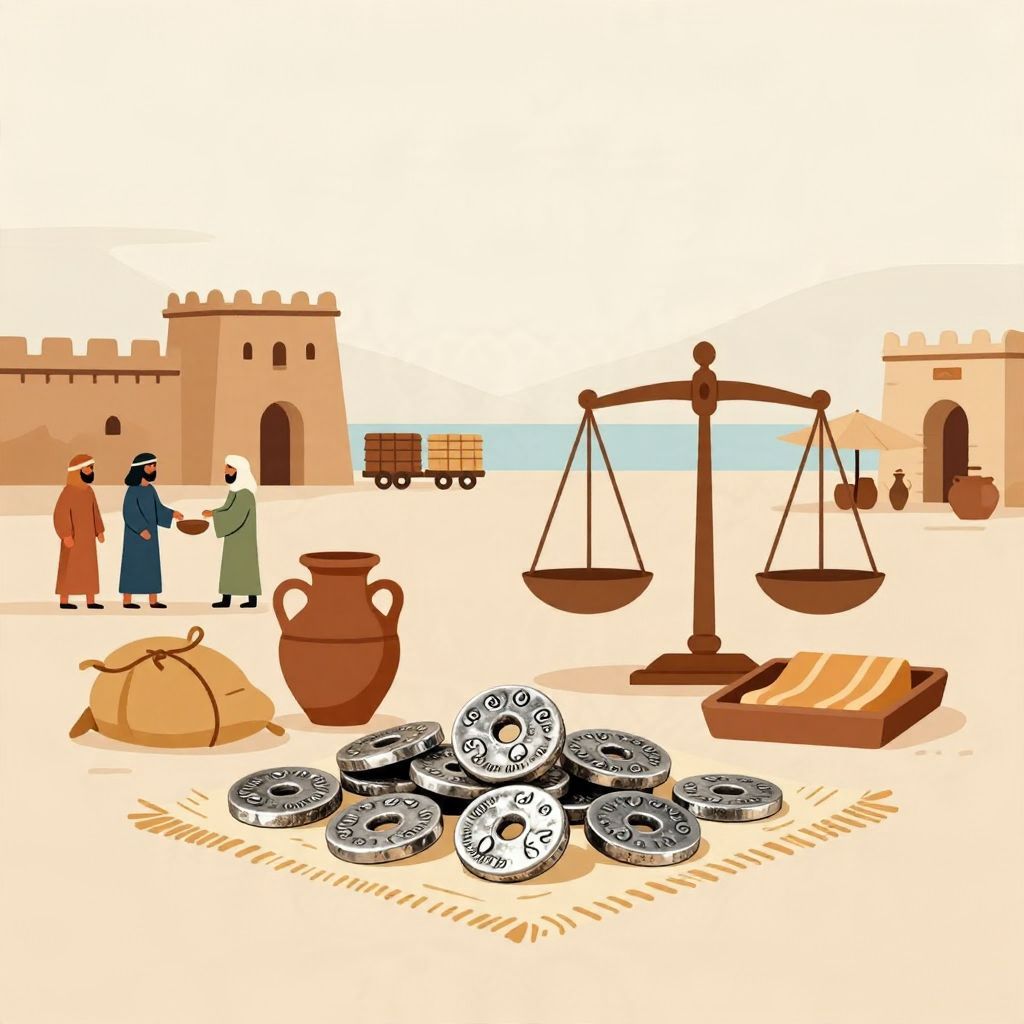
What is a shekel? The answer depends on the period you mean. In the ancient Near East, a shekel was first a unit of weight, then a unit of money based on silver or other precious metal. In the modern world, “shekel” is also the name of Israel’s currency, the Israeli new shekel.
Because the word has a long history, it appears in archaeology, the Bible, economic history, and modern politics. Understanding the shekel means tracing how people measured value before coins, how metal became money, and how an ancient term survived into the present.
What is a shekel?
A shekel was originally a weight unit used in the ancient Near East, roughly equivalent to 11 grams, though exact values varied by time and place. It later became a monetary unit tied to silver. Today, the shekel is the currency name used in Israel, where the modern Israeli new shekel replaced earlier versions of the shekel.
The ancient origins of the shekel
The word “shekel” comes from a Semitic root meaning “to weigh.” That origin is important: the shekel began as a measure of weight, not as a coin. Long before standardized coinage, societies in Mesopotamia, Canaan, and surrounding regions used weighed metal—especially silver—as a medium of exchange.
From weight to value
In early economies, merchants did not need coins to conduct trade. They could weigh out silver, copper, or grain according to accepted standards. A shekel represented a specific amount of metal, and its value depended on purity and local custom. This made the shekel both practical and flexible in a world where markets were still developing.
By the second millennium BCE, shekel-based accounting was already part of the economic life of the ancient Near East. Clay tablets from Mesopotamia show systems of weights and payments that used units like the shekel and the mina. These systems helped rulers, temples, and merchants keep records of taxes, wages, debts, and trade.
How much was a shekel?
The exact weight of a shekel was not fixed across all ancient societies. A commonly cited value is around 11.3 grams, but different regions and periods used slightly different standards. That variation matters because ancient weights were often local, and political authorities sometimes adjusted standards to suit administrative needs.
Shekels in the biblical world
The shekel appears frequently in the Hebrew Bible, where it functions as both a weight and a monetary unit. Biblical texts refer to silver shekels in transactions, tribute, temple offerings, and legal compensation. In that context, the shekel helps show how everyday economic life worked in ancient Israel and Judah.
Why the shekel matters in biblical history
Several biblical passages mention shekels in ways that reveal the social importance of measured silver. Payments for land, bride-price, fines, and religious obligations could all be expressed in shekels. This does not mean every story can be read as literal economic record, but it does show that the shekel was familiar to the biblical writers and their audiences.
One of the best-known later associations is the phrase “thirty pieces of silver,” which appears in the New Testament. That expression is often linked to the shekel as a silver unit, though scholars caution that the exact historical value and context are debated. The phrase became culturally powerful because it symbolized betrayal, not because it was a precise accounting statement.
Did ancient shekels mean coins?
Not at first. The shekel predates widespread coinage by many centuries. In its earliest use, it was a weight standard, and payment was often made in weighed pieces of silver rather than struck coins. Coinage emerged much later, in the 7th century BCE in western Anatolia, and then spread through the Mediterranean world.
When coins changed money
Once coins became common, older weight units like the shekel did not disappear. Instead, they were adapted into monetary language. A “shekel” could now refer to a coin-like unit of account, even when the actual payment involved weighed metal or, later, coinage with a recognized face value. This shift is one reason the term survived so long.
In practice, ancient economies often mixed systems. People used bullion, weighed silver, and coins side by side depending on location and period. The shekel fit well into this world because it could function as a standard of value even when the form of money changed.
The shekel in the ancient Near East
The shekel was part of a broader network of Mesopotamian and Levantine measurement systems. It was related to larger units such as the mina and talent, which allowed accountants to scale up from small payments to large state transactions. These units were essential for palaces, temples, and long-distance trade.
Common ancient weight relationships
- Shekel: a basic weight and monetary unit
- Mina: a larger unit, often equal to 50 or 60 shekels depending on the system
- Talent: a much larger unit used for major sums and tribute
These relationships were not always uniform. Ancient economies were not standardized in the modern sense, and local systems could differ. Still, the shekel remained one of the most important building blocks of ancient accounting because it sat at the level where ordinary trade and official finance met.
The shekel in later Jewish history
After the biblical period, the shekel continued to appear in Jewish historical memory and practice. During the Second Temple period, the term was used for religious taxes and offerings. The best-known example is the annual temple tax, which was associated with a half-shekel payment in some Jewish traditions.
Coinage and the Jewish revolts
During the First Jewish Revolt against Rome in the 1st century CE, Jewish rebels issued coins marked with inscriptions referring to shekels and half-shekels. These coins were politically significant because they expressed autonomy and identity under Roman rule. They also show that the shekel had become more than a weight: it was now a symbol of collective authority.
That symbolic power continued in later centuries. For many Jewish communities, the shekel remained a cultural and religious reference point even when actual local currencies changed. The term carried memory as well as economic meaning.
The modern Israeli shekel
In the 20th century, the shekel was revived as the name of a modern currency in the State of Israel. This was a deliberate historical choice, connecting the new state to older Hebrew and Jewish traditions. The modern currency has gone through several versions, reflecting inflation and monetary reform.
Key modern stages
- 1980: Israel introduced the shekel as a currency name, replacing the Israeli pound.
- 1985: High inflation led to a reform and the creation of the Israeli new shekel.
- Today: The new shekel is the standard currency of Israel, abbreviated as ILS and divided into 100 agorot.
The modern shekel is not the same thing as the ancient unit of weight, but the name was chosen to evoke historical continuity. That continuity is real in a cultural sense, though the economic systems are very different. Ancient shekels were measured in metal weight; modern shekels are fiat currency backed by state institutions and financial policy.
Why the shekel still matters historically
The shekel is important because it shows how money developed before modern banking and coin systems. It also reveals how language can preserve economic history. A term that once meant “to weigh” became a unit of account, then a symbol in sacred texts, and finally the name of a modern national currency.
What the shekel tells us about ancient economies
The history of the shekel highlights three major features of early economic life: the centrality of weight standards, the importance of silver, and the close relationship between commerce and state power. Ancient rulers needed reliable units for taxes and tribute, while merchants needed trusted measures for exchange. The shekel served both needs.
It also reminds us that money has never been only about economics. It carries political authority, religious meaning, and cultural memory. That is why a word born in the ancient Near East can still appear on modern banknotes and in historical discussions today.
Quick facts about the shekel
- The word likely comes from a Semitic root meaning “to weigh.”
- Originally, a shekel was a unit of weight, not a coin.
- Ancient shekel weights varied by region and period.
- The shekel later became a monetary unit based on silver.
- It appears often in the Hebrew Bible and other ancient Near Eastern records.
- The modern Israeli new shekel is a separate, contemporary currency that borrows the ancient name.
So, what is a shekel? Historically, it is a weight turned money unit, one that moved from ancient silver accounting into religious texts and modern national currency. If you want to explore related history, you may also be interested in how much 30 pieces of silver were worth and what mercantilism was.