
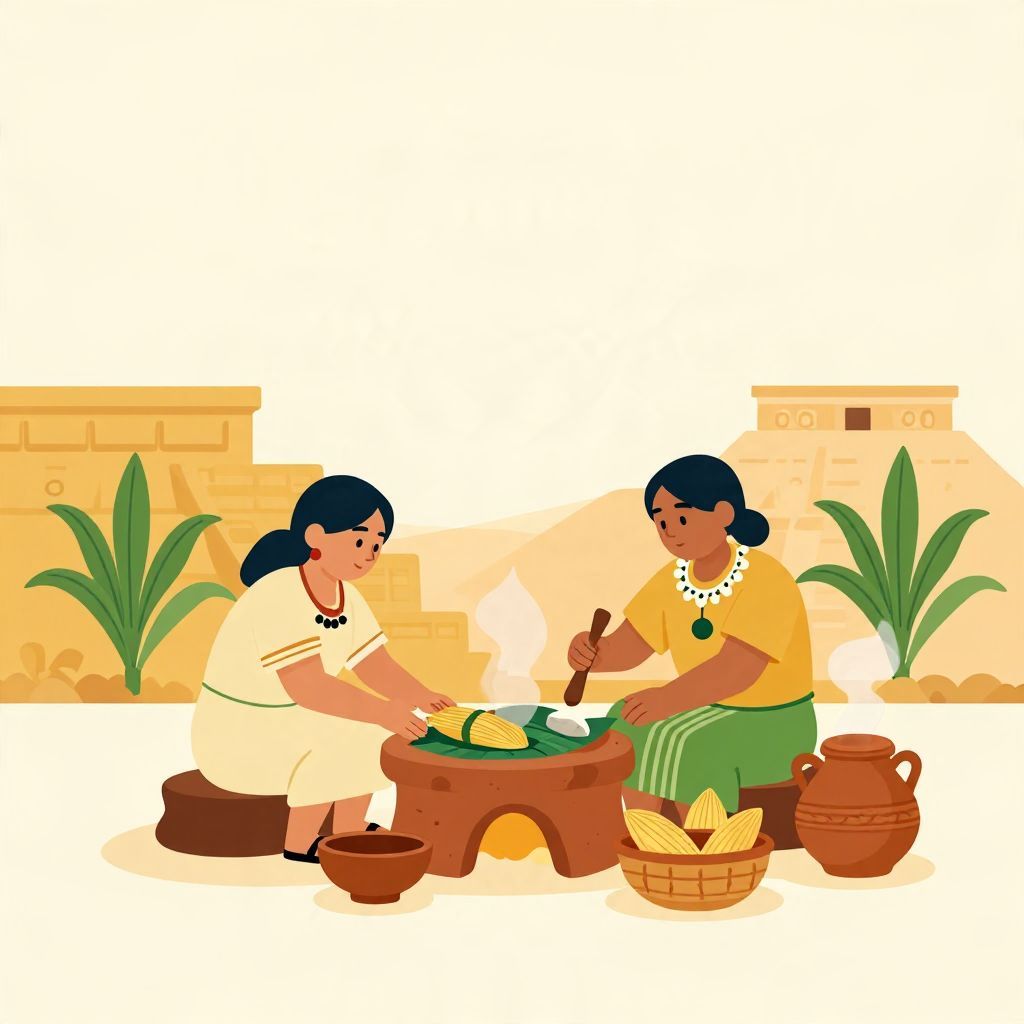
When people ask where tamales originated, they are usually asking about one of the oldest and most widespread foods in the Americas. The short answer is that tamales originated in Mesoamerica, especially among Indigenous peoples in what is now Mexico, long before European contact.
Their exact “birthplace” cannot be pinned to one village or one date, because tamales developed over centuries across several cultures. But the strongest historical evidence places their early history in central and southern Mexico, where maize-based cuisine became the foundation of daily life, ritual feasting, travel food, and military rations.
Where Did Tamales Originate?
Tamales originated in Mesoamerica, most likely in ancient Mexico, among Indigenous peoples who domesticated maize and transformed it into a portable, wrapped food. Archaeological and historical evidence points to a long pre-Columbian tradition shared by cultures such as the Maya, Aztec, Zapotec, and others, rather than a single inventor or exact location.
The Mesoamerican Roots of Tamales
Tamales are deeply tied to the history of maize, the crop that shaped Mesoamerican civilization. Once Indigenous communities learned to process corn into masa, they created many ways to cook it. Wrapping dough in leaves or husks and steaming or baking it was practical, efficient, and adaptable, making tamales useful for everyday meals and ceremonial occasions alike.
Why maize mattered
Maize was not just a crop; it was the basis of food, labor, religion, and identity in many Mesoamerican societies. Because masa could be mixed with meat, beans, chili, seeds, fruits, or herbs, tamales became a flexible food that could vary by region, season, and social setting. Their portability also made them ideal for travel, hunting, warfare, and trade.
What the word “tamal” tells us
The modern Spanish word tamal comes from Indigenous languages, especially Nahuatl, the language associated with the Mexica (Aztec) world. This linguistic evidence supports the food’s deep Indigenous roots, even though similar wrapped foods existed across Mesoamerica in different forms and under different names.
How Ancient Tamales Were Made and Used
In the pre-Columbian world, tamales were made from masa and wrapped in corn husks, banana leaves, avocado leaves, or other plant materials depending on local ecology. They were then cooked by steaming, baking, or placing them in hot ashes. This method preserved moisture and made the food easy to carry and reheat.
Everyday food and special food
Tamales were not limited to one social class. They could be humble daily fare or part of elite feasts, depending on ingredients and occasion. In many communities, they also had ritual meaning. Offerings of tamales appear in Indigenous ceremonial contexts, showing that the food was both practical and symbolic.
Food for movement and labor
Because tamales were wrapped and self-contained, they were useful for people on the move. Warriors, messengers, traders, and travelers could carry them without needing bowls or utensils. That portability helped tamales spread widely and survive as a food tradition across changing political landscapes.
Did Tamales Come from the Aztecs?
The Aztecs, or more precisely the Mexica, are strongly associated with tamales, but they did not invent them from nothing. By the time the Mexica rose to power in the 14th and 15th centuries, tamales were already part of a long Indigenous culinary tradition. The Aztec Empire helped popularize and document them, but their origins are older and broader than Aztec rule.
Aztec-era evidence
Spanish chroniclers and Indigenous codices from the colonial period describe tamales as common foods in the Mexica world. These sources are valuable, though they were recorded after the conquest and must be read carefully. They show that tamales were widespread in central Mexico, but they do not prove that the Mexica were the first to make them.
Why the Aztecs are often credited
Many people connect tamales with the Aztecs because the food appears prominently in accounts of Tenochtitlan and because Nahuatl vocabulary shaped later Spanish usage. In popular memory, the Aztec association became stronger than the broader Mesoamerican story. Historically, though, tamales belong to a much larger Indigenous food tradition.
Evidence from Maya and Other Indigenous Cultures
The Maya also made tamales, and their long history helps show how widespread the dish was. In Maya-speaking regions, tamales appear in culinary traditions, ceremonial life, and seasonal festivals. Similar foods are found across Mesoamerica, which suggests that tamales evolved through shared agricultural and cultural developments rather than a single origin point.
A regional family of foods
Different peoples used different wrappers, fillings, and cooking methods. In tropical areas, banana leaves were common; in highland regions, corn husks were more typical. Some tamales were savory, others sweet, and some were prepared for special ritual calendars. This variety is part of the reason historians describe tamales as a Mesoamerican food tradition rather than one fixed recipe.
Beyond central Mexico
Related wrapped maize foods also existed farther south in parts of Central America and the Andes, though not always in the same form or with the same name. That wider presence shows how important maize-based wrapped foods were across Indigenous America, but the strongest evidence for the classic tamal tradition still points to Mesoamerica, especially Mexico.
What Happened to Tamales After the Spanish Conquest?
The Spanish conquest in the 16th century did not erase tamales. Instead, the food survived, adapted, and spread even more widely. Indigenous cooks continued making tamales, while new ingredients such as pork, chicken, cheese, raisins, and lard entered many regional recipes. The result was continuity with change: an ancient food tradition that absorbed colonial influences.
Continuity and adaptation
Colonial rule disrupted Indigenous societies, but it also created new culinary exchanges. Tamales remained important in households, markets, and festivals because they were already deeply embedded in local foodways. Over time, regional styles developed across Mexico and beyond, reflecting local ingredients, religious calendars, and family traditions.
From Indigenous food to national symbol
In modern Mexico and in many Latin American communities, tamales became more than a meal. They came to symbolize heritage, celebration, and continuity with Indigenous pasts. Their survival is historically significant because it shows how a pre-Columbian food could endure conquest, colonization, migration, and modernization.
Why Historians Avoid a Single “Inventor” Story
It is tempting to ask who invented tamales, but that question does not fit the historical evidence very well. Foods like tamales usually emerge gradually through shared practice. In Mesoamerica, generations of cooks experimented with maize, wrapping materials, heat, and fillings until the tamal became a durable culinary form.
What can be stated with confidence
- Tamales are pre-Columbian in origin.
- They developed in Mesoamerica, especially ancient Mexico.
- They were made by multiple Indigenous cultures, not one single people alone.
- Their survival after conquest reflects deep cultural importance and adaptability.
What remains uncertain
Historians cannot name the first tamal maker or the exact first year tamales were created. There is no single surviving record that marks a precise invention moment. Instead, the evidence points to a long culinary evolution tied to maize agriculture, regional exchange, and Indigenous innovation.
Why Tamales Matter in Historical Perspective
Tamales are important because they reveal how food carries history. They show the centrality of maize in Mesoamerican civilization, the creativity of Indigenous cooks, and the resilience of cultural traditions across conquest and change. A tamal is not just a dish; it is a surviving link to ancient American history.
So, where did tamales originate? They originated in Mesoamerica, especially in what is now Mexico, as part of a long Indigenous tradition built around maize. Their story is not one of a single inventor or exact moment, but of centuries of culinary development, cultural exchange, and survival. For related cultural history, you may also enjoy reading about cultural divergence and how Christmas is celebrated in Mexico.