
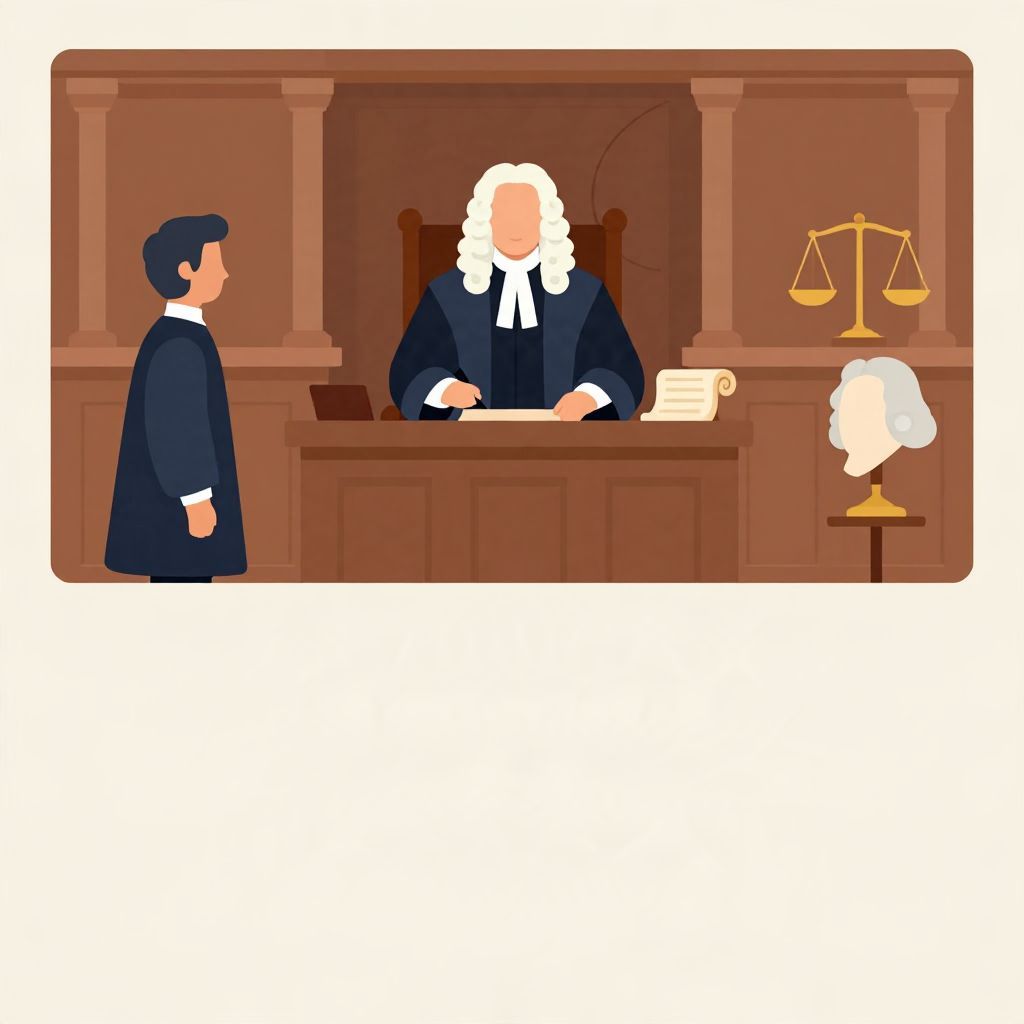
Why do judges wear wigs? The short answer is that the practice began as a fashion trend in 17th-century Europe and then survived as a symbol of dignity, continuity, and the impersonality of the law. In Britain, wigs became part of formal legal dress and remained so long after they disappeared from everyday life.
What looks strange today was once ordinary elite clothing. Over time, the wig stopped being a practical fashion item and became a visual sign that a judge was acting not as a private individual, but as an official of the court.
Why do judges wear wigs?
Judges wear wigs because the custom developed from aristocratic fashion in the 1600s and later became a legal tradition. In Britain and some former British legal systems, wigs helped signal authority, formality, and continuity with the past. They also created a uniform appearance that reduced personal display and emphasized the office rather than the person.
The fashion origins of judicial wigs
The legal wig did not begin in the courtroom. It came from broader European fashion, especially in the 17th century, when wigs became popular among the wealthy and politically powerful. Men wore them to project status, elegance, and maturity. When this style spread into official life, lawyers and judges adopted it too.
From royal courts to legal courts
Wigs were associated with the elite because they were expensive and time-consuming to make and maintain. In an age when appearance mattered greatly in public life, a wig suggested rank and respectability. As courtly fashion changed, legal professionals kept the style after ordinary society moved on. That is why the wig became a fossil of older elite culture inside the justice system.
The influence of King Charles II
In England, the reign of Charles II (restored in 1660) is often linked with the spread of wig-wearing among men at court. He helped make elaborate dress fashionable again after the austerity of the Interregnum. Although judges were not simply copying the king, the broader court culture of the later 1600s made wigs a respectable part of formal male attire.
How wigs became part of the legal profession
By the late 17th and early 18th centuries, English lawyers and judges were wearing wigs as part of professional dress. The legal world valued order, hierarchy, and visible tradition. Once wigs had become standard in the profession, they helped mark out the courtroom as a special space governed by its own customs.
A uniform for the law
One reason wigs endured is that they functioned like a uniform. A uniform reduces individuality and makes the wearer immediately recognizable as part of an institution. In court, that mattered. The wig helped distinguish judges and barristers from ordinary citizens and reinforced the seriousness of proceedings.
Impersonality and authority
Legal systems often try to present justice as something larger than personal opinion. The wig supported that idea by making judges look less like private individuals and more like representatives of the law. This was especially important in a society where rank, family, and personal connections could otherwise dominate public life.
Why the tradition lasted after the fashion disappeared
Most clothing fashions fade quickly, but legal dress is conservative by design. Once wigs became tied to authority and ceremony, they were preserved as tradition even after they stopped being fashionable in ordinary life. By the 18th century, everyday wig-wearing was declining, but the courtroom preserved the style as a sign of continuity.
Tradition as a legal value
The law often changes slowly, and symbols can matter as much as practical usefulness. Judges’ wigs survived because they connected modern courts to older legal institutions. For many supporters, the wig was not about vanity; it was about preserving the dignity and stability of the justice system.
Why continuity mattered in Britain
British legal culture places unusual weight on precedent, inherited forms, and ceremonial continuity. The wig fit that culture well. It suggested that the court was not a place for fashion or personal expression, but for inherited rules and disciplined procedure. In that sense, the wig became a visible sign of legal conservatism.
What judges’ wigs were meant to communicate
Judges’ wigs communicated several ideas at once: authority, neutrality, seriousness, and social distance. They also helped create a sense of ritual. Courtrooms can be intimidating, and formal dress contributes to their atmosphere by making clear that the proceedings are structured and public, not casual or personal.
Respectability and decorum
In the early modern period, public officials were expected to appear respectable and restrained. Wigs helped create a polished, controlled image. They were part of a larger system of robes, collars, and other formal garments that made the courtroom visually distinct from everyday life.
Equality before the court?
Ironically, the wig both reflected and masked social hierarchy. On one hand, it could make judges seem impartial by reducing personal expression. On the other, it belonged to a legal world that historically was not equal in practice, especially in societies with limited political rights and strong class divisions. The wig symbolized impartial justice more than it guaranteed it.
Did judges always wear the same kind of wig?
No. Legal wigs changed over time. The long, full wigs of the late 17th and early 18th centuries were eventually replaced by shorter and simpler styles. The modern British judicial wig is a much more restrained version of the older fashion, reflecting the fact that the tradition has outlived the original style by centuries.
Different wigs for different roles
In Britain, barristers and judges developed different forms of wig and court dress. The most formal wigs were associated with judges, while barristers wore styles suited to their rank and function. These distinctions helped reinforce the hierarchy of the legal profession.
Not all legal systems kept the custom
The wig is especially associated with Britain and some places influenced by British legal tradition. Many countries with civil-law systems never adopted it, and several common-law jurisdictions later abandoned it for most or all court settings. That makes the wig less a universal legal symbol than a specifically British historical inheritance.
Why some judges still wear wigs today
In a few courts, judges still wear wigs because the tradition remains part of official dress and legal identity. Supporters argue that it preserves continuity, reinforces solemnity, and reminds the public that the legal system is older than any one generation. Critics see it as outdated, expensive, and detached from modern society.
Tradition versus modernization
Debates over judicial wigs are really debates about what symbols the law should use. Should courts preserve inherited forms because they represent stability, or should they modernize to look more accessible and less remote? Different legal systems have answered that question differently, which is why the wig survives in some places and not others.
Practical reasons are secondary
People sometimes assume wigs were worn for hygiene, warmth, or disguise, but those explanations are not the main historical reason. The strongest evidence points to fashion, status, and symbolism. Any practical benefits were secondary to the social meaning the wig acquired in legal culture.
Common myths about judges’ wigs
Several popular explanations for judges’ wigs sound plausible but are misleading. The tradition is older and more cultural than people often realize.
- Myth: Judges wear wigs to hide baldness.
Reality: Wigs were fashionable among elite men long before they became legal costume. - Myth: Wigs were invented specifically for courts.
Reality: They came from general European fashion and were later adopted by lawyers and judges. - Myth: Wigs are mainly for practical comfort.
Reality: Their real importance is symbolic and ceremonial.
The historical meaning of the wig in the courtroom
The judge’s wig is a reminder that institutions often preserve old symbols long after their original purpose has changed. What began as a fashionable accessory became a marker of office, then a tradition, and finally a visual shorthand for legal authority. Its survival tells us as much about the history of the law as about the history of clothing.
So, why do judges wear wigs? Because the courtroom inherited a 17th-century fashion and turned it into a symbol of dignity, continuity, and impartial justice. The wig is not just a costume piece; it is a historical artifact that still shapes how legal authority looks. For more on British legal tradition, see why British judges wear wigs and the broader historical setting in what is a duchy.