
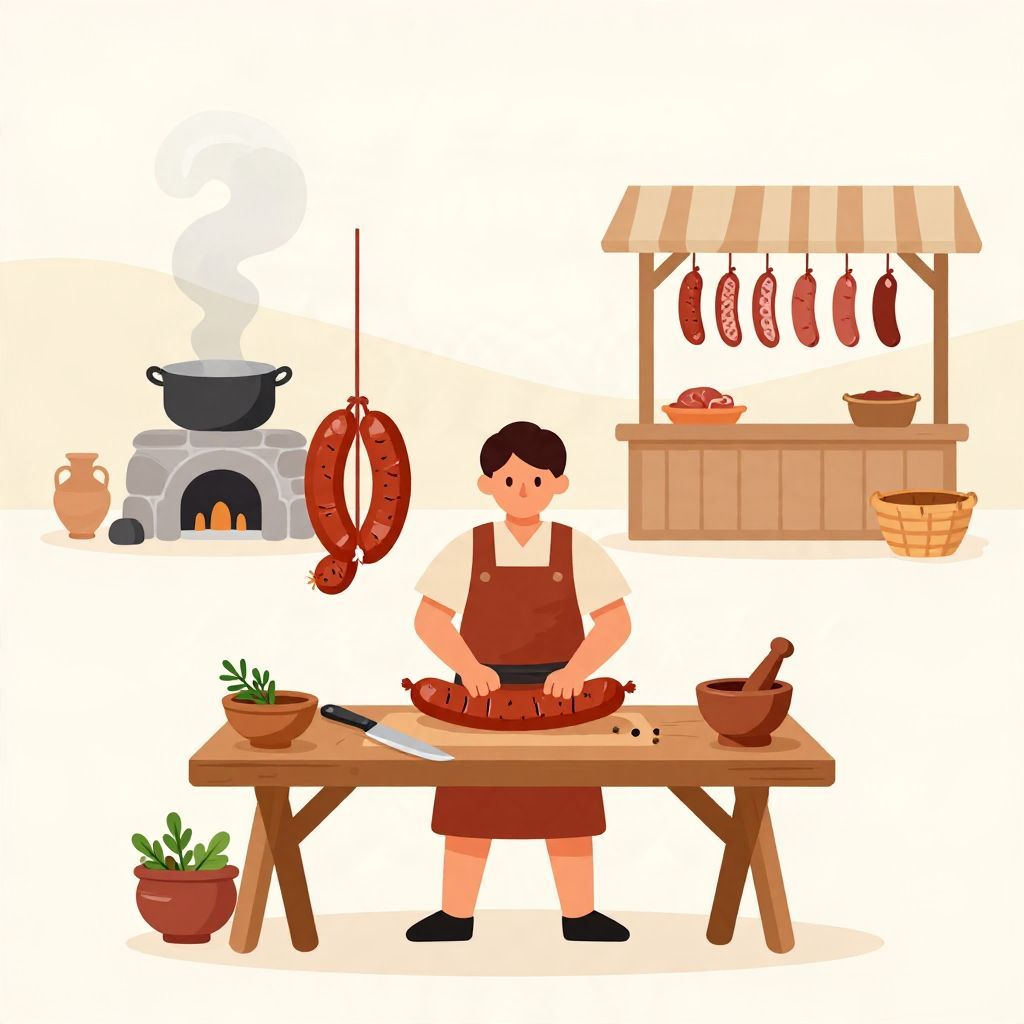
Where does sausage come from? The short answer is that sausage is ancient: it developed as a practical way to preserve and use meat, fat, and seasonings long before modern refrigeration. Many cultures independently created versions of it, so there is no single inventor or birthplace.
Its history stretches from the ancient Mediterranean and Near East to Europe, Asia, and beyond, where people learned to stuff minced meat into casings, dry it, smoke it, or cook it immediately. Over time, sausage became both a survival food and a regional specialty.
Where Does Sausage Come From?
Sausage likely emerged in multiple ancient societies as a preservation method for meat, especially after slaughter seasons. The earliest written and culinary evidence points to the ancient Near East, Greece, and Rome, but similar foods almost certainly existed wherever people raised livestock and needed to avoid waste.
The Ancient Origins of Sausage
The idea behind sausage is simple: chop meat, mix it with fat, salt, and spices, then pack it into an intestine or other casing. That method helped people store food longer, transport it more easily, and use parts of an animal that might otherwise spoil quickly. In the ancient world, this was both economical and practical.
Early evidence in the ancient world
References to sausage-like foods appear in ancient texts from Greece and Rome. Greek writers mention seasoned meat mixtures, and Roman sources describe a wide range of stuffed meats. By the time of the Roman Empire, sausages were common enough to be part of everyday eating as well as festive banquets.
One famous Roman term, botulus, referred to a type of sausage or blood sausage. Roman food culture was highly developed, and cooks experimented with flavorings, preservation techniques, and regional styles. Sausage was not a luxury item only; it was also a way to make use of scraps and preserve protein in a world without modern cold storage.
Why sausage spread so widely
Sausage spread because it solved a universal problem. Livestock were slaughtered seasonally, and meat had to be used quickly. Salt, drying, smoking, and fermentation all helped extend shelf life. Since these techniques were useful in many climates, sausage traditions appeared independently in different regions rather than spreading from just one origin point.
How Sausage Developed Across Cultures
Sausage history is really a history of many local traditions. Different peoples adapted the basic idea to available animals, spices, grains, and preservation methods. That is why sausage can mean very different things in different places: fresh breakfast links, smoked sausages, blood sausages, cured salamis, or spiced meat mixtures.
Europe: from Roman kitchens to regional specialties
In Europe, sausage became deeply rooted in local foodways. The Roman legacy helped shape later traditions, but medieval and early modern Europeans transformed sausage into countless regional forms. Pork was especially common in many areas because pigs were efficient to raise and yielded fat useful for preservation.
In German-speaking lands, for example, sausage-making became highly diversified, with fresh, boiled, smoked, and cured varieties. In Italy, cured sausages such as salami developed into long-lasting foods suited to different climates. In France, Spain, and elsewhere, local herbs, wine, garlic, and pepper influenced flavor. The result was not one sausage culture, but many.
The Middle East, Central Asia, and beyond
Other regions also developed sausage traditions shaped by local conditions. In parts of the Middle East and Central Asia, people made spiced meat mixtures and preserved meats using drying and smoking. Some traditions used lamb or beef rather than pork, reflecting religious dietary rules and regional livestock patterns.
These variations show an important historical point: sausage is not tied to one civilization. It is a food technology as much as a recipe. Whenever a society had access to meat, salt, and a need for preservation, sausage-like foods were a logical solution.
What Made Sausage So Useful in History?
Sausage mattered because it turned perishable meat into a more manageable food. It reduced waste after slaughter, made transport easier, and allowed households, armies, and travelers to carry protein over long distances. In preindustrial societies, that was a major advantage.
Preservation before refrigeration
Before refrigeration, meat spoiled quickly. Salting, smoking, drying, and fermenting were among the main ways to slow decay. Sausage combined several of these techniques. The casing protected the meat, while salt and drying helped preserve it. Some sausages were eaten fresh, but many were designed to last.
Using the whole animal
Sausage also reflects a broader historical principle: frugality. In many societies, people tried to use as much of the animal as possible. Trimmings, organs, fat, and blood could all be incorporated into sausage. This made sausage a practical food for ordinary households, not just elites.
Medieval and Early Modern Sausage Traditions
During the Middle Ages, sausage became even more varied. Towns, guilds, and rural households all developed their own recipes. Markets sold fresh sausages for immediate cooking, while cured sausages could be stored for weeks or months. Recipes changed according to local customs, religious rules, and available seasonings.
Religion and dietary rules
Religious practice shaped sausage history in important ways. In Christian Europe, pork sausage was common because pigs were widely raised. In Jewish and Islamic traditions, pork was prohibited, so communities developed sausage-like foods using beef, mutton, lamb, or poultry instead. These differences helped create distinct culinary identities.
Trade, spice, and status
As trade expanded, so did sausage flavor. Pepper, nutmeg, cloves, and other spices became available to wealthier households, while ordinary people relied more on salt, garlic, onions, and herbs. Spices could signal status, but they also served practical roles in flavoring preserved meat. Over time, sausage moved between humble and prestigious settings.
How Sausage Reached the Modern World
Modern sausage emerged through industrialization, migration, and mass food production. As people moved across Europe and then to the Americas and other regions, they carried sausage traditions with them. At the same time, new technologies changed how sausage was made, stored, and sold.
Industrial production and standardization
In the 19th and 20th centuries, urban growth created demand for inexpensive, consistent meat products. Factories and butcher shops standardized recipes, while refrigeration and mechanized grinding changed production methods. Sausage became both artisanal and industrial: a local craft in some places, a mass-market food in others.
Immigration and regional American sausages
In the United States and other immigrant societies, sausage traditions from Germany, Italy, Poland, Ireland, and elsewhere blended with local ingredients. This helped produce familiar foods such as hot dogs, bratwurst, kielbasa, chorizo, and breakfast sausage. These are not all the same food, but they share a common historical root in meat preservation and adaptation.
Is There One “First Sausage”?
No single “first sausage” can be identified with confidence. The historical record shows sausage-like foods in the ancient world, but the basic idea may be much older than surviving documents. Because many early societies used similar preservation methods, sausage probably arose more than once.
That uncertainty matters. It is tempting to imagine a single inventor or birthplace, but food history rarely works that way. Sausage is better understood as a convergent invention: a useful solution discovered independently in many places.
Common Types of Sausage and What They Reveal
Different sausage types tell us how people adapted the same idea to local needs. Some were meant to be eaten immediately, while others were designed for long storage. A few examples show the range:
- Fresh sausage — made to be cooked soon after preparation.
- Smoked sausage — preserved and flavored through smoke.
- Cured sausage — dried and salted for longer storage.
- Blood sausage — uses blood as an ingredient, often with grains or fat.
- Fermented sausage — developed through controlled aging and drying.
These categories are useful because they show that sausage is not one fixed recipe. It is a family of foods shaped by climate, religion, trade, taste, and technology.
Why Sausage Still Matters Historically
Sausage is more than a popular food. It is evidence of how people solved everyday problems in the past. It reveals how ancient and medieval communities preserved meat, how trade spread spices and techniques, and how migration carried culinary traditions across continents.
Its long history also explains why sausage appears in so many cuisines today. From Roman kitchens to modern delis and butcher shops, the basic idea has remained remarkably durable because it is practical, adaptable, and economical.
So, where does sausage come from? It comes from ancient food preservation, from practical household cooking, and from many cultures that independently turned meat into a storable, flavorful staple. If you want to explore more food origins, you may also enjoy reading about where the hamburger originated and where tamales originated.