
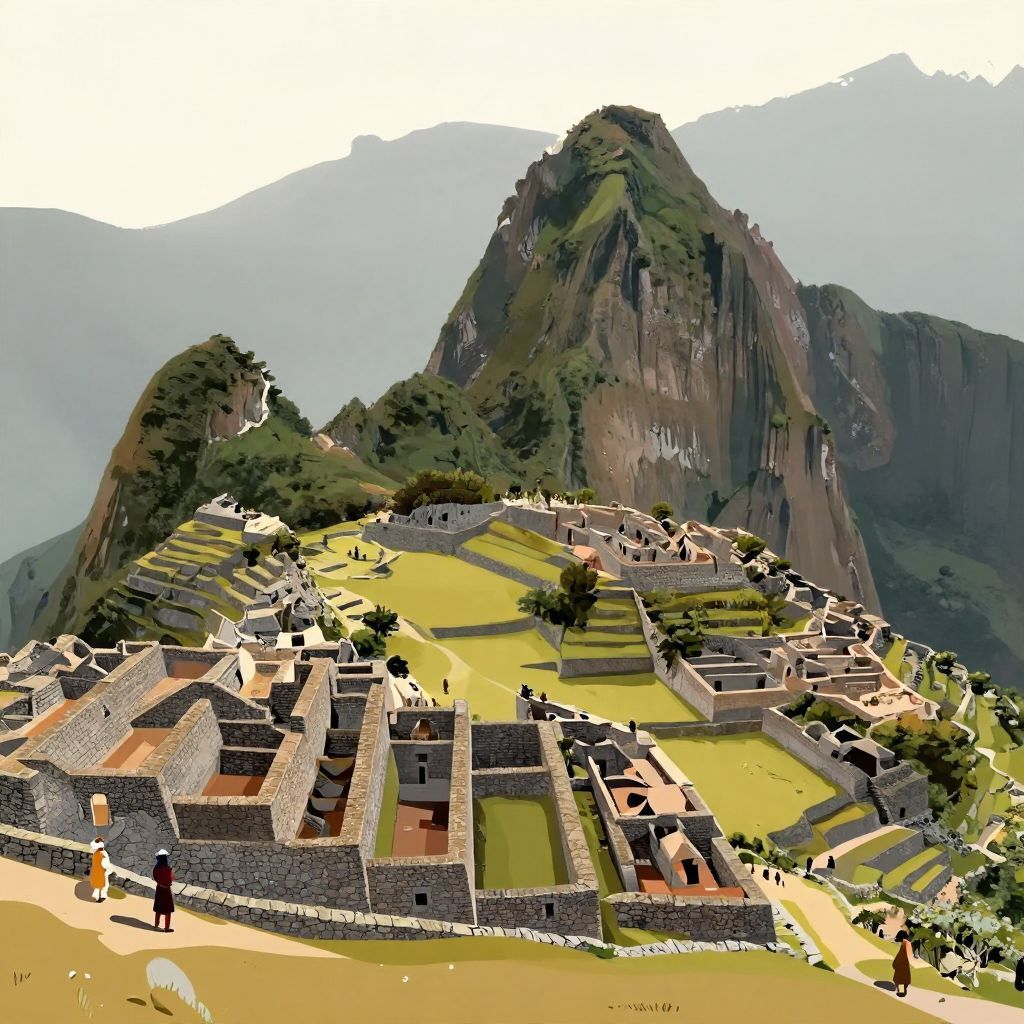
Why was Machu Picchu built? The short answer is that the Inca likely created it in the mid-15th century as a royal estate and ceremonial center for Emperor Pachacuti, though scholars still debate the full range of its functions. Its dramatic mountain setting, refined stonework, and limited agricultural terraces suggest a place that combined elite residence, ritual activity, and political symbolism.
Because the Inca left no written records in the European sense, historians and archaeologists reconstruct Machu Picchu’s purpose from its architecture, landscape, and artifacts. That evidence points to a carefully planned site that was both practical and symbolic, tied to Inca power, religion, and control of the Andes.
Why Was Machu Picchu Built?
Machu Picchu was probably built around the mid-1400s as an Inca royal retreat, estate, and sacred center associated with Emperor Pachacuti. It was not a normal city. Instead, it appears to have served a small elite population, supported by agricultural terraces, water management, and ceremonial spaces that reinforced Inca authority and religious beliefs.
A royal estate for Pachacuti
The strongest scholarly interpretation is that Machu Picchu functioned as a royal estate for Pachacuti, the Inca ruler who transformed the kingdom of Cusco into a major empire. Inca rulers often owned estates outside the capital, where they could stay seasonally, conduct rituals, and display their status. Machu Picchu fits that pattern well.
The site’s layout suggests elite use rather than mass settlement. It contains finely built residences, storehouses, temples, and open plazas, but no evidence of a large urban population. The presence of agricultural terraces also indicates that the estate could support the people living there without depending entirely on outside food supplies.
A ceremonial and sacred landscape
Machu Picchu was also built with ritual in mind. The Incas regarded mountains, springs, and rock formations as sacred features of the landscape. At Machu Picchu, architecture seems deliberately aligned with natural peaks and celestial events. This suggests that the site was designed not only for living, but also for ceremonies tied to the Inca worldview.
Several structures are especially important in this interpretation. The Temple of the Sun, the Intihuatana stone, and carefully placed windows and doorways all imply ritual significance. These features likely connected the site to solar observation, seasonal change, and the sacred authority of the emperor, who was linked to the sun god Inti.
A symbol of Inca power and control
Building Machu Picchu in such a remote and spectacular location also had political meaning. The Inca were master builders and organizers, and the site demonstrated their ability to shape difficult terrain into a functioning ceremonial landscape. In this sense, Machu Picchu was a statement of imperial power as much as a residence or shrine.
The location may also have been strategic. It sat in a region between the Andes and the Amazonian slopes, an area of ecological diversity and political importance. By establishing a royal site there, the Inca could assert control over land, labor, and resources in a region far from Cusco.
What Historical Evidence Supports This Interpretation?
Archaeology strongly suggests that Machu Picchu was built in the 15th century and abandoned before or during the Spanish conquest. Its construction style matches other late Inca sites, and the artifacts found there point to elite occupation. While no single document explains its purpose, the material evidence supports a royal and ceremonial role.
Architecture and planning
The site contains more than 150 structures, arranged in a deliberate urban plan divided into agricultural, residential, and ceremonial sectors. The stonework varies by function: some buildings are made with highly polished, carefully fitted stones, while others are more modest. This hierarchy is typical of Inca elite architecture.
The terraces are another key clue. They were not simply decorative. They stabilized the steep slopes, improved drainage, and created farmland. In the Andes, terracing was a sophisticated agricultural technology. At Machu Picchu, it helped sustain the site while also shaping the landscape into a controlled, ordered space.
Burials and artifacts
Excavations have uncovered human remains, ceramics, tools, and other objects that help identify the people who lived there. The burial evidence suggests a mixed community of attendants, specialists, and possibly retainers, rather than a broad civilian population. Many of the artifacts are consistent with high-status Inca use.
At the same time, the site does not look like a military fortress in the usual sense. Its dramatic setting has led some early observers to describe it that way, but the evidence points more toward a political and ritual estate than a defensive stronghold. The Inca certainly valued defensible locations, but Machu Picchu’s main purpose appears to have been symbolic and administrative, not martial.
Spanish silence and Inca absence
One reason Machu Picchu remains mysterious is that the Spanish chroniclers did not describe it in detail. It was likely abandoned by the time Spanish rule reached the region, which means it escaped the destruction that affected many other Inca centers. As a result, archaeologists must rely on physical evidence rather than extensive written testimony.
This absence of records has encouraged speculation, but it also protects historians from overconfidence. The most responsible conclusion is that Machu Picchu had multiple functions, with royal, ceremonial, and agricultural roles all woven together.
How Did Machu Picchu Fit Into the Inca Empire?
Machu Picchu should be understood within the wider world of the Inca Empire, or Tawantinsuyu, which expanded rapidly in the 15th century. The Incas built roads, terraces, storehouses, and administrative centers across the Andes. Machu Picchu was part of that imperial system, but it was also unusually secluded and refined.
The role of Pachacuti
Pachacuti is central to Machu Picchu’s history. He is widely credited with launching the Inca imperial expansion and reorganizing the state. Royal estates were one way Inca rulers extended their influence after death, because their descendants maintained those properties and used them for rituals honoring the ruler’s memory.
Machu Picchu may have been one of these estates. If so, it would have had both practical value and dynastic meaning. It helped sustain the royal household while also reinforcing the legitimacy of Pachacuti’s line.
Labor and imperial organization
The Inca did not build monuments with money in the modern sense. They relied on labor obligations known as mit’a, through which communities contributed workers to state projects. Machu Picchu’s construction would have required careful coordination of labor, transport, food supply, and stoneworking expertise.
That level of organization reveals something important about why the site was built. It was not an isolated retreat created for private comfort alone. It was a product of empire, made possible by the Inca state’s ability to mobilize people and resources across difficult terrain.
Was Machu Picchu a City, Fortress, or Temple?
Machu Picchu is best understood as a combination of functions rather than a single-purpose site. It was probably a royal estate with ceremonial spaces, agricultural terraces, and elite residences. Some parts had religious significance, while the location itself offered natural protection. Calling it only a city, fortress, or temple oversimplifies the evidence.
Why it was not a typical city
A true city usually has signs of dense, permanent, and diverse population. Machu Picchu does not fit that model well. Its population was likely limited, and its buildings suggest specialized use. There is little evidence of the sort of crowded domestic life seen in larger urban centers.
Why it was not simply a fortress
Its steep cliffs and narrow access routes made it defensible, but defense does not appear to have been the main reason for its construction. The ceremonial architecture and agricultural layout matter more than military features. The site was secure because of its setting, but that does not make it primarily a fortress.
Why it had temple-like features
The sacred geography of the site is undeniable. The Incas often built in places where mountains, springs, and stones had religious meaning. At Machu Picchu, these elements were integrated into the plan, suggesting that ritual was built into the landscape itself. In that sense, the site functioned partly as a sanctuary of imperial religion.
Why Was Machu Picchu Abandoned?
The abandonment of Machu Picchu is still not fully understood. It was likely deserted in the 16th century, probably after the Spanish conquest destabilized the Inca world. Because the Spanish never fully occupied the site, it was not reshaped into a colonial town, which helped preserve it but also left its history incomplete.
Possible reasons for abandonment
- Disruption from the Spanish conquest and the collapse of Inca political authority
- Loss of the royal household that may have maintained the estate
- Changes in regional labor and settlement patterns under colonial rule
- Possible movement of inhabitants to other centers in the Andes
It is important to note that no single explanation is universally accepted. The abandonment likely resulted from a combination of political collapse, demographic disruption, and changing priorities under Spanish rule.
Why Machu Picchu Still Matters
Machu Picchu matters because it reveals how the Inca combined engineering, religion, and political power in a single landscape. It shows that the Inca were not only builders of roads and fortresses, but also creators of sacred spaces that reflected their cosmology and imperial ambition.
Its preservation also makes it unusually valuable. Since the site was not heavily altered by colonial construction, it offers a rare window into Inca architecture and planning. Modern visitors often see it as an ancient wonder, but historically it is also evidence of how the Inca state expressed authority through carefully chosen places.
In the end, Machu Picchu was built to serve power, ritual, and landscape together. It was likely a royal estate for Pachacuti, a ceremonial center linked to the sun and sacred mountains, and a visible symbol of Inca mastery over the Andes. If you want to explore the broader cultural setting, see what Machu Picchu means and where the Incas lived.