
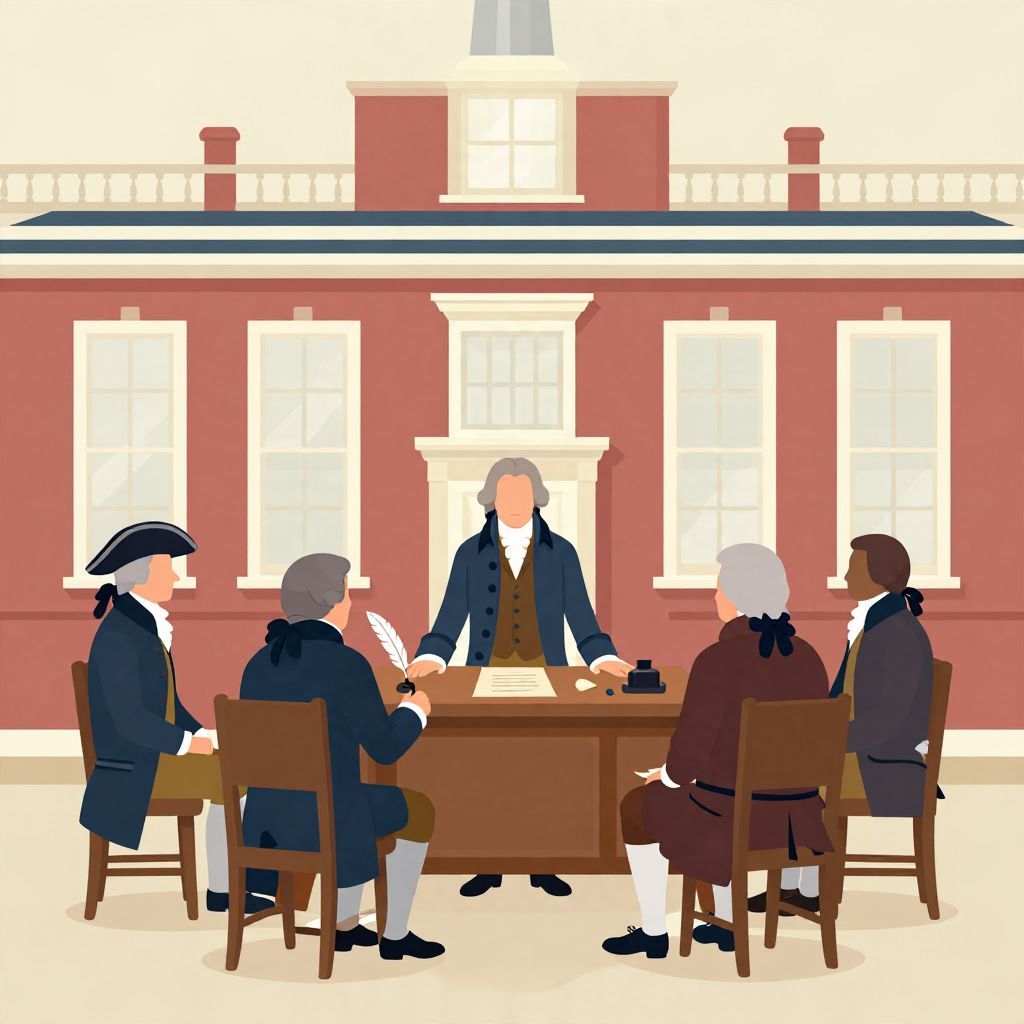
How many people signed the Constitution? The short answer is 39 delegates signed the U.S. Constitution at the Constitutional Convention in Philadelphia on September 17, 1787. Not every delegate who attended the convention signed it, and some prominent figures left before the final document was completed.
The signing marked the end of a difficult summer of debate over how to build a stronger national government after the weaknesses of the Articles of Confederation.
How Many People Signed the Constitution?
Thirty-nine men signed the Constitution on September 17, 1787, in Philadelphia. They represented 12 of the 13 states that participated in the Constitutional Convention; Rhode Island did not send delegates. Although 55 men attended the convention at different times, many left early, and some refused to sign the final document.
Who Signed the Constitution?
The signers were delegates chosen by their states to revise the national government, but the convention ended up drafting an entirely new framework. The 39 signers included some of the best-known founders, such as George Washington, James Madison, Benjamin Franklin, and Gouverneur Morris, who helped write the final text and present it for signing.
Why not all delegates signed
Some delegates had already left Philadelphia before the final version was ready. Others disagreed with the Constitution’s structure or believed it gave too much power to the new federal government. A few refused to sign on principle, while others stayed away because they were dissatisfied with compromises over representation, slavery, or executive power.
The most famous names among the signers
- George Washington of Virginia, who presided over the convention
- James Madison of Virginia, often called the “Father of the Constitution”
- Benjamin Franklin of Pennsylvania, the oldest signer
- Alexander Hamilton of New York, one of the few signers from his state
- Roger Sherman of Connecticut, who helped shape the Great Compromise
Why Was the Number 39, Not 55?
The convention had 55 delegates at one point, but that number does not represent the signers. Attendance changed constantly over the summer of 1787 because delegates came and went for personal, political, or health reasons. By the final day, only 42 delegates were still present, and three of those declined to sign, leaving 39 signatures on the finished Constitution.
Delegates who did not sign
Among the more notable non-signers were Elbridge Gerry of Massachusetts, George Mason of Virginia, and Edmund Randolph of Virginia. Their objections mattered because they showed that the Constitution was not universally accepted even among leading founders. These disagreements later fueled the push for a Bill of Rights during the ratification process.
What Happened at the Signing on September 17, 1787?
The final draft was presented to the delegates after months of debate behind closed doors in Independence Hall. The signing ceremony was not a grand public event in the modern sense, but it became one of the most important moments in American political history. Washington signed first, and the delegates signed in order by state.
The role of the convention presidency
Washington’s presence gave the gathering legitimacy, but he did not direct every debate. The convention’s work was shaped by compromise: large states and small states balanced representation in Congress, and the new government divided power among legislative, executive, and judicial branches. The signatures symbolized agreement with that new system, even if some delegates remained uneasy about parts of it.
How the Constitution’s Signatures Compare to Other Founding Documents
People sometimes confuse the Constitution with the Declaration of Independence. The Declaration was signed in 1776 and is associated with a different political moment: independence from Britain. The Constitution was signed 11 years later, in 1787, to create a stronger national government. The two documents are connected, but they answered different historical problems.
Declaration of Independence vs. Constitution
- Declaration of Independence: announced separation from Britain
- Constitution: established the structure of the U.S. federal government
- Signers of the Declaration: 56 men over time, not all at once
- Signers of the Constitution: 39 men on September 17, 1787
Why the Constitution Needed Signers at All
Signing the Constitution gave the document political authority and signaled that the delegates were willing to recommend it to the states for ratification. It did not make the Constitution law by itself. Instead, the signed draft was sent to state conventions, where the real fight over approval would take place.
Ratification followed signing
The Constitution became effective only after nine states ratified it in 1788. That process was controversial and intense. Supporters, known as Federalists, argued that the new government was necessary for stability and national defense. Opponents, often called Anti-Federalists, feared centralized power and demanded protections for individual liberties. The eventual adoption of the Bill of Rights in 1791 helped answer some of those concerns.
Historical Significance of the 39 Signers
The number 39 matters because it shows both unity and division. The signers represented a major political achievement: they created a durable framework for the United States. But the smaller number also reflects the limits of consensus. The Constitution was not the product of unanimous agreement; it was a negotiated compromise among men with different interests, state loyalties, and visions of government.
That tension shaped the early republic. The Constitution’s authority came not from perfect agreement, but from enough agreement to create a functioning system. Its signature page became a symbol of national founding, yet the debates behind it reveal how fragile that achievement really was.
Quick Facts About the Constitution’s Signers
- Date signed: September 17, 1787
- Total signers: 39
- Total delegates who attended at some point: 55
- States represented by signers: 12
- State not represented: Rhode Island
So, how many people signed the Constitution? Thirty-nine. That number captures the final act of the Constitutional Convention, but the larger story is about compromise, disagreement, and the creation of a new national government. If you want more context on the founders themselves, see how old the Founding Fathers were in 1776 or review the ideals behind the nation’s founding in two rights in the Declaration of Independence.