
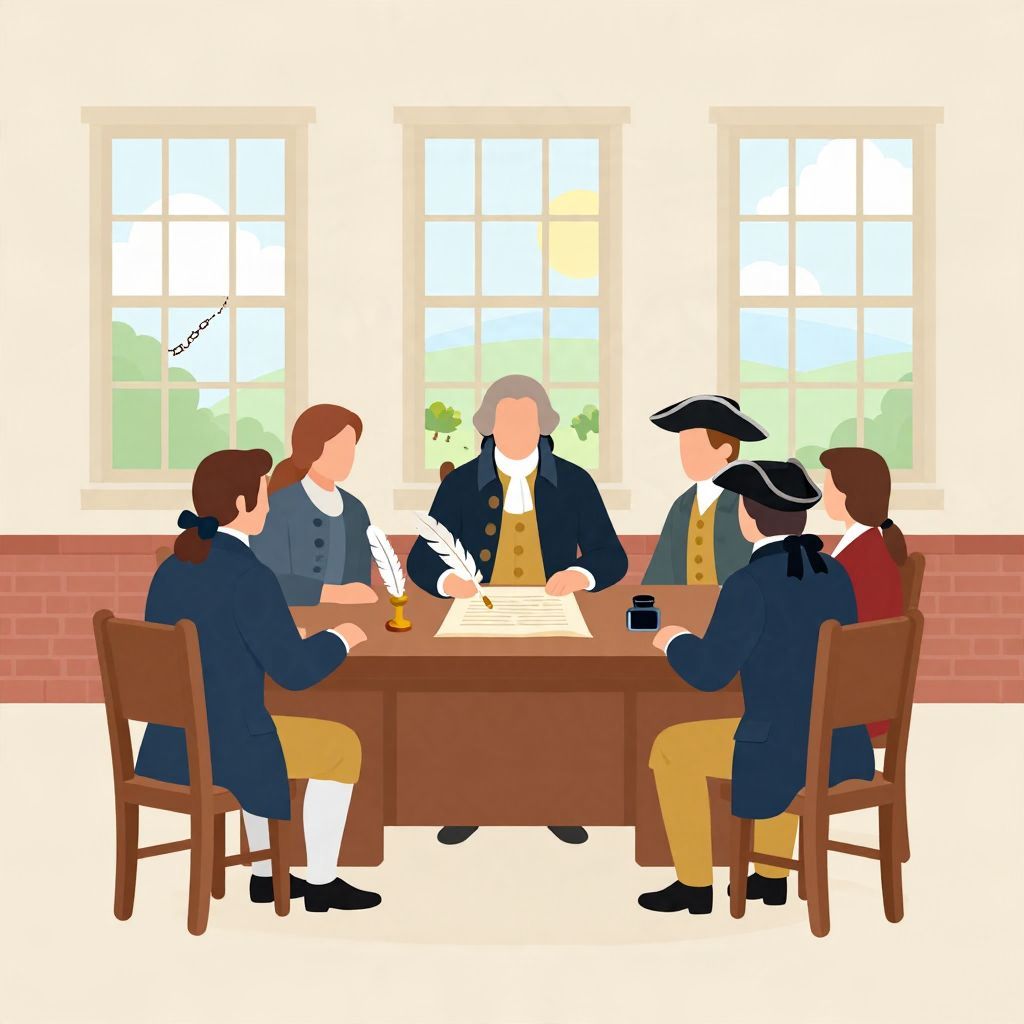
What are two rights in the Declaration of Independence? The clearest answer is that the document names “Life” and “Liberty” as two of the rights that people possess. It also adds the pursuit of happiness, forming the famous trio in Thomas Jefferson’s draft of 1776.
Those words were revolutionary in the context of British rule in North America. They expressed the idea that government exists to protect natural rights, and that people may alter or abolish a government that fails to do so.
What Are Two Rights In The Declaration Of Independence?
The two rights most often identified are life and liberty. In the Declaration’s opening section, Jefferson wrote that all people are endowed with “unalienable Rights,” including “Life, Liberty and the pursuit of Happiness.” The document presents these as natural rights, meaning rights that belong to people by virtue of being human, not because a king or parliament grants them.
Why “Life” and “Liberty” Matter in the Declaration
“Life” and “liberty” were not just abstract ideals. In 1776, colonists were arguing that the British government had violated their rights through taxation without representation, military pressure, and interference in colonial self-government. By naming life and liberty, the Declaration framed independence as a defense of basic human freedom and security.
Life
“Life” referred to the right to exist without arbitrary destruction or oppression. In the political thought of the 1700s, this idea was tied to the belief that rulers should not endanger the people they governed. The Declaration did not define life in a modern legal sense, but it used the term to express a broad claim: government should protect, not threaten, human existence.
Liberty
“Liberty” meant freedom from unjust control. For the American revolutionaries, this included political freedom, the right to govern themselves, and protection against abuses of power. The word had deep roots in English political culture, but in 1776 it became part of a bold argument that the colonies were entitled to self-rule.
The Full Phrase: “Life, Liberty and the Pursuit of Happiness”
Although people often ask for two rights, the Declaration actually lists three: life, liberty, and the pursuit of happiness. This phrasing appears in the final adopted text of July 4, 1776. Jefferson’s earlier draft is often discussed in relation to “property,” but the Continental Congress revised the wording before adoption.
Why the wording changed
Historians generally agree that the final phrase reflects Enlightenment political thought, especially ideas about natural rights and human flourishing. The change from “property” to “the pursuit of happiness” is important because it broadened the statement beyond ownership and economic interests. It suggested that people have a right to seek fulfillment and well-being, not merely material possessions.
Where the Idea of Natural Rights Came From
The Declaration did not invent the idea of rights. It drew on a long tradition of political thought that included English constitutional history, Protestant resistance theory, and Enlightenment philosophy. Among the most influential writers was John Locke, who argued that people have natural rights and that governments exist through consent.
John Locke and political consent
Locke’s influence is especially visible in the Declaration’s logic: if government becomes destructive of rights, the people may change or abolish it. That reasoning helped justify independence from Britain. The Declaration’s authors were not simply listing grievances; they were building a philosophical case for revolution.
English precedents
Colonists also inherited a political tradition shaped by documents such as the Magna Carta and the English Bill of Rights. These earlier texts did not say exactly what the Declaration says, but they helped establish the idea that rulers are limited by law and that subjects have enforceable rights.
Who Wrote the Declaration?
Thomas Jefferson was the principal author of the Declaration of Independence, though Congress edited the text before adoption. The drafting committee also included John Adams, Benjamin Franklin, Roger Sherman, and Robert Livingston. Jefferson’s role was central, but the final document was the product of collective revolutionary politics.
Drafting and adoption in 1776
Congress approved independence on July 2, 1776, and adopted the Declaration’s text on July 4. The famous date has become the national holiday in the United States, but the political decision to break from Britain was made before the final wording was completed.
What the Declaration Actually Does—and Does Not—Say
The Declaration is often treated as a source of American law, but it is not a constitution or a bill of rights. It is a statement of political principles and a formal announcement of separation from Britain. Its language has enormous symbolic power, yet it did not itself create a full legal rights system.
Not all Americans enjoyed those rights equally
One of the most important historical realities is that the Declaration’s ideals were not applied equally in 1776. Enslaved people were denied liberty, women lacked political rights, Native peoples were excluded from the new nation’s governing framework, and many free men without property still faced limits on participation. This gap between principle and practice has shaped American history ever since.
How the Declaration’s Rights Shaped Later History
The Declaration’s language influenced later reform movements, even when those movements criticized the nation for failing to live up to its own ideals. Abolitionists, suffragists, civil rights activists, and others returned to the words “life” and “liberty” to argue that the United States had a moral obligation to expand freedom.
Influence on the Constitution and Bill of Rights
The Declaration itself was followed by the Articles of Confederation and later the U.S. Constitution. The Constitution did not repeat the Declaration’s phrasing, but the Bill of Rights and later amendments gave legal form to many freedoms that Americans associated with the revolutionary generation’s ideals.
Influence beyond the United States
The Declaration also inspired political movements outside the United States. Its claim that rights are natural and governments derive authority from the consent of the governed became part of a wider Atlantic world of revolutionary ideas in the late eighteenth and nineteenth centuries.
Common Misunderstandings About the Two Rights
People sometimes simplify the Declaration into a short list of “two rights,” but that can blur the historical meaning. The document does not say that life and liberty are the only rights people have. It presents them as examples of fundamental rights, and then adds the pursuit of happiness as a third central principle.
Life, liberty, and property?
A frequent confusion comes from comparing the Declaration to Locke’s writings, which often emphasize “life, liberty, and property.” Jefferson’s final text uses “pursuit of happiness” instead. Scholars debate the exact reasons for that change, but the safest historical conclusion is that the final adopted wording intentionally widened the statement’s moral scope.
Rights versus privileges
Another misunderstanding is to treat these rights as privileges granted by government. The Declaration argues the opposite. It says rights exist before government and that legitimate government is created to secure them. That idea was radical in an age when monarchs still claimed authority by inheritance and tradition.
Why This Question Still Matters
Asking what two rights are in the Declaration of Independence leads to a larger historical insight: the American Revolution was not only a war over taxes or colonial administration. It was also a struggle over political theory, human freedom, and the purpose of government. The words “life” and “liberty” remain central because they capture the Declaration’s core promise.
In short, the two rights most often named are life and liberty, though the full Declaration adds the pursuit of happiness. Understanding those words in their 1776 context reveals both the boldness of the American Revolution and the unfinished nature of the ideals it announced. For more context, you may also want to read about the causes of the American Revolution and the U.S. Constitution and Bill of Rights.