
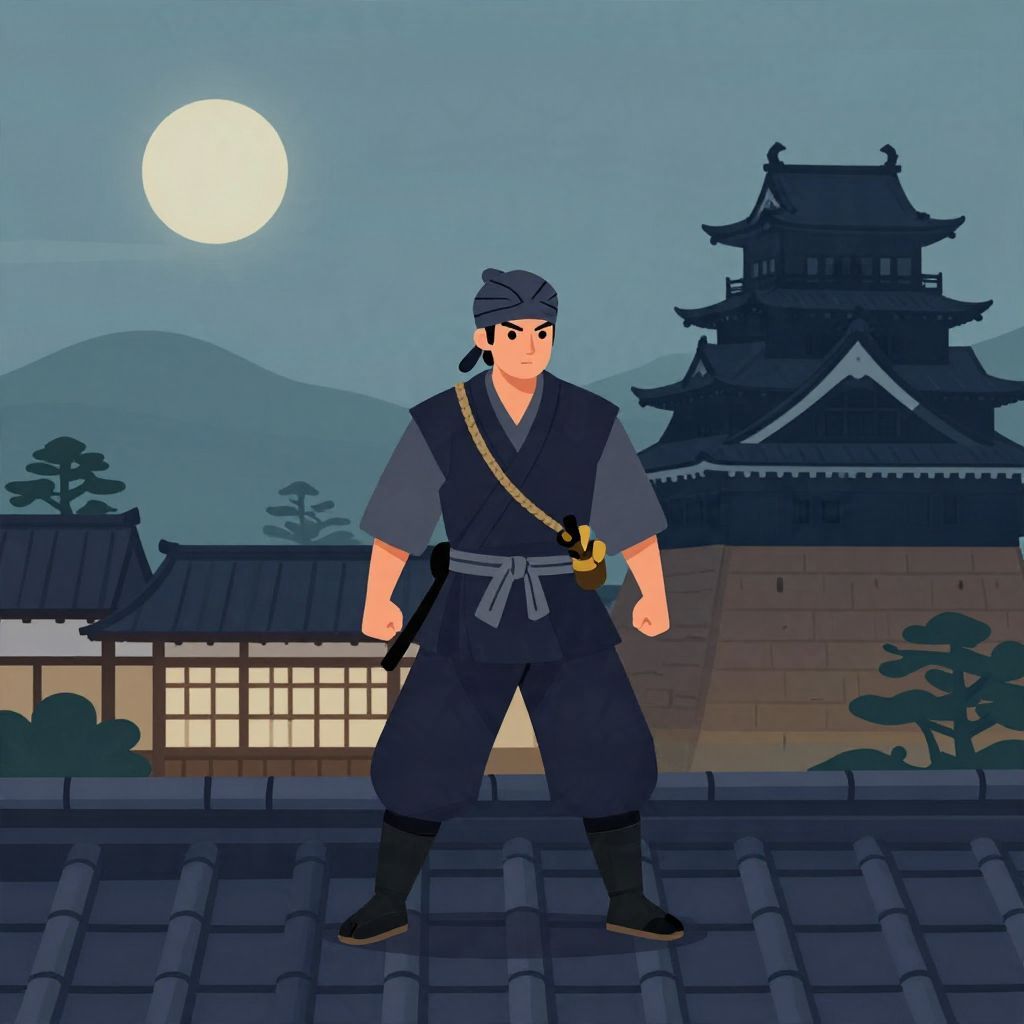
What is a shinobi? In Japanese history, a shinobi was a covert operative associated with espionage, infiltration, scouting, sabotage, and intelligence gathering, especially during Japan’s medieval and early modern periods. The word is often translated as “ninja,” but that later term and the modern image of a black-clad assassin are only part of the story.
Shinobi worked in a world of warfare, political competition, and local power struggles. Their real historical role was usually practical rather than theatrical: observe, report, slip through defenses, spread confusion, and survive long enough to bring back information.
What is a shinobi?
A shinobi was a Japanese covert agent, most often active in the late medieval and early modern periods, who specialized in stealth, reconnaissance, infiltration, and irregular warfare. They were not a separate “mystical” class, but people trained for secret work in military and political conflicts. The familiar word “ninja” became common much later.
Background: where the shinobi came from
The shinobi emerged from the realities of Japan’s centuries of warfare, especially from the late medieval period known as the Sengoku era, roughly the 15th to early 17th centuries. During this time, regional warlords fought constantly, and information could matter as much as battlefield strength. In that environment, covert agents became useful and sometimes essential.
War, castles, and intelligence
As fortifications grew stronger and armies became more organized, commanders needed people who could cross enemy lines, map terrain, identify weak points, and gather rumors or troop counts. Shinobi were part of a broader military culture that valued intelligence, deception, and surprise. Their work overlapped with that of scouts, spies, messengers, and saboteurs.
Not just one profession
Historical evidence suggests that “shinobi” was more of a function than a single fixed social rank. Some were drawn from warrior families, some from local communities with specialized skills, and some may have served as hired operatives. They were not always distinct from samurai society; in some cases, they worked for samurai lords, while in others they belonged to local bands or regional networks.
Shinobi or ninja: what is the difference?
“Shinobi” is the older Japanese term, while “ninja” is a later reading of the same characters that became widespread in modern usage. In historical contexts, shinobi is often the more precise term. The modern English word “ninja” is now common worldwide, but it is strongly shaped by later popular culture, theater, novels, film, and comics.
Why the modern image is misleading
The popular image of a shinobi as a black-clad, sword-wielding super-assassin comes mostly from later storytelling and entertainment traditions. Real covert agents would have tried to blend in, not stand out. Clothing, disguise, and behavior would depend on the mission, location, and season. A successful shinobi was more likely to avoid attention than to advertise their identity.
The historical origins of shinobi activity
There is no single “founding moment” for shinobi. Covert military activity existed earlier in Japanese history, but the best-documented development of shinobi roles belongs to the medieval centuries. References to stealthy or secret agents appear in historical texts, and by the 15th and 16th centuries such work had become more visible in warfare.
Iga and Kōka
The regions most often associated with shinobi tradition are Iga and Kōka in central Japan. These areas became linked with specialist families and local groups reputed for covert skills. Later tradition and popular history have emphasized them as centers of ninja culture. While some of these claims are supported by historical evidence, parts of the lore were also amplified in later centuries.
What the sources can and cannot prove
Because shinobi activity was secretive by nature, the historical record is incomplete. Much of what we know comes from military chronicles, domain records, later manuals, and retrospective accounts. That means historians must separate well-supported evidence from legend. Some stories about miraculous disguises, impossible gadgets, or near-supernatural abilities belong more to folklore than to verifiable history.
What did a shinobi actually do?
Shinobi performed a range of tasks tied to intelligence and irregular warfare. Their work could be dangerous, mundane, or both. In many cases, success depended on patience, observation, and local knowledge rather than combat prowess.
- Reconnaissance: observing enemy camps, roads, walls, and supply lines.
- Infiltration: entering guarded places to gather information or create openings.
- Espionage: learning plans, alliances, troop movements, and morale.
- Sabotage: damaging infrastructure, supplies, or communications when ordered.
- Deception: using disguise, false identity, rumor, or misdirection.
- Guidance: helping armies move through difficult terrain or around defenses.
Stealth over spectacle
Popular culture often focuses on weapons, but stealth and planning were usually more important than direct fighting. A shinobi might avoid combat entirely if the mission required secrecy. If violence occurred, it was usually one part of a broader operation rather than the main purpose.
How shinobi fit into Japanese society
Shinobi did not exist outside the social and political structures of their time. They served lords, allied domains, or local interests depending on circumstances. Some were tied to warrior elites, while others came from communities with practical knowledge of terrain, travel, or covert movement. Their status could be ambiguous and varied by region.
Relationship to the samurai
Shinobi are often contrasted with samurai, but the relationship was more complicated. Samurai were warrior elites, while shinobi were specialists in covert tasks. A samurai could employ shinobi, and some shinobi may themselves have had warrior status. The categories overlap historically, even if modern storytelling separates them sharply.
Training and skills
Historical shinobi would have needed skills such as navigation, observation, disguise, climbing, swimming, endurance, and the ability to read people and situations quickly. They also needed discipline and judgment. A failed covert mission could be disastrous, so practical intelligence mattered as much as physical ability.
The Edo period and the changing role of shinobi
After the unification of Japan in the early 17th century under the Tokugawa shogunate, large-scale warfare declined. As peace expanded, the demand for battlefield infiltration decreased. Shinobi traditions did not disappear overnight, but their military role changed as Japan entered a more stable political order.
From wartime agents to cultural memory
During the Edo period, stories about shinobi began to circulate in more literary and theatrical forms. Over time, these stories helped transform the shinobi from a practical wartime specialist into a figure of fascination. The later image of the ninja owes much to this process of cultural memory, adaptation, and exaggeration.
Common myths about shinobi
Modern audiences often encounter shinobi through fiction, which has created several persistent myths. Some are harmless, but others obscure the real historical context.
- Myth: Shinobi always wore black.
Reality: They would have used whatever clothing best fit the mission and environment, often aiming to look ordinary. - Myth: Shinobi were magical or superhuman.
Reality: Their reputation grew through storytelling, but their work was grounded in human skill and risk. - Myth: They were only assassins.
Reality: Intelligence gathering and reconnaissance were central to their historical role. - Myth: “Ninja” is the only authentic term.
Reality: “Shinobi” is the older historical term and is often preferable in serious historical writing.
Why shinobi matter in history
Shinobi matter because they reveal how warfare actually worked beyond open battle. Armies needed information, not just weapons. The history of shinobi shows the importance of secrecy, mobility, local knowledge, and communication in premodern conflict. It also shows how later generations reshape the past into memorable legends.
From history to popular culture
The shinobi became a powerful cultural symbol in modern Japan and around the world. Films, television, manga, video games, and novels have turned them into iconic figures. That popularity has value, but it can blur the line between historical fact and entertainment. Understanding the real shinobi means looking past the costume and asking what secret work meant in a war-torn society.
Key facts about shinobi
- The term shinobi refers to a covert operative in Japanese history.
- The word ninja is a later and now more global term for the same characters.
- Shinobi were especially associated with the Sengoku period and the centuries around it.
- Their main tasks were intelligence gathering, infiltration, deception, and sabotage.
- They were not a purely separate caste; their roles overlapped with samurai and other military specialists.
- Many popular images of shinobi come from later fiction rather than direct historical evidence.
So, what is a shinobi? Historically, it was a skilled covert agent shaped by Japan’s age of conflict, valued for secrecy, adaptability, and intelligence work. The shinobi of history was less a fantasy warrior than a practical specialist whose real importance lay in information, strategy, and survival. If you want to explore the wider world that produced them, you may also find it useful to read about whether samurai still exist and what a ronin was.