
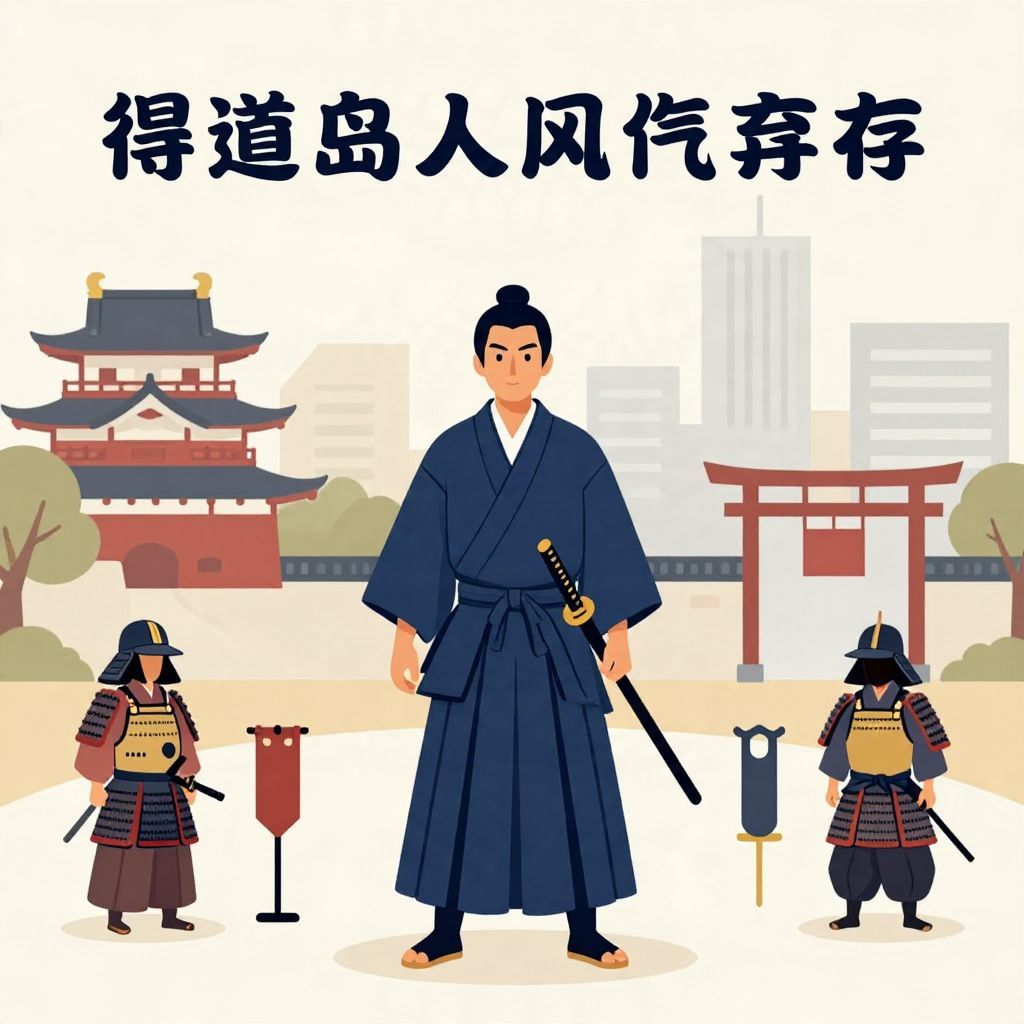
Do samurai still exist? The short answer is no, not as a legal social class or military caste in Japan. But samurai did not simply vanish overnight. Their status was dismantled in the late 19th century, and many families, traditions, and cultural ideals associated with samurai continued in new forms.
Today, the word “samurai” survives mainly as history, identity, and popular culture. To understand what ended, and what remains, it helps to trace how samurai rose to power, how the Meiji government abolished their privileges, and why their legacy still feels visible in modern Japan.
Do samurai still exist?
No, samurai do not exist today as an official hereditary warrior class in Japan. The samurai estate was abolished during the Meiji era, especially in the 1870s, when Japan replaced feudal status groups with a modern national army and civil society. However, descendants, cultural practices, and samurai values still survive in different forms.
What the samurai were in historical Japan
Samurai were armed retainers and military elites who served powerful lords in premodern Japan. Over time, they became a formal warrior class with social rank, legal privileges, and administrative responsibilities. They were not just fighters; many also worked as officials, tax collectors, scholars, and local governors.
From warriors to ruling class
The samurai emerged gradually during the late Heian period, roughly the 10th to 12th centuries, as provincial military families gained influence. By the Kamakura shogunate, beginning in 1185 or 1192 depending on the definition used, samurai had become central to political power. They later dominated Japan under successive shogunates, especially the Tokugawa regime from 1603 to 1868.
What made them distinct
Samurai status was tied to service, loyalty, stipends, and the right to bear arms. In the Edo period, many samurai lived in castle towns and received rice stipends from their lords rather than farming for themselves. Their role was shaped by hierarchy, discipline, and an ideal of loyalty that later generations would call bushidō, though that term and its meaning changed over time.
When did samurai disappear?
The samurai class was not abolished in a single moment, but its power eroded quickly after the Meiji Restoration of 1868. The new government sought to modernize Japan, centralize authority, and build a conscript army. Between the 1870s and early 1880s, samurai privileges were removed step by step until the class no longer existed in law.
Key changes in the Meiji era
- 1868: The Tokugawa shogunate fell and imperial rule was restored under the Meiji government.
- 1871: Feudal domains were abolished and replaced with prefectures, weakening the old lord-vassal system.
- 1873: Conscription created a national army made from commoners as well as former samurai.
- 1876: Samurai were forbidden to wear swords in public, a powerful symbolic loss of status.
These reforms mattered because samurai identity had been built on exclusive military service and hereditary privilege. Once the state monopolized military force and ended stipends, samurai ceased to function as a separate class. Some former samurai adapted successfully, while others resisted or suffered economic decline.
Resistance and the end of armed samurai power
Not all samurai accepted the new order. The most famous uprising was the Satsuma Rebellion of 1877, led by Saigō Takamori, himself a former samurai leader. The rebellion was defeated by the modern imperial army, which showed that Japan’s future belonged to centralized state power rather than hereditary warriors.
What happened to samurai families after abolition?
Many former samurai families remained influential, but they no longer formed a legal warrior estate. Some entered government, education, business, the military, or professional life. Others lost income when stipends were converted or ended, forcing them to sell property, change careers, or leave the social position they had once inherited.
From status to social memory
In the decades after abolition, samurai ancestry could still carry prestige, especially in local communities. Yet ancestry was no longer the same as status. A person might descend from a samurai family without having any legal privilege, military duty, or special rank. In that sense, “samurai” became a historical identity rather than a living caste.
Do any samurai traditions survive today?
Yes, but as cultural inheritance rather than an active feudal institution. Martial arts, family histories, museums, literature, and ceremonial practices preserve aspects of samurai culture. These survivals can be real and meaningful, but they should not be confused with the existence of samurai as a governing class.
Modern cultural echoes
- Martial arts: Disciplines such as kendō and iaidō preserve sword-related training in modernized forms.
- Family heritage: Some Japanese families preserve genealogies or stories linking them to samurai ancestors.
- Public memory: Castles, armor displays, festivals, and historical sites keep samurai history visible.
- Popular culture: Films, novels, manga, and games often reimagine samurai for modern audiences.
These traditions reflect memory and adaptation. A modern kendō practitioner is not a samurai in the historical sense, even if the sport draws on older martial ideals. Likewise, a family with samurai ancestry is not part of a samurai class, because that class no longer exists.
Why people still ask if samurai exist
The question persists because samurai are one of the most recognizable symbols of Japan. Their armor, swords, codes of honor, and dramatic role in history make them seem timeless. Popular culture also blurs the line between history and myth, sometimes presenting samurai as if they were still a living social group.
History versus legend
Some ideas about samurai are exaggerated. The romantic image of every samurai living by an unchanging “code of honor” is too simple. Samurai behavior varied widely across centuries, regions, and political circumstances. Some were devoted retainers, others were pragmatic administrators, and many adapted to the needs of their era rather than following a single timeless code.
That is why historians distinguish between the actual historical samurai and the later idealized samurai image. The real class changed over time, and the modern image was shaped strongly by Meiji nationalism, wartime ideology, and 20th-century popular culture.
How samurai history shaped modern Japan
Even though samurai no longer exist as a class, their legacy helped shape modern Japanese institutions and identity. The Meiji state used parts of samurai discipline and loyalty while rejecting feudal hierarchy. At the same time, former samurai played important roles in building the modern bureaucracy, military, and education system.
Lasting influence
Samurai history remains important because it shows how Japan moved from a feudal warrior order to a modern nation-state. The abolition of the samurai was not just the end of an old class; it was part of a larger transformation in law, military organization, social mobility, and national identity. That change helped make modern Japan possible.
So, do samurai still exist in any sense?
Only in limited, indirect ways. There are no legal samurai today, no feudal lords to serve, and no hereditary warrior estate recognized by the Japanese state. But samurai survive as descendants, symbols, traditions, and historical memory. Their world ended in the 19th century, yet their legacy remains deeply woven into Japanese culture.
In historical terms, the answer is clear: samurai do not still exist as a class, but they do still exist in Japan’s memory, institutions, and cultural imagination. If you want to explore related topics, you may also enjoy reading about broader cultural history at My Life Is History or the history of religious and social groups such as what monks were in history.