
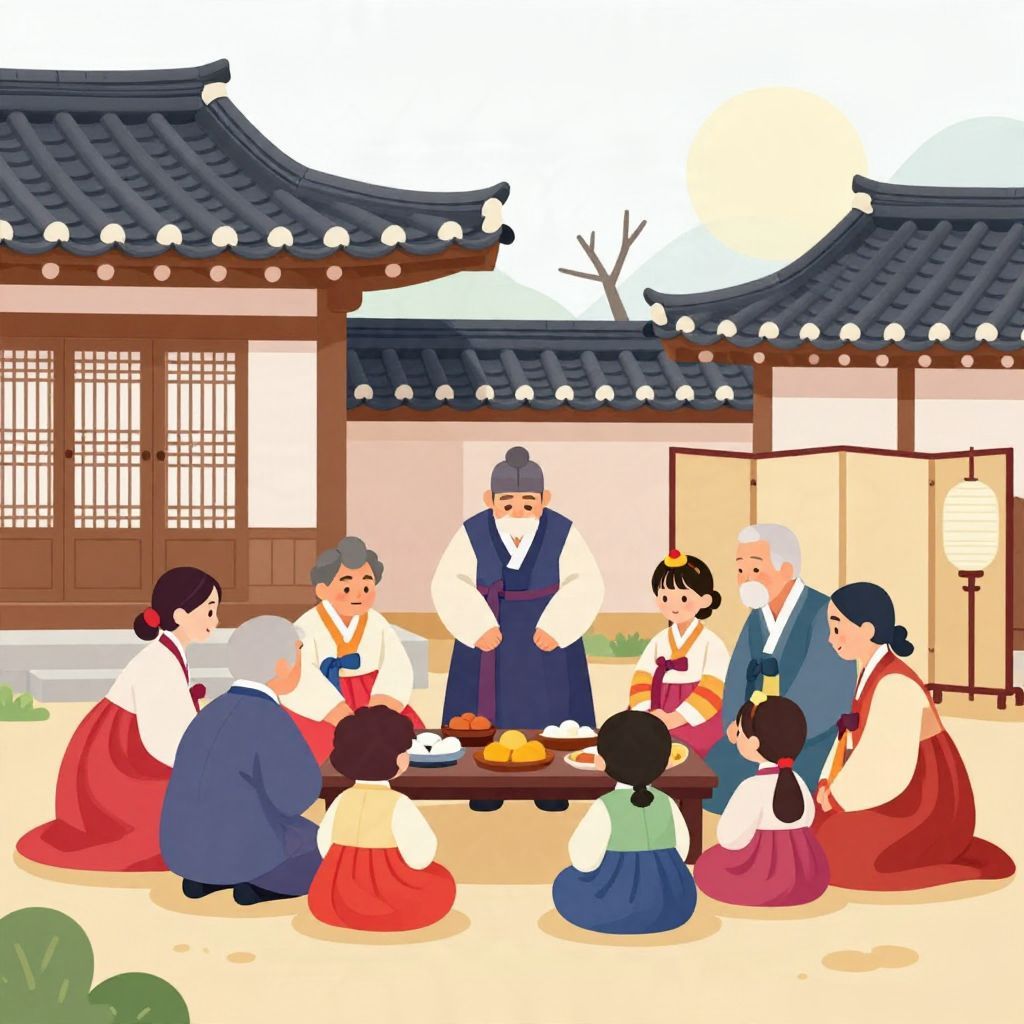
Do Koreans celebrate Lunar New Year? Yes—traditionally, many Koreans observe Seollal, the Korean Lunar New Year, as one of the most important holidays of the year. It is a family-centered celebration rooted in the East Asian lunar calendar, ancestral rites, and seasonal renewal, though its modern form also reflects Korea’s changing history.
The answer is straightforward, but the history behind it is more interesting: Seollal has deep premodern roots, was reshaped by colonial rule and modernization, and remains a major cultural holiday in both South Korea and among Koreans abroad.
Do Koreans Celebrate Lunar New Year?
Yes. Koreans traditionally celebrate Lunar New Year as Seollal, a major holiday marked by family gatherings, ancestral memorial rites, special foods, and age-old customs such as bowing to elders. In South Korea it is one of the most important national holidays, though its exact observance has changed over time and differs somewhat between families and communities.
What Is Seollal?
Seollal is the Korean name for Lunar New Year. The word refers to the first day of the first month in the lunar calendar, though in practice the holiday often includes the day before and the day after as well. It is both a seasonal turning point and a family ritual, not just a date on the calendar.
A holiday of family, ancestry, and renewal
Historically, Seollal has centered on honoring ancestors, greeting elders, and wishing for health and good fortune in the year ahead. Many households prepare special foods, wear traditional clothing such as hanbok, and perform sebae, a formal deep bow to older relatives. Children often receive blessings and gifts or money after bowing.
The Historical Roots of Korean Lunar New Year
Korea’s Lunar New Year traditions developed over many centuries in a broader East Asian cultural world shaped by the Chinese lunar calendar, Confucian family ethics, and local Korean seasonal customs. It is not accurate to treat Seollal as a simple import or as a purely modern invention. It emerged through long cultural exchange and local adaptation.
Ancient and premodern seasonal rituals
Before modern nation-states existed, Korean societies already observed seasonal rites tied to agriculture, ancestors, and the changing year. During the Three Kingdoms period and later dynasties, the lunar calendar became important for court life, ritual observance, and everyday timing. By the Goryeo and Joseon periods, New Year rites were deeply embedded in elite and popular culture.
In the Joseon dynasty, especially from the 14th century onward, Confucian values gave Seollal a strong family and ancestral dimension. Households performed memorial rituals for deceased relatives, and social hierarchy shaped how people greeted one another. The holiday became a key moment for reaffirming family bonds and moral order.
Why the lunar calendar mattered
The lunar calendar was widely used in premodern Korea for agriculture, ritual, and official scheduling. Because farming depended on seasonal cycles, holidays linked to the moon’s phases helped mark renewal at the start of the year. Lunar New Year was therefore not only symbolic but practical, organizing time in a society closely tied to agriculture.
What Do Koreans Traditionally Do on Seollal?
Seollal customs vary by region and family, but several practices are especially well known. These traditions reflect a blend of ancestor veneration, social etiquette, and festive eating. Many families still follow some or all of them today, even if modern life has simplified the holiday.
- Charye: a memorial rite for ancestors, usually performed at home.
- Sebae: a deep bow made by younger family members to elders.
- Special foods: especially tteokguk, a rice cake soup associated with gaining a new year and a new age.
- Family visits: travel to ancestral hometowns or relatives’ homes.
- Traditional games: such as yutnori, a board game often played during the holiday.
The meaning of tteokguk
Tteokguk, rice cake soup, is one of the best-known Seollal foods. Its white rice cakes symbolize purity and a fresh beginning, while the soup itself is associated with starting the year properly. A common saying links eating tteokguk with becoming one year older, showing how the holiday blends timekeeping, family identity, and food culture.
How Seollal Changed in Modern Korean History
Seollal did not remain untouched by modern history. Korea’s experience of Japanese colonial rule, division after 1945, rapid industrialization, and changing family structures all affected how the holiday was observed. The tradition survived, but its public meaning and scale shifted.
Colonial rule and cultural pressure
During Japanese colonial rule from 1910 to 1945, Korean cultural life faced intense pressure. Japanese authorities promoted their own imperial calendar and institutions, and many Korean customs were marginalized or altered. Even so, Lunar New Year traditions remained important in private life and family memory. Cultural suppression did not erase Seollal; it helped make the holiday a marker of Korean identity.
Postwar modernization and national holidays
After liberation in 1945, South Korea underwent rapid social change. In the mid-20th century, the government emphasized the solar calendar for official and administrative life, and there were periods when Lunar New Year was less publicly prominent than today. Over time, however, Seollal regained strong national importance. It became a major public holiday, with travel, family reunions, and media coverage reinforcing its place in modern life.
In North Korea, holiday practices developed differently under a socialist system, but ancestral and seasonal customs did not disappear entirely. The broader Korean cultural memory of New Year traditions remained significant across the peninsula, even as political systems diverged.
Is Lunar New Year the Same as Seollal Everywhere?
Not exactly. Seollal is the Korean version of Lunar New Year, and while it shares a calendar basis with other East Asian New Year celebrations, it has distinct customs, foods, and social meanings. The holiday is related to, but not identical with, Chinese New Year or Vietnamese Tết.
Shared calendar, local traditions
Many East Asian societies historically used lunisolar calendars and celebrated the new year with family rituals and seasonal foods. Yet each culture developed its own practices. In Korea, the emphasis on charye, sebae, and tteokguk gives Seollal a particular character. So while the holiday belongs to a wider regional tradition, it is unmistakably Korean in form and meaning.
How Koreans Celebrate Lunar New Year Today
Today, Seollal remains one of the most important holidays in South Korea. Many people travel long distances to visit family, often creating some of the year’s busiest transportation periods. Households may continue ancestral rites, though some families simplify them or replace them with more informal gatherings.
Tradition and modern life
Urbanization and smaller family sizes have changed the holiday. Some younger Koreans spend Seollal in more relaxed ways, and not every family follows every traditional custom. Still, the holiday’s core ideas—respect for elders, remembrance of ancestors, and the wish for a good year—remain widely recognized. In this sense, Seollal has adapted rather than disappeared.
Korean communities abroad
Koreans living overseas also celebrate Seollal, often as a way to preserve language, family identity, and cultural continuity. In diaspora communities, the holiday may be observed with community events, church gatherings, or home meals that combine tradition with local adaptations. This has helped keep Seollal visible beyond the Korean peninsula.
Why This Holiday Matters Historically
Seollal is more than a festive occasion. It reveals how Koreans have understood family, time, ancestry, and belonging across centuries of change. The holiday connects premodern ritual life with modern national identity, showing how traditions can survive conquest, reform, migration, and modernization.
So, do Koreans celebrate Lunar New Year? Yes—through Seollal, one of Korea’s most enduring traditions. Its history shows a holiday shaped by ancient seasonal rhythms, Confucian family culture, colonial disruption, and modern reinvention. For related comparisons, see Do Japanese Celebrate Lunar New Year and Do Filipinos Celebrate Lunar New Year.