
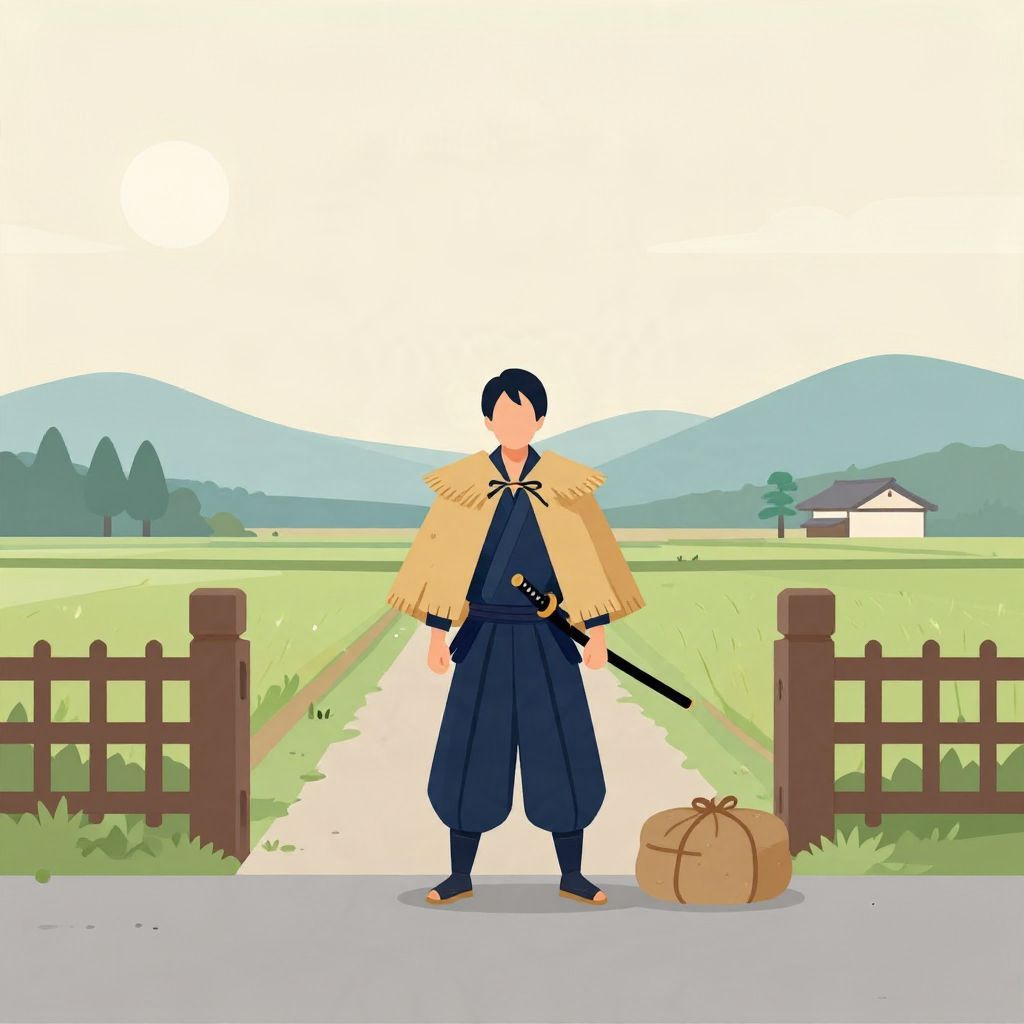
What is a ronin, and why does the term still capture so much interest? In Japanese history, a ronin was a samurai without a master. The word came to describe men who had lost their lord through death, disgrace, dismissal, or political upheaval, and it carried strong social and moral meaning in premodern Japan.
Ronin were not simply “wandering warriors.” Their status reflected the rigid hierarchy of feudal Japan, where loyalty to a lord was central to a samurai’s identity. Over time, the ronin became a powerful historical symbol in stories of honor, independence, hardship, and social instability.
What Is a Ronin?
A ronin was a samurai who had no lord to serve. In feudal Japan, samurai were expected to belong to a household or domain under a daimyo, and losing that connection made a warrior socially adrift. The term later came to mean a masterless samurai, often viewed with suspicion, pity, or admiration depending on the context.
Where Did the Word Ronin Come From?
The word ronin is usually written with characters that mean “wave person,” suggesting someone drifting like a wave and lacking a fixed place. That image fits the social reality of a masterless warrior: a person cut loose from the stable bonds that defined samurai life. The term existed in medieval Japan, but it became especially significant in the Edo period, when peace left many warriors without military roles.
Why the Meaning Mattered
In samurai culture, loyalty was not just a personal virtue; it was a social obligation. A samurai’s identity depended on service, rank, and reciprocal duty. When that relationship disappeared, the warrior’s status became uncertain. A ronin could be pitied as someone cast out by fate, or judged as someone who had failed in duty.
How Did Someone Become a Ronin?
There was no single path to becoming a ronin. Some lost their lord because the lord died without a clear successor. Others were dismissed, punished, or left unemployed after political changes. In times of war, a defeated clan could leave its retainers masterless. In times of peace, a samurai might lose his position because there was less need for armed service.
Common Causes of Ronin Status
- Death of a lord without immediate replacement or transfer of service
- Loss of employment after a domain was reduced, abolished, or reorganized
- Political conflict that destroyed a clan or household
- Dismissal or disgrace following punishment or internal disputes
- Economic hardship that made continued service impossible
The Historical Background: Samurai, Daimyo, and Feudal Japan
To understand ronin, it helps to understand the broader feudal order. From the medieval period through the early modern era, Japan was ruled through a hierarchy of military elites. Local lords, or daimyo, controlled lands and armies, while samurai served them as retainers. Above them stood the shogunate, the military government that shaped national politics.
This system was built on personal loyalty and inherited status. A samurai was expected to serve faithfully, and in return he received support, rank, and a place in the social order. A ronin was a break in that order: a man trained for service but no longer attached to a house.
From War to Peace
The rise of the Tokugawa shogunate after 1600 brought long-term peace to Japan. That peace had an unintended consequence: many samurai found themselves with fewer military duties. Some became administrators, but others lost relevance or income. As a result, the number of masterless samurai increased, especially in the 17th century.
What Was Life Like for a Ronin?
Life as a ronin could be precarious. Without a lord’s support, a masterless samurai might struggle to earn a living. Some became bodyguards, teachers, mercenaries, laborers, or hired swords. Others tried to find a new master. A few turned to crime, though that was not inevitable and should not be treated as the defining feature of ronin life.
Because samurai status carried prestige, a ronin was not simply an ordinary commoner. Yet he also lacked the security and social backing of a serving retainer. This in-between position made ronin both visible and vulnerable in Japanese society.
Practical Consequences
- Loss of regular income or stipends
- Reduced social standing and uncertain legal position
- Need to seek new employment or patronage
- Possible tension with authorities if the ronin traveled armed
Were Ronin Always Seen Negatively?
No. The image of the ronin was mixed. Some were regarded as irresponsible or dangerous, especially if they drifted into violence or banditry. But others were admired for independence, courage, or steadfast loyalty to a lost cause. Japanese literature and later popular culture often turned ronin into tragic or heroic figures.
The famous ideal of the loyal retainer sometimes made a masterless samurai seem morally significant. If a lord died unjustly or a clan was destroyed unfairly, a ronin could symbolize fidelity beyond the ordinary structure of service. That is one reason the term became so powerful in storytelling.
The Forty-Seven Ronin and the Meaning of Loyalty
The most famous ronin in Japanese history are the Forty-Seven Ronin, also known as the Akō rōshi. Their story took place in the early 1700s, when retainers of a lord named Asano Naganori became masterless after Asano was forced to commit seppuku in 1701. The retainers later avenged him by killing the official they blamed for his downfall, then accepted punishment themselves.
Historically, this event became one of Japan’s best-known loyalty narratives. It was celebrated in plays, stories, and later films, though the real events were shaped by political constraints and later moral interpretation. The story is important not because all ronin acted this way, but because it shows how masterless samurai could be turned into symbols of duty, sacrifice, and honor.
Why This Story Endured
The Forty-Seven Ronin story resonated because it raised difficult questions: Was loyalty to a lord higher than loyalty to the law? Could vengeance be honorable? Should a samurai obey the state or personal obligation? These questions made the ronin a lasting cultural figure rather than merely a social category.
Ronin in the Edo Period
During the Edo period, especially from the 17th to the 19th centuries, Japan experienced relative peace under Tokugawa rule. This stability reduced the battlefield role of samurai and increased the number of masterless men. Some ronin became teachers, scholars, or advisers. Others joined political movements or participated in unrest as the old order weakened.
As the Tokugawa system aged, ronin sometimes played a role in anti-shogunate politics. Because they were not tied as tightly to a domain, some could move more freely between factions. In the decades before the Meiji Restoration, certain ronin became important actors in the political struggles that helped end the shogunate.
How Did the Meaning of Ronin Change Over Time?
Originally, the word described a social condition: a samurai without a master. Over time, it also became a cultural type. In literature, theater, and later film and manga, ronin often appear as lone swordsmen, wandering protectors, or men seeking redemption. These portrayals are not always historically accurate, but they reflect the enduring fascination with a warrior outside the normal order.
In modern Japanese usage, ronin can also be used more broadly, sometimes metaphorically, for someone between institutions or without a fixed affiliation. The historical meaning remains strongest, however, in relation to samurai society.
Key Facts About Ronin
- A ronin was a masterless samurai.
- The term became especially important in feudal and early modern Japan.
- Ronin could lose status because of a lord’s death, political change, dismissal, or war.
- Not all ronin were criminals; many sought new service or other work.
- The Forty-Seven Ronin are the most famous example in Japanese history.
- The term carries themes of loyalty, loss, independence, and social uncertainty.
Why Ronin Still Matter Today
Ronin matter because they reveal how tightly identity, duty, and class were bound together in feudal Japan. They also show how political change can leave trained people without a place in society. The ronin were both a real historical group and a lasting cultural symbol shaped by memory, literature, and legend.
So, what is a ronin? Historically, it is a samurai without a lord. But the term also represents the instability of Japan’s warrior society and the enduring tension between loyalty, survival, and personal independence. If you want to explore the wider world that produced ronin, see what a feudal system is and whether samurai still exist.