
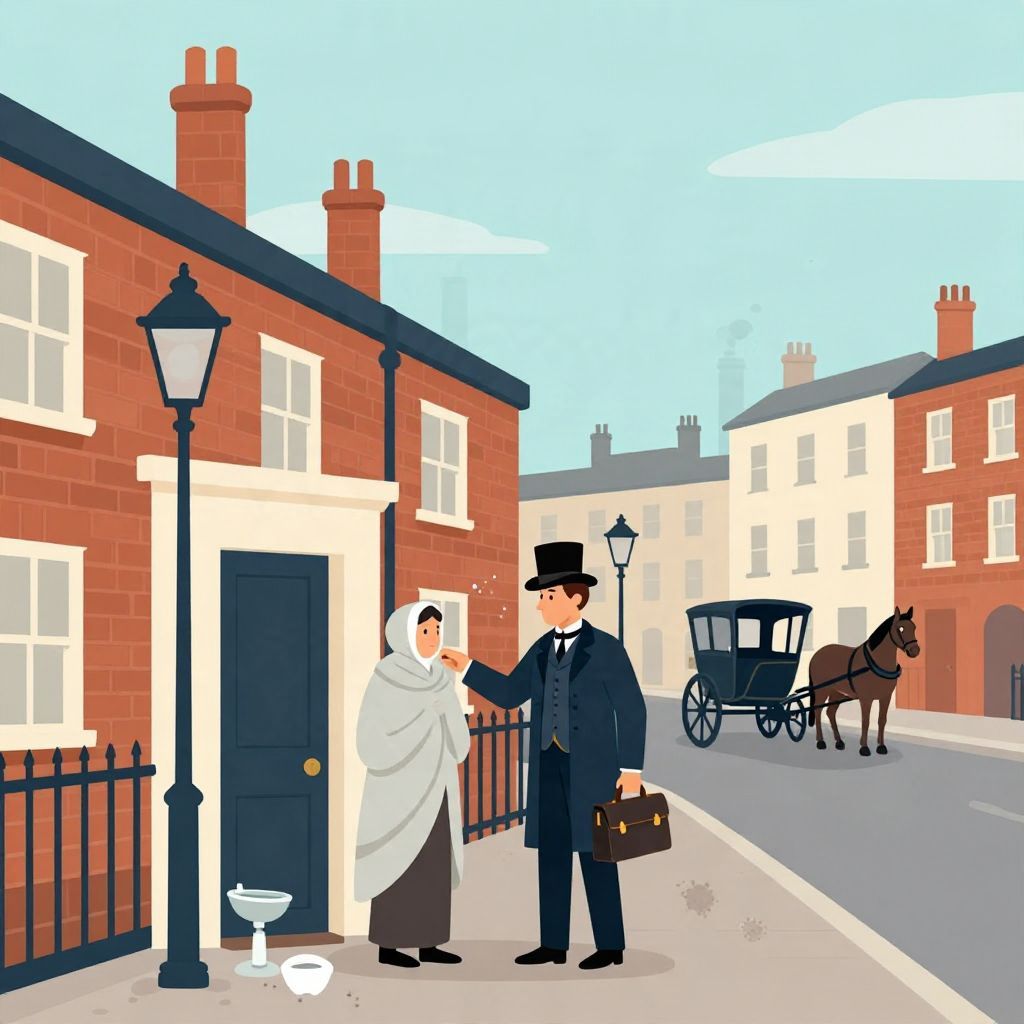
“Victorian disease” is not a single medical diagnosis. It is a broad historical label used to describe the illnesses, conditions, and health anxieties associated with 19th-century Britain, especially during Queen Victoria’s reign from 1837 to 1901. The phrase can refer to infectious diseases, chronic urban health problems, and disorders that became especially visible in Victorian society.
To understand it properly, we need to look at the crowded cities, poor sanitation, rapid industrialization, and limited medical knowledge of the era. In that sense, “Victorian disease” is less one illness than a window into how people lived, worked, and died in the 19th century.
What Is Victorian Disease?
Victorian disease is a modern umbrella term for the illnesses commonly associated with the Victorian era, especially in Britain. It usually refers to diseases made worse by overcrowding, poverty, contaminated water, and weak public health systems, rather than to one specific condition. Common examples include cholera, tuberculosis, typhoid, scarlet fever, and rickets.
The phrase is not a formal medical category from the 19th century. Historians and popular writers use it to describe the health realities of the age: a society transformed by industrial growth, but still struggling with sanitation, nutrition, and disease control. In other words, “Victorian disease” is a historical label, not a single Victorian-era diagnosis.
Why Did Disease Become So Associated with the Victorian Era?
The Victorian period saw dramatic population growth and urbanization. Cities such as London, Manchester, Liverpool, and Glasgow expanded quickly, often faster than housing, drainage, clean water, and waste removal could keep up. These conditions allowed infectious diseases to spread easily and made everyday life unhealthy for many working-class families.
Industrial cities and overcrowding
Factories drew people from rural areas into cities in search of work. Many arrived to find cramped housing, shared privies, poor ventilation, and polluted air. Families often lived in single rooms or crowded tenements. Such environments made respiratory infections and waterborne diseases far more common.
Weak sanitation and contaminated water
Before modern sewage systems were widely developed, human waste often contaminated streets, rivers, and wells. This helped spread cholera, typhoid, and dysentery. The famous “Great Stink” of London in 1858 exposed how severe the sanitation crisis had become and helped push public authorities toward major sewer reforms.
Limited medical understanding
Victorian doctors did not yet understand germs in the way modern medicine does. Before the widespread acceptance of germ theory in the later 19th century, many people believed diseases were caused by “miasma,” or bad air. This misunderstanding delayed effective prevention, even though some public health reforms still helped improve conditions.
Which Diseases Were Most Common in Victorian Britain?
Several illnesses became especially associated with the Victorian age. Some were infectious; others were caused or worsened by poverty, diet, and working conditions. Together, they shaped the era’s reputation for disease and early death.
Cholera
Cholera was one of the most feared diseases of the 19th century. It spread through contaminated water and caused severe dehydration and death. Major outbreaks hit Britain repeatedly in the 1830s, 1840s, and 1850s. The disease became a turning point in public health history because it revealed the deadly consequences of polluted water supplies.
Tuberculosis
Tuberculosis, often called consumption in the 19th century, was one of the leading causes of death in Victorian Britain. It spread through close contact and thrived in overcrowded, poorly ventilated homes. Because it could linger for years, it became associated with wasting illness, poverty, and domestic tragedy.
Typhoid and typhus
Typhoid fever, spread by contaminated food and water, was common in unsanitary urban areas. Typhus, spread by lice, was linked to overcrowding and poor hygiene. Though the names are often confused, they were distinct diseases and both reflected the harsh conditions faced by the urban poor.
Scarlet fever and measles
Childhood infections such as scarlet fever and measles could be deadly in the 19th century, especially where nutrition was poor and medical care limited. These diseases were part of everyday fear for Victorian families, many of whom lost children at young ages.
Rickets and other deficiency diseases
Rickets, caused largely by vitamin D deficiency, was common among children in polluted cities with little sunlight and poor diets. It led to soft bones and skeletal deformities. Its prevalence showed that “Victorian disease” was not only about infection but also about malnutrition and environment.
Was “Victorian Disease” One Disease or a Social Problem?
It was a social problem as much as a medical one. The diseases associated with the Victorian era were shaped by class, housing, work, and access to clean water. Wealthier Victorians could often avoid the worst conditions, while the poor faced the highest risks. Disease in this period was therefore deeply tied to inequality.
Poverty and vulnerability
Poor families were more likely to live in damp, overcrowded housing and to rely on unsafe water sources. They also had less access to nutritious food, rest, and medical treatment. This meant that disease was not distributed evenly across society. The same city could contain both affluent neighborhoods and districts where life expectancy was drastically lower.
Child health and mortality
Children were especially vulnerable. Infant and child mortality rates were high by modern standards, and many families expected to lose at least some children to illness. This reality shaped Victorian family life, religious belief, and attitudes toward grief and charity.
How Did Victorians Try to Fight Disease?
Victorian Britain eventually became a major center of public health reform. The response to disease changed over time, moving from fear and resignation toward sanitation, regulation, and scientific medicine. These reforms did not eliminate disease overnight, but they significantly improved urban life.
Public health reform
Reformers argued that governments had a responsibility to improve sewers, drainage, water supply, and housing. The Public Health Act of 1848 was an important early step, though its enforcement was uneven. Later measures expanded local authority over sanitation and urban planning.
Sanitation and sewer systems
One of the most important developments was the construction of modern sewer systems, especially in London under engineer Joseph Bazalgette after the 1858 Great Stink. Cleaner streets and better waste disposal reduced the spread of waterborne disease and became a model for other cities.
Germ theory and medical change
By the later 19th century, scientists such as Louis Pasteur and Robert Koch helped establish germ theory, showing that microorganisms caused many diseases. This changed medicine profoundly. Antiseptic surgery, improved hospital practice, and better understanding of infection all grew from this scientific shift.
Vaccination and prevention
Vaccination also became part of the Victorian public health landscape, especially for smallpox. Although vaccination was controversial in some circles, it marked an important move toward disease prevention rather than treatment alone.
How Did Victorians Understand Disease?
Victorian ideas about disease changed over the century. Early in the period, many people still believed in miasma theory, which blamed foul-smelling air. Later, germ theory transformed medical thinking. But even before germs were understood, many reformers recognized that dirty water, overcrowding, and poor drainage were linked to illness.
Miasma theory
Miasma theory was not entirely useless, because bad smells often accompanied filth and contamination. However, it led people to focus on odor rather than the true routes of transmission. This sometimes produced partial solutions, such as masking smells, instead of addressing the source of infection.
Scientific medicine and reform
The Victorian era was a period of transition. Medicine became more professional, hospitals improved, and public health became a political issue. The shift was uneven, but by 1900 Britain had moved much closer to a modern understanding of disease than it had in 1837.
Why Does the Term Still Matter Today?
“Victorian disease” still matters because it captures the relationship between health and society. It reminds us that disease is not only biological; it is also shaped by housing, sanitation, nutrition, labor, and public policy. The Victorian era is a powerful example of how urban growth can create health crises if infrastructure does not keep pace.
It also helps explain why public health reform became such an important part of modern government. Sewer systems, clean water, vaccination campaigns, and disease surveillance all grew from lessons learned in the 19th century. In that sense, the Victorian struggle with disease helped create the foundations of modern urban health.
Key Facts About Victorian Disease
- It is not one disease but a historical label for illnesses associated with the Victorian era.
- Major causes included overcrowding, poor sanitation, contaminated water, and malnutrition.
- Common illnesses included cholera, tuberculosis, typhoid, typhus, scarlet fever, measles, and rickets.
- Public health reform expanded during the 19th century, especially after repeated cholera outbreaks.
- Germ theory transformed medicine in the later Victorian period and improved disease prevention.
Conclusion
So, what is Victorian disease? It is the historical pattern of illness that defined much of life in 19th-century Britain: a mix of infectious disease, poverty-related health problems, and the slow rise of public health reform. The term points to a society learning, often painfully, that health depends on more than medicine alone.
If you want to explore the wider historical background, you may also find when germs were discovered and what is cultural divergence useful for understanding how ideas and societies changed over time.